
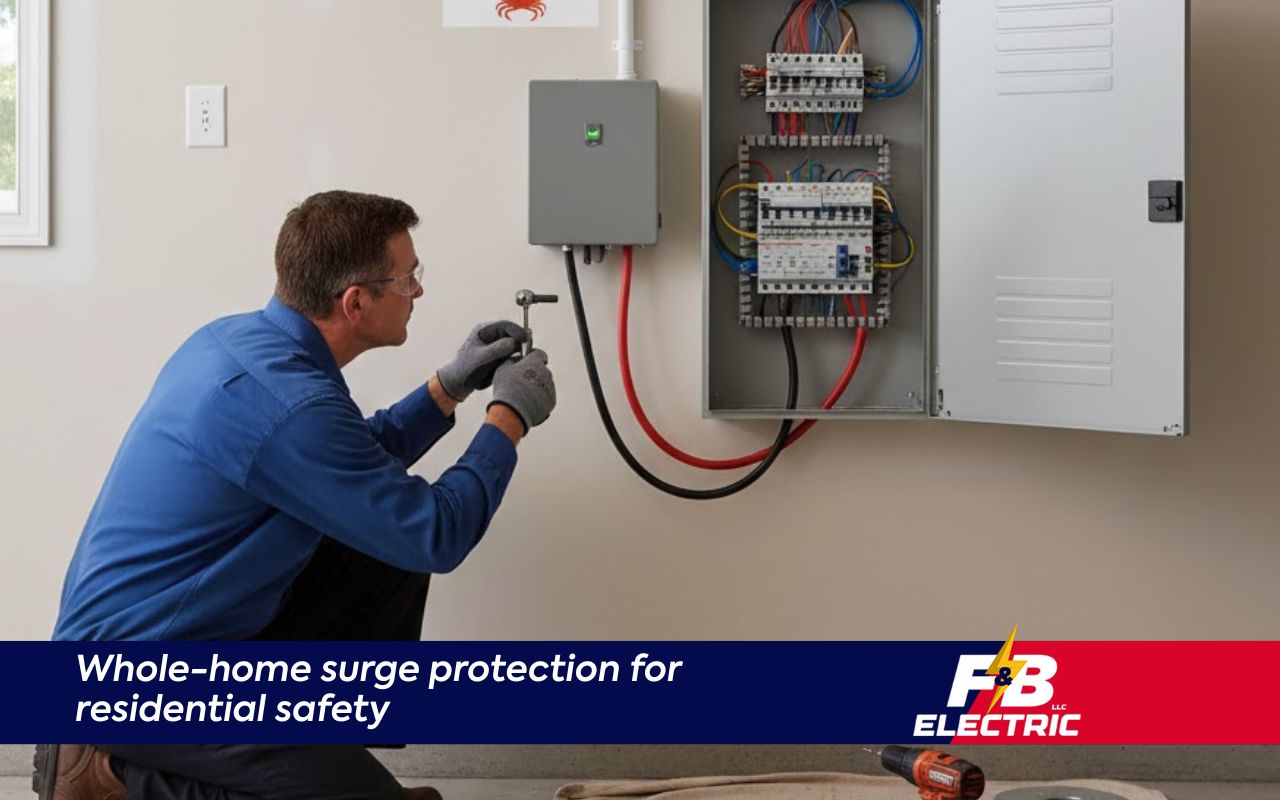
Residential whole-house surge protection in MD is the hidden shield that protects your home from electrical chaos. When storm clouds gather or lightning strikes nearby, that shield stands between you and costly damage.
For many homeowners, whole-home surge protection is not a luxury but a basic safety upgrade. It guards appliances, electronics, and home systems that support how you live and work each day. In today’s tech-heavy homes, keeping these devices safe is not only smart; it is essential.
Think of surge protection as a quiet guard that works in the background. Power surges cause millions of dollars in damage every year across homes and neighborhoods. They can harm electronics, weaken wiring, and in extreme cases even start electrical fires. This guide explains whole-house surge devices, the surge protector installation Maryland homeowners need, and a clear residential surge protection checklist. With simple steps, you can protect your home and keep your safe place secure.
The Importance of Whole-Home Surge Protection
Every modern home depends on safe, steady power for comfort and daily routines. A whole-house surge device acts as a guard, pushing sudden voltage spikes away from sensitive wiring and outlets. When power surges move through your circuits, they can weaken or destroy appliances and shorten the life of electronics. They can also create fire hazards if wiring overheats or insulation breaks down.
Implementing Residential whole-house surge protection in MD helps shield your home from swings in electricity caused by storms or grid issues. It also protects against utility company problems or switching events on local power lines. Beyond safety, a whole-home surge solution can save money over time. It helps prevent costly replacement of televisions, refrigerators, computers, and HVAC equipment.
Plug-in surge strips protect single devices only and often leave the main panel exposed. With a properly installed whole-house surge device, each branch circuit gains a strong first line of defense. This reduces hidden damage that might stay unnoticed until an appliance fails.
Understanding Electrical Surges and Their Impact
Electrical surges are short bursts of extra voltage running through your home’s wiring. Most surges last only a fraction of a second, but that is enough to overload parts and circuits. Common causes include nearby lightning, fallen trees on lines, faulty wiring, or power company switching. In older homes without modern protection, risk rises as more devices plug into the same system.
If your property is older, consider surge protection for older homes to cover extra vulnerabilities. Surges do not always leave clear signs right away. They slowly weaken wire insulation and corrode connections over months or years. This can lead to random failures, tripped breakers, or short circuits. Electronics with microchips, like game consoles, smart thermostats, and security systems, are especially delicate.
By learning how surges work, you can schedule an electrical surge inspection early and limit hidden damage. This simple step helps protect both your wiring and your electronics from silent, long-term harm.
Risks Posed by Power Surges to Home Appliances and Electronics
A single voltage spike can start a chain of problems inside your home. Motors and compressors in refrigerators, washing machines, and water heaters react badly to sudden voltage jumps. High surges can overheat motor windings or melt solder joints, forcing major repairs or full replacement. Sensitive electronics such as laptops, routers, and televisions face instant danger during strong spikes.
Common results of repeated power surges include:
- Shorter life for appliances and electronics
- Random device shutoffs, reboots, or screen flickers
- Lost files or damaged data on computers
- Offline smart home devices and security cameras
- Higher repair and replacement costs over time
Power surges can also disrupt data storage and remove important files from your devices. Smart home networks may crash or become unresponsive, leaving cameras or safety systems offline. Damage might look small at first, such as a slow startup or mild buzzing noise. Over time, repeated events shorten equipment life. Regular electrical surge inspection supports a safe and reliable home environment.
Benefits of Installing Whole-House Surge Devices
Whole-house surge protection offers clear benefits for safety, comfort, and property value. A surge arrestor at your main panel gives every circuit the same strong level of protection. You no longer depend only on small point-of-use strips, which can be missed or overloaded.
Key benefits include:
- Protection for every outlet, light, and hardwired appliance
- Lower risk of sudden equipment failure after storms
- Reduced chance of hidden wiring damage
- Fewer emergency service calls and repairs
- Improved appeal for future home buyers
A whole-house surge device installed by a licensed electrician shows that your home receives professional care. Fewer repair visits and fewer replacement purchases help lower maintenance costs across the years. Whether problems are small or large, a robust surge system often pays for itself through avoided damage.
How Whole-House Surge Protectors Work
Whole-house surge protectors use simple, effective technology to guard your home. The device watches incoming voltage and reacts when levels pass a safe limit. Excess energy then moves away from your home’s wiring and into the grounding system. This keeps dangerous voltage from reaching your appliances and electronics.
Inside the device, parts called metal oxide varistors change resistance when voltage spikes. They absorb and release extra energy during the surge event. When voltage returns to normal, these parts reset and stand ready for the next surge. The protector works around the clock without any effort from you.
Factors to Consider When Choosing a Surge Protector
Several factors matter when you choose a surge protection system. First, make sure the device matches your home service, usually 120 or 240 volts for houses. Next, look at the surge current rating, measured in kiloamperes or kA. Higher ratings usually give stronger protection against large surges.
Also check warranty terms, response time, and any indicator lights that show device status. Choose models tested and listed by recognized safety agencies. Ask your electrician about inspection needs and how often an electrical surge inspection should be scheduled. Following maker instructions keeps your protection system in top condition.
Surge Protector Installation Process in Maryland
Surge protector installation should always be handled by a licensed professional. For surge protector installation Maryland homeowners can trust, start by hiring an experienced local electrician. The electrician will shut off power to your panel and mount the surge protector close to the breakers. They connect it to the line, neutral, and ground terminals according to code. Proper grounding is vital because it gives extra voltage a safe path out of your home.
After wiring, the electrician restores power and tests the device. Most whole-house units include lights or a simple display that confirm they are working. This step often includes a quick electrical surge inspection to verify safe grounding and correct wiring. With a skilled installer, surge protection starts working right away and supports your system from day one.
Residential Surge Protection Checklist
Use this residential surge protection checklist before and after installation. It helps you confirm that Residential whole-house surge protection in MD is set up correctly and stays reliable.
- Confirm surge protector voltage and current ratings match your main panel.
- Check that the surge current rating is at least 50 kA for strong performance.
- Verify that the device is listed by a trusted safety agency, such as UL or CSA.
- Review your grounding system and remove or repair any corroded connections.
- Make sure all branch circuits, outdoor outlets, and subpanels benefit from the whole-house surge device.
- Plan regular inspections, at least once each year, to review indicator lights and system health.
If the device shows wear, damage, or warning lights, schedule a replacement as soon as possible. Ongoing checks keep protection strong when storms and grid events occur.
Maintaining and Testing Your Surge Protection System
Regular maintenance keeps your surge protection system ready for surprise events. Most whole-house surge devices include status lights that show when the unit is active and healthy. If the light goes out or changes color, the device may no longer protect your home. In that case, contact an electrician to replace it quickly.
Over time, strong surges slowly wear down internal parts even if you see no damage. Replacing the surge protector after severe weather or every few years is a smart habit. A professional electrical surge inspection can confirm grounding quality and wiring integrity. These checks help catch hidden issues that might reduce protection.
Frequently Asked Questions
Do I still need whole-house surge protection if I already use power strips?
Yes. Power strips usually protect only the devices plugged into them. They do not guard your main panel or hidden wiring. Whole-house devices stop large surges before they spread through every circuit in the home.
How long does a whole-house surge device usually last?
Life span depends on surge strength and how often events occur. Many units last several years under normal conditions. After major storms or repeated surges, your electrician may suggest replacement to keep protection strong.
Can surge protection help during lightning storms?
No system can guarantee full protection from a direct lightning hit. However, a quality whole-house surge device greatly reduces damage from nearby strikes. It works with proper grounding to send excess energy safely into the earth.
Is surge protection especially important for older homes in Maryland?
Yes. Older homes may have aging wiring and fewer grounded outlets. These issues can increase risk during surges. Combining modern devices with surge protection for older homes offers better safety and reliability.
Who should handle installation of Residential whole-house surge protection in MD?
Always hire a licensed electrician for this work. They understand panel layouts, grounding rules, and local Maryland codes. A trained professional ensures Residential whole-house surge protection in MD is wired correctly, tested, and ready for real surge events.
Ensuring Your Home’s Safety with Whole-Home Surge Protection
Whole-home surge protection is a simple way to secure your family, your home, and your budget. A device at the main panel creates a strong barrier against surprise voltage spikes. By pairing Residential whole-house surge protection in MD with routine electrical surge inspection, you keep systems running safely. Use your residential surge protection checklist and stay in touch with a trusted electrician.
If you are ready to upgrade, contact our team to discuss options for your home. With the right plan, you can enjoy a safer and more resilient living space for years to come.