
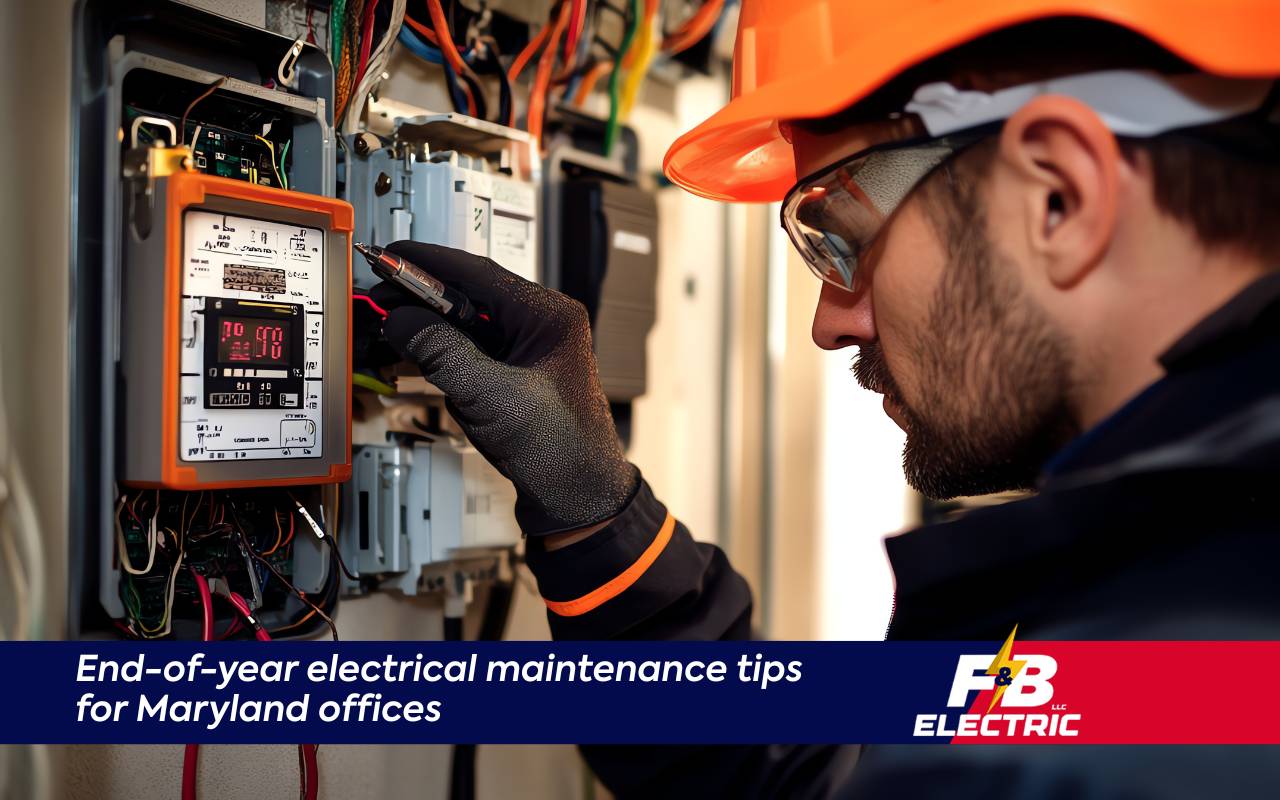
Office Electrical Maintenance Checklist in MD helps Maryland offices close the year safe and ready for winter. As the year ends, many teams finish projects and plan new goals, but electrical care often slips.
End-of-year electrical work prevents surprise outages and keeps everyone productive and safe during busy seasons. By choosing preventive maintenance for offices, you avoid high repair bills and reduce dangerous situations. A well-structured office electrical maintenance checklist in MD also supports smooth inspections and steady daily operations.
Importance of an Office Electrical Maintenance Checklist in MD
Maintaining office wiring and equipment at the end of the year plays a big role in safety and daily performance. When you plan work now, you lower the chance of sudden outages when your team returns from holiday breaks.
A planned checkup can reveal worn wires, loose connections, and tired equipment before they fail. This simple habit also helps you follow local safety rules and insurance needs, which supports a safer workplace.
- Reduce downtime from surprise electrical problems.
- Lower the risk of shocks and electrical fires.
- Support insurance and safety code requirements.
- Keep staff comfortable, confident, and focused on work.
Seasonal changes in Maryland, from damp fall days to icy winter nights, put extra strain on building systems. Winter electrical prep MD becomes easier when you already know your weak spots. A careful office safety inspection highlights fire hazards, overloaded circuits, and old parts, helping your business run smoothly.
Creating an Office Electrical Maintenance Checklist
Building a clear checklist makes regular work easier and consistent. First, list each electrical area, such as main panels, breakers, outlets, lights, and emergency systems. Then assign how often each item should be checked, like quarterly, twice a year, or yearly.
Including key steps in a commercial electrical checklist MD helps everyone follow the same simple process. You can make the checklist even more useful by adding sections like these:
- Service panels and circuit breakers.
- Office lighting, exit lights, and emergency lighting.
- Outlets, power strips, and surge protectors.
- Computers, printers, and shared appliances.
- Backup power systems and safety devices.
Once tasks are listed, assign staff or service providers and note deadlines. Use clear items such as “inspect outlet covers” or “test emergency lights.” Keeping the office electrical maintenance checklist in MD up to date supports accountability and helps your team fix issues before they grow.
Inspecting Electrical Wiring Systems
Regular wiring checks protect your office from shocks and fires. Start with a visual scan of wiring in accessible walls, panels, and junction boxes. Look for damage, discoloration, or signs of heat around wires and connections.
- Check for loose or hanging wires in open areas.
- Look for dark marks or melted spots near connections.
- Confirm wire insulation is intact and not cracked.
- Make sure no wires are sharply bent or pinched by furniture.
Also confirm that wires stay secure inside boxes and panels and that covers are in place. Write down what you see and schedule quick repairs or replacements when needed. This simple step greatly lowers risk in busy hallways and workspaces.
Checking Electrical Appliances and Equipment
Testing office appliances, such as computers, printers, copiers, and coffee machines, extends their life and prevents sudden failures. Begin by unplugging each device and checking the cord for cuts, frays, kinks, or twists.
Look at the plug pins for burn marks or discoloration, which can show overload or poor contact. Then plug devices back in during quiet hours and test their performance. Make sure grounding prongs are present and surge protectors still work. Keep notes on age and condition so you can plan simple replacements instead of emergency swaps.
Testing Backup Power Sources
Backup generators and uninterruptible power supplies, or UPS units, act as your safety net during power loss. Test these systems during low-activity hours so you do not disturb daily work. For a generator, run a short load test and confirm fuel levels are correct.
Check oil, coolant, and battery health so the unit can handle long outages. For UPS systems, briefly unplug the main power source to simulate a failure. Watch to see whether each UPS turns on quickly and powers attached devices. Replace or recharge weak batteries and note units nearing end of life so you can swap them before a real outage.
Conducting Safety Inspections for Fire Hazards
Many office fires start with overloaded circuits or faulty equipment. Walk through the space and look for crowded power strips, several plugs in one outlet, or wires under carpets and rugs. Make sure circuit breaker panels are clearly labeled and easy to reach.
Install smoke detectors near higher risk areas, including server rooms and kitchenettes, and test every alarm. Replace weak batteries and log each test. For extra guidance, review practical electrical safety guidelines for Maryland offices and share them with your team during safety meetings.
Weatherproofing Electrical Components
Moisture and cold air can damage unprotected electrical parts, especially outside. Inspect outdoor outlets, conduit seals, and junction boxes for rust, broken covers, or gaps. Replace worn gaskets and install weather-resistant covers to block water and snow.
Also check where cables enter near doors and windows. Seal gaps with silicone caulk to keep out drafts and pests. By adding these steps to your winter electrical prep MD, you lower corrosion risks and keep connections dry and safe all season.
Scheduling Professional Maintenance Services
While your staff can handle simple checks, licensed electricians can perform deeper inspections. These experts can test ground fault circuit interrupters, or GFCIs, use thermal cameras on panels, and confirm code compliance. Look for local providers familiar with commercial electrical checklist MD standards and who hold proper licenses and insurance.
Set yearly or twice-yearly visits to keep preventive maintenance for offices on track. Many companies offer service agreements that simplify scheduling and may provide faster help in emergencies. During each visit, document findings and add them to your office electrical maintenance checklist in MD so you close any gaps in your plan.
If you need a trusted local team, consider reviewing commercial electrician services in Baltimore and choosing the option that best matches your building’s needs.
Implementing Energy-Saving Practices
Energy-saving habits lower costs and protect your equipment. Switch to LED bulbs in common areas and workstations, since they use less power and last longer. Also install motion sensors in conference rooms, storage areas, and restrooms so lights turn off automatically.
- Use programmable thermostats to ease HVAC use on mild days.
- Ask staff to shut down computers and screens each evening.
- Unplug chargers and small devices that are not in use.
- Group equipment on quality power strips with surge protection.
These small changes support your office safety inspection routine and help with winter electrical prep MD. Over time, they create a greener, more cost-effective workspace that still feels comfortable for your team.
Frequently Asked Questions
How often should I update my office electrical checklist?
You should review and update your checklist at least once a year, ideally before winter begins. However, you can also refresh it after any major office change, such as new equipment, layout changes, or a renovation project.
What signs show I need an electrician, not just in-house checks?
You need a licensed electrician if you notice burning smells, frequent breaker trips, warm outlets, flickering lights, or buzzing panels. Also call a professional after any water leak near electrical equipment or when your staff feels unsafe using certain outlets or devices.
Do I really need backup power for a small office?
Yes, even small offices benefit from backup power. A basic UPS can protect computers from sudden shutdowns and data loss. For larger spaces or critical operations, a backup generator can keep lights, servers, and security systems running during longer outages.
How can I make my office safer without a big budget?
You can start with low-cost steps such as checking cords, removing overloaded power strips, testing smoke alarms, and switching to LED bulbs. Training staff to follow simple electrical safety habits also improves protection without major spending.
Who should manage electrical maintenance tasks in the office?
Often, a facility manager or office manager coordinates tasks and calls licensed electricians when needed. You can assign small checks to trained team members but keep advanced work for professionals. Clear roles keep your plan organized and reduce confusion during busy periods.
Ensuring a Safe and Efficient Workspace
Year-end electrical maintenance is more than a simple list. It shows your commitment to team safety and business stability. By following a clear office electrical maintenance checklist in MD, you lower fire risks, prevent downtime, and prepare for winter challenges.
Regular inspections, timely repairs, and skilled support keep your workspace safe and energy smart. Make preventive maintenance for offices a steady priority, not just a one-time project. When you are ready to plan your next inspection, you can contact the team at F & B Electrical LLC and move into the new year with greater confidence and peace of mind.