
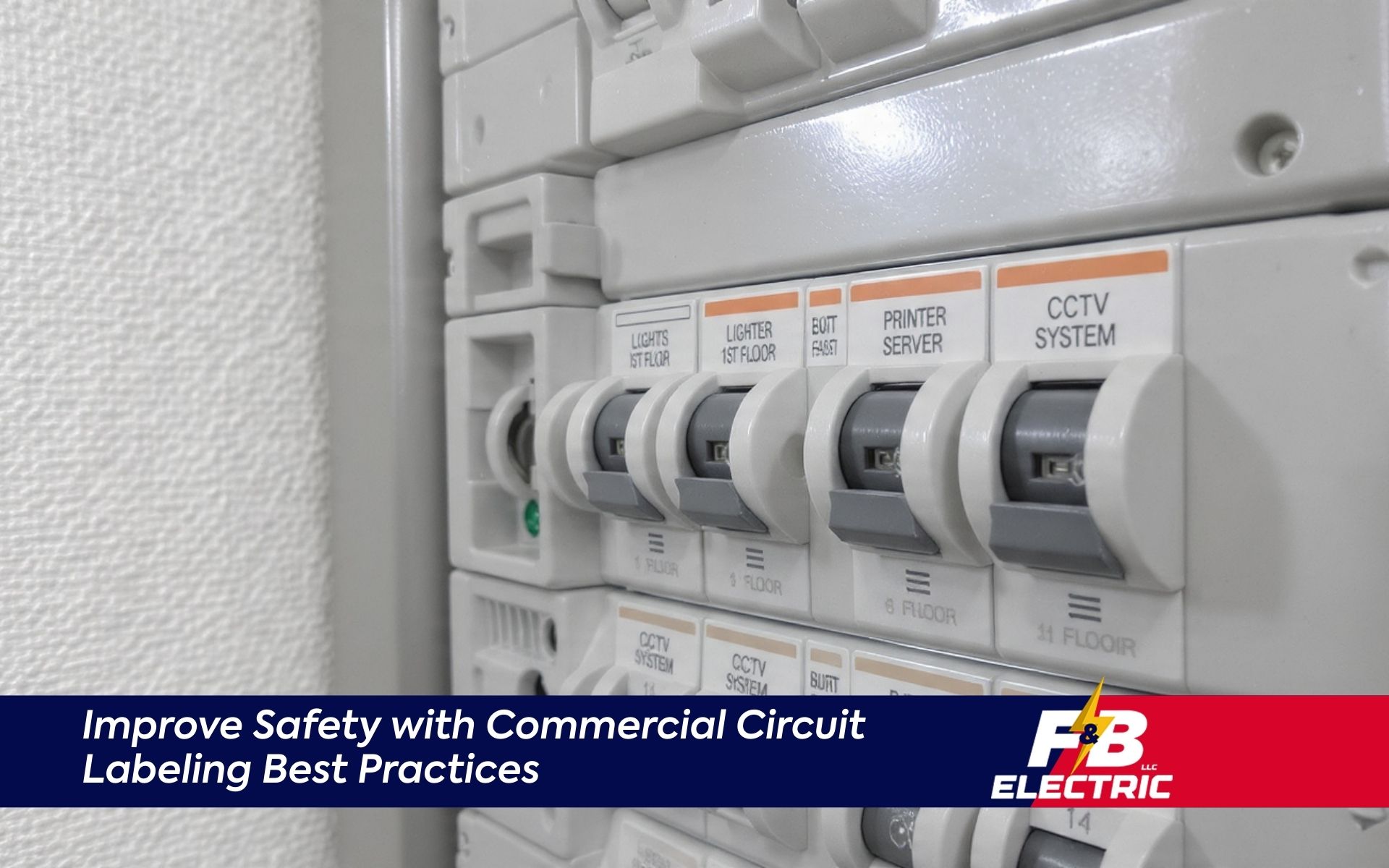
Commercial Circuit Labeling Best Practices keep office electrical systems safer and easier to manage. Although the wiring is often hidden, clear labels reduce confusion and protect people during emergencies.
Moreover, accurate panel and circuit labels cut downtime and speed repairs. As a result, electricians can work faster and with less risk.
Importance of Comprehensive Circuit Labeling in Commercial Buildings
Commercial buildings may have hundreds of circuits for lighting, HVAC, cameras, and equipment. Therefore, a clear map helps teams find the right breaker quickly. Also, updated labels prevent guesswork after upgrades or remodels.
- Match every breaker to its real load.
- Update labels after every change.
- Keep names consistent across floors.
Benefits of Proper Circuit Labeling for Safety and Efficiency
Clear labels lower accident risk and help staff shut off power fast. In addition, technicians avoid trial-and-error testing. Consequently, work takes less time and critical systems stay online. Commercial safety labeling also makes layouts easier for new contractors.
Key Elements of Commercial Circuit Labeling Best Practices
Commercial Circuit Labeling Best Practices rely on consistency, readability, and accuracy. For example, use durable materials, clear fonts, and simple descriptions. Also, keep a digital record to back up physical tags and support audits.
- Use uniform naming and circuit numbers.
- Include panel location and load details.
- Review labels on a set schedule.
Understanding Panel Labeling Standards
Panel labeling standards focus on clarity and uniform placement. Therefore, labels should stay legible in low light and busy rooms. Also, remove outdated or duplicate tags to avoid confusion during maintenance.
What standards often require
Many rules cover label size, placement, and clear circuit descriptions. In addition, local guidance may define the format for breaker numbers and load names.
Implementing Clear and Accurate Labels for Electrical Panels
Choose laminated vinyl or industrial polyester labels to resist heat and wear. Also, use unique panel codes like A1 or B2 to prevent mix-ups. For safer routines, pair your labels with an electrical inspection checklist that supports consistent reviews.
Best Practices for Labeling Individual Circuits
Assign each circuit a breaker number and a short, plain name, like “Server Room AC.” Then, support office circuit mapping with simple diagrams. Also, follow a Circuit labeling guide in MD or local rules to stay consistent.
- Use printed labels for readability.
- Avoid unclear abbreviations.
- Update labels right after work.
Enhancing Troubleshooting and Repair with Commercial Circuit Labeling Best Practices
Commercial Circuit Labeling Best Practices help technicians go straight to the correct breaker. As a result, they avoid shutting down critical loads by mistake. Additionally, keep an electronic log and simple maps so new staff learn layouts faster.
Ensuring Compliance with Safety Regulations through Circuit Labeling
With Commercial Circuit Labeling Best Practices, you support code compliance and reduce risk. Therefore, use recognized symbols and naming rules that inspectors expect. Also, run regular audits and fix mismatches between labels and maps immediately.
Training and Education on Circuit Labeling for Maintenance Teams and Electricians
Training keeps labels accurate long after installation. For example, teach staff how to format names, place tags, and update digital records. Moreover, refresher sessions help teams stay aligned after renovations or equipment changes.
- Practice locating breakers using maps.
- Review labeling rules during onboarding.
- Collect technician feedback for updates.
Frequently Asked Questions
How often should we update circuit labels?
Update labels right after any electrical change. Also, review them during scheduled inspections.
What should a circuit label include?
Include breaker number, a clear load name, and the related area or room. Keep wording simple.
Should we use color-coding?
Yes, when it matches your site rules. However, don’t rely on color alone for identification.
Do we need digital records if labels are printed?
Yes, because digital files add backup and speed audits. They also help track changes over time.
What causes the most labeling errors?
Outdated tags after remodels are common. In addition, unclear abbreviations often confuse new technicians.
Creating a Safe and Efficient Commercial Environment through Circuit Labeling
Commercial Circuit Labeling Best Practices create a safer, more efficient workplace for everyone. Moreover, combining physical tags with office circuit mapping reduces downtime and stress. If you need expert support, explore Baltimore electrician services and then contact F&B Electric to plan a clean, compliant labeling system.