
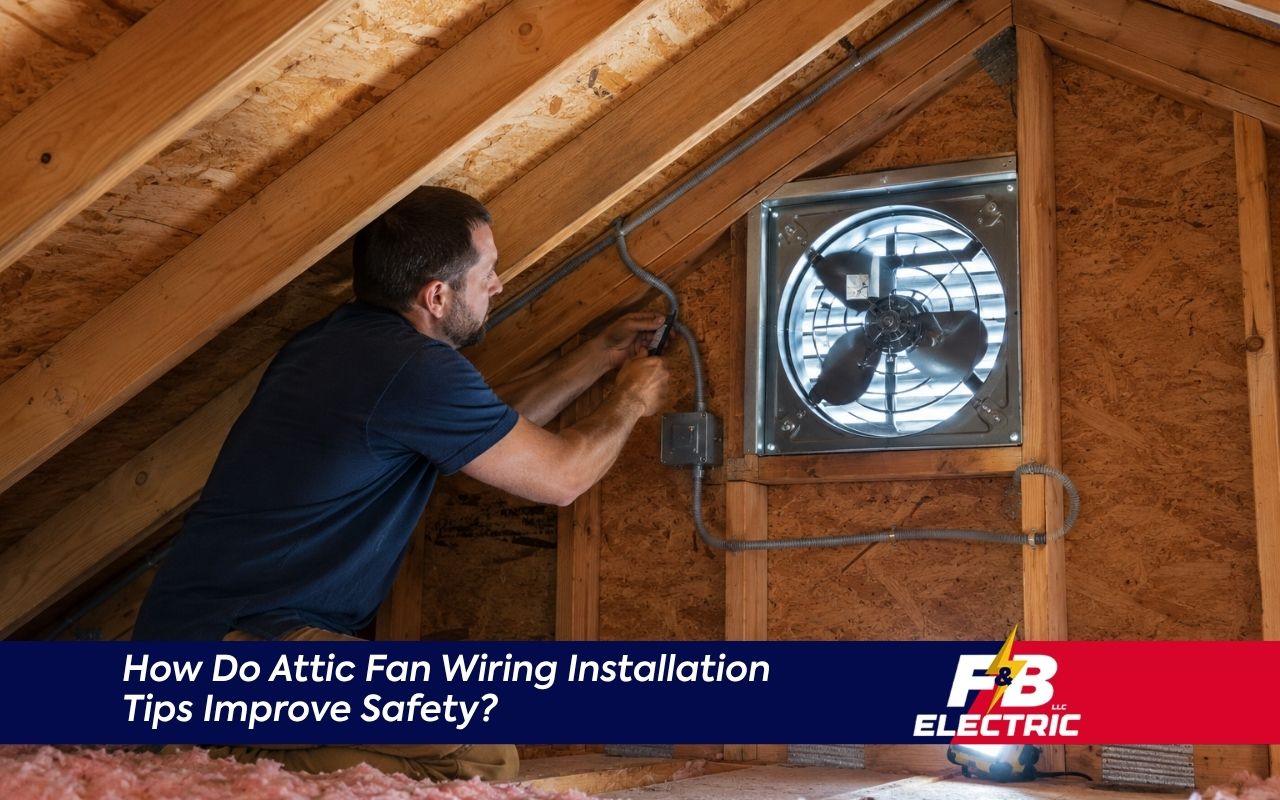
Hot attic air can make a Maryland home harder to cool, especially when wiring is rushed or unclear. Before adding a fan, review the circuit, controls, vents, and safety steps. For home wiring projects, our Residential Electrician in Baltimore, MD page can help you plan the next step.
How Do Attic Fan Wiring Installation Tips Improve Safety?
Attic fan wiring installation tips improve safety by helping homeowners plan the circuit, control switch, thermostat, and electrical connections before work begins. Safe wiring reduces shock risks, overheating, loose connections, and fan failure while supporting better attic ventilation. For more help with safe home wiring, visit Home Electrical Safety.
Attic fan wiring connects a powered ventilation fan to a safe electrical source, control, and sometimes a thermostat. Homeowners need it when attic heat builds up, moisture becomes a concern, or airflow feels poor. The goal is to move hot air out while keeping wiring protected, grounded, and code-aware.
Plan Safer Attic Fan Electrical Wiring Before Work
Safe attic fan electrical wiring starts with a clear plan before any wires touch. The circuit, breaker, cable route, junction box, grounding path, and control location should be reviewed first, so the fan can run without unsafe heat, loose connections, or overload concerns.
Many attic fan wiring installation tips focus on preparation because attic work can hide risks. Insulation, framing, tight spaces, and poor lighting can make simple tasks harder. Before work begins, we check how the fan will receive power and whether the existing circuit can support the load.
At F&B Electric LLC, we look at the wiring path, access point, and fan location before recommending the safest setup. A fan should not be tied into a random wire just because it is nearby. The right circuit choice helps prevent nuisance trips and overheating.
- Confirm the breaker serving the planned circuit.
- Check manufacturer wiring instructions before connecting power.
- Use approved cable, boxes, connectors, and staples.
- Keep wiring away from sharp edges and moving parts.
- Shut off power before inspecting or handling wiring.
The National Fire Protection Association shares electrical safety guidance because home wiring problems can create fire and shock risks. That is why we recommend careful planning instead of guesswork.
Choose The Right Attic Ventilation Circuit Layout First
A good attic ventilation circuit layout supports both airflow and electrical safety. The fan needs a stable power source, proper intake ventilation, and a clean exhaust path. Without enough intake air, the fan may work harder while delivering less cooling benefit.
An attic fan does not work alone. It pulls hot air out, but outside air must enter through soffit or other intake vents. When intake vents are blocked by insulation or debris, the fan may create pressure problems and reduce comfort instead of improving it.
According to the U.S. Department of Energy, attic moisture and improper ventilation are closely connected. A dry, well-ventilated attic can help reduce moisture-related problems. Balanced intake and exhaust vents support better attic performance.
Before installing a fan, compare the main location options:
- Gable-mounted fan: useful when a gable wall allows direct exhaust.
- Roof-mounted fan: useful near the upper attic area.
- Thermostat-controlled fan: useful when automatic operation is preferred.
- Manual switch control: useful when the homeowner wants direct control.
Our team at F&B Electric LLC helps homeowners understand how the wiring plan and ventilation plan work together. When the layout is clear, the installation feels less confusing and more predictable.
Connect Thermostat Attic Fan Wiring With Clear Controls
Thermostat attic fan wiring allows the fan to turn on when attic temperature reaches a set level. This control can improve convenience, but it must be wired correctly, placed properly, and matched to the fan model to avoid unreliable operation.
A thermostat can be built into the fan or installed as a separate control. In either case, the thermostat should be rated for the fan and installed according to the manufacturer’s instructions. A mismatched control can cause poor fan response or wiring problems.
Some homeowners also want a wall switch. That setup can work when planned correctly, but the control path must be simple and safe. When customers ask F&B Electric LLC about controls, we explain which option fits the fan, attic layout, and daily use.
Important control details include:
- Thermostat rating for the fan load.
- Clear access for future testing.
- Secure wire connections inside approved boxes.
- Proper grounding for metal parts.
- Manufacturer-approved wiring diagrams.
If the fan does not start during testing, power should be turned off before checking connections. A buzzing sound, loose wire, or repeated breaker trip should not be ignored. For related support, review our Hiring a Professional Electrician resource.
Follow Attic Fan Safety In MD Requirements Carefully
Attic fan safety in MD depends on safe wiring, proper materials, local code awareness, and careful testing. Maryland homeowners should avoid unsafe shortcuts because attic wiring is exposed to heat, dust, insulation, and access challenges that can hide hazards.
Local requirements can vary by county, project type, and electrical scope. Before wiring a new fan, it is wise to check permit and inspection needs. We do not guess on code questions because a safe installation must match the home and local rules.
With F&B Electric LLC, you get clear guidance before the work begins. We review the fan instructions, wiring route, breaker plan, and access conditions. Then we explain the safest next step in simple terms.
Power must be shut off and verified before any attic fan wiring is handled. A non-contact voltage tester can help confirm the circuit is not live, but electrical testing should still be done with care. If anything feels unclear, contact a licensed electrician.
Homeowners should also think about the attic space itself. Heat, low headroom, exposed nails, and loose insulation can increase the risk of injury. Safe installation includes safe movement, stable lighting, and protected wiring from start to finish.
Prepare A Simple Service Visit For Safe Installation
A smooth service visit starts with basic information about the fan, attic access, existing wiring, and preferred control style. When these details are reviewed early, the installation can be planned with fewer surprises and a safer wiring approach.
When you contact us, we first ask about the fan type, attic access, current ventilation, and whether a thermostat or wall switch is desired. We may also ask where the fan will be mounted and whether the attic already has a nearby circuit.
After scheduling, our team reviews the practical details and explains what should happen next. At F&B Electric LLC, we keep the conversation clear because electrical work should not feel mysterious or rushed.
- We ask about the fan model and control type.
- We review attic access and wiring conditions.
- We inspect the planned circuit and connection points.
- We explain safe options before work begins.
- We test the fan after wiring is complete.
Before the visit, clear stored items around the attic entry when possible. Also, keep the fan manual available. The fan manual often shows wiring details that matter for safe installation. If you need project help, visit our Residential Electrician in Baltimore, MD page.
Maintain Cooler Attic Air With Routine Checks Yearly
Long-term attic fan performance depends on clean vents, secure wiring, working controls, and routine checks. A fan that was wired correctly can still lose efficiency if dust builds up, vents clog, or thermostat settings no longer match the home’s needs.
Maintenance should begin with power off. Fan blades can collect dust, and attic insulation can shift near the unit. During a safe inspection, we look for loose connections, worn parts, blocked vents, and signs of heat around wiring or controls.
Attic fan wiring installation tips are not only for the first setup. They also help homeowners understand warning signs after installation. Unusual noise, burning smells, repeated breaker trips, or a fan that will not start need prompt attention.
Ventilation should also be checked after storms or seasonal changes. Leaves, dust, insulation, or pests can block airflow. When intake vents stay clear, the fan can move air more effectively and reduce trapped heat in the attic.
Our crew can help review wiring concerns, controls, and safety questions. For direct support, use the Contact F&B Electric LLC page when you are ready to discuss your project.
Frequently Asked Questions
Can I connect an attic fan to an existing circuit?
An attic fan may use an existing circuit only when the circuit can safely handle the added load and meets local requirements. A licensed electrician can check the breaker, wiring, and available capacity. You can also review Residential Electrician in Baltimore, MD for home wiring help.
Does a thermostat make attic fan wiring safer?
A thermostat does not replace safe wiring, but it can make fan control easier. Thermostat attic fan wiring should use a compatible control, secure connections, and the correct wiring diagram. Poor control wiring can cause the fan to run poorly or fail to start.
What safety signs should I watch after installation?
Watch for buzzing sounds, hot smells, repeated breaker trips, loose covers, or a fan that turns on and off strangely. These signs may point to wiring or motor issues. For practical prevention tips, visit Home Electrical Safety.
Why does attic ventilation matter with fan wiring?
Attic ventilation matters because the fan needs intake air to move heat out. If soffit vents are blocked, the fan may struggle and provide less benefit. A proper attic ventilation circuit supports airflow, cooling, and moisture control.
When should I hire an electrician for attic fan work?
Hire an electrician when the circuit is unclear, a new wire run is needed, controls are confusing, or local code questions apply. Electrical work in attics can involve heat, tight spaces, and hidden wiring. Start with Hiring a Professional Electrician for guidance.
Schedule Safer Fan Wiring Support For Your Home
Attic fan wiring installation tips can make planning easier, but safe installation still depends on the home, fan model, circuit, and controls. When you want clear guidance before wiring starts, contact our team through Contact F&B Electric LLC and tell us about your attic fan project.