
Flickering lights, small shocks, and buzzing outlets can point to deeper wiring safety concerns. Learning the basics helps you know when to stop guessing and request Electrical Code Compliance support before a small issue becomes a larger hazard.
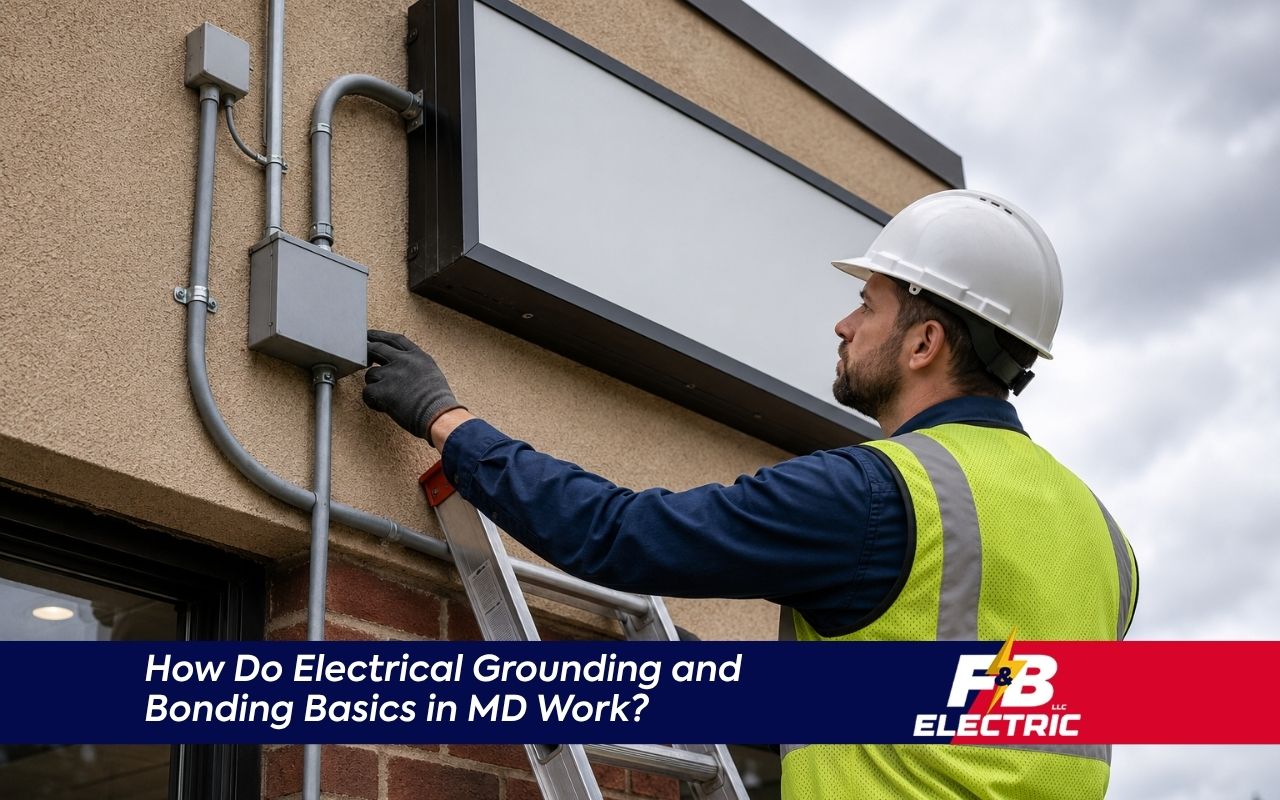
How Do Electrical Grounding and Bonding Basics in MD Work?
Electrical grounding and bonding basics in MD explain how electrical systems move fault current safely and keep metal parts at the same voltage level. Together, grounding and bonding reduce shock risks, support breaker operation, and help Maryland properties meet electrical safety expectations through safe Electrical Services.
Grounding and bonding are safety methods used in homes and businesses to control unwanted electrical energy. Grounding connects a system to the earth, while bonding connects metal parts together. People need these systems when they want safer wiring, fewer shock risks, and better protection from faults, surges, and damaged equipment.
Grounding Creates Safer Paths For Fault Current In Maryland
Grounding gives fault current a safer route away from people, equipment, and exposed metal parts. In Maryland homes and businesses, a proper grounding path can help breakers respond when a wiring fault occurs. At F&B Electric LLC, we check grounding conditions before recommending the safest next step.
A grounded electrical system is not just about placing a rod in the soil. It must create an effective path for unwanted current. According to OSHA, grounding conductors and bonding conductors must be able to carry fault current safely.
Maryland properties can face different soil, moisture, and building conditions. Because of that, grounding should be reviewed as part of a full safety picture. Loose clamps, corrosion, damaged conductors, and hidden wiring issues can all reduce protection.
- Grounding helps move fault current away from touchable metal.
- Grounding can support faster breaker or fuse response.
- Grounding helps stabilize voltage during certain fault events.
- Grounding should be inspected when symptoms appear.
Electrical grounding and bonding basics in MD are especially useful when a property has older wiring, panel changes, storm damage, or repeated electrical problems. When something feels unsafe, the safest action is to stop using the affected area and request a professional review.
Bonding Connects Metal Parts For Safer Electrical Systems
Bonding joins metal parts so they share the same electrical potential. This lowers the chance that a person touches two metal surfaces with different voltage levels. Our team at F&B Electric LLC explains grounding vs bonding in simple terms before work begins.
Grounding vs bonding is a common point of confusion. Grounding connects electrical systems to the earth. Bonding connects metal parts together and to the grounding path. Both methods work together, but they do different jobs.
Bonding may involve metal boxes, service equipment, water piping, gas piping, raceways, and other conductive parts. The goal is to create a continuous, low-resistance path that allows protective devices to respond during a fault.
- Grounding connects the system to earth.
- Bonding connects metal parts together.
- Grounding helps control fault current paths.
- Bonding helps reduce touch voltage differences.
NFPA explains that grounding and bonding are not the same, yet they work closely together in electrical safety systems. That is why both should be reviewed during Whole Home Grounding Inspection work.
Grounding Electrode Systems Reduce Shock And Surge Risks
A grounding electrode system uses rods, plates, metal water piping, concrete-encased electrodes, or building steel to connect an electrical system to earth. This system helps move fault energy into the ground. With F&B Electric LLC, customers receive clear guidance on what we inspect and why.
The grounding electrode system is one of the most important parts of grounding. It must be connected correctly and protected from damage. When connections are loose or corroded, the system may not perform as intended.
A grounding electrode system can include more than one electrode. Multiple electrodes may improve reliability when soil, moisture, or building conditions affect performance. Access to electrodes should remain clear so inspections and repairs are easier.
A proper grounding electrode system gives fault current a planned path instead of leaving energy to travel through unsafe surfaces. This is one reason electrical grounding and bonding basics in MD matter for homes, businesses, additions, and electrical upgrades.
Maryland Code Rules Clarify Electrical Bonding Requirements For Properties
Maryland electrical work must follow the National Electrical Code or the local electrical code and amendments adopted by the county. These rules affect grounding electrode systems, bonding conductors, equipment grounding, and inspections. We review the visible conditions before explaining code-related next steps.
Electrical bonding requirements help define how metal parts must be connected. These rules are important because electrical faults can energize metal surfaces. When bonding is missing or weak, a breaker may not trip as expected.
Maryland law states that electrical installations in the state must conform to the National Electrical Code or the electrical code and amendments adopted by the county. Local inspection needs can also vary by project, property type, and jurisdiction.
Electrical bonding requirements may affect:
- Service equipment and panels
- Metal raceways and enclosures
- Water piping and other conductive piping
- Grounding electrode conductors
- Bonding jumpers and connectors
Because code rules can depend on the property, we do not guess from symptoms alone. Before making recommendations, we check accessible components and guide customers through Electrical Services that match the concern.
Bonding Wire Safety In MD Supports Safer Repairs
Bonding wire safety in MD depends on correct conductor sizing, secure connections, approved fittings, and protected wire routing. A bonding wire must stay continuous and reliable. When customers contact F&B Electric LLC, we ask about symptoms, recent work, and affected areas first.
Bonding wires should not be treated as spare wires or optional parts. A bonding wire may be the path that allows a breaker or fuse to react when a fault energizes metal. Damaged bonding wires should not be ignored.
Safe bonding wire work usually includes the right conductor type, solid clamps or lugs, and routing away from heat or damage. Sharp bends, loose screws, corrosion, and missing labels can make future inspection harder.
Bonding wire safety in MD also matters after renovations. Plumbing changes, panel replacements, generator connections, and service upgrades can affect bonding. If recent work changed metal piping, service equipment, or wiring paths, a review can help confirm that protection remains in place.
Warning Signs Reveal Grounding And Bonding Problems Early
Grounding and bonding problems can show up as small shocks, flickering lights, buzzing outlets, tripped breakers, or visible corrosion near grounding parts. These signs do not prove one exact cause. However, they do show that the system deserves careful inspection.
Some warning signs seem minor at first. However, electrical symptoms can point to loose connections, damaged conductors, overloaded circuits, poor bonding, or grounding problems. A small shock from an appliance is a safety warning, not a normal event.
- Lights flicker without a clear load change.
- Outlets buzz, spark, or feel warm.
- Appliances give a tingling shock.
- Breakers trip more than expected.
- Ground rods or clamps look corroded.
- Metal boxes or panels show damage.
When these signs appear, avoid opening panels or touching suspected conductors. Instead, note where the problem happens and when it started. This information helps us understand the issue before inspection.
Service Inspections Guide Safer Grounding And Bonding Decisions
A service inspection helps identify visible grounding and bonding concerns before repair decisions are made. The process should be simple for the customer. We ask clear questions, check accessible components, explain findings, and recommend next steps without making unsupported promises.
When you contact us, we first ask about the electrical concern. Useful details include flickering lights, shocks, recent renovations, panel changes, storm damage, or appliances involved. These details help us prepare for the visit.
During the visit, we may review visible grounding conductors, bonding connections, panel conditions, grounding electrodes, and related safety concerns. Before work begins, we explain what we found in plain language so you can make an informed decision.
- Share the concern and affected areas.
- Review recent electrical or plumbing changes.
- Inspect accessible grounding and bonding parts.
- Explain risks, findings, and repair options.
- Complete approved work when authorized.
After the review, we help you understand what was checked and what still needs attention. For code-related concerns, the next step may include repair, further testing, or coordination with inspection requirements.
Frequently Asked Questions
What is the difference between grounding and bonding?
Grounding connects an electrical system to the earth, while bonding connects metal parts together. Grounding vs bonding matters because both protect people in different ways. A safety review through Whole Home Grounding Inspection can help identify concerns.
Why do Maryland homes need a grounding electrode system?
A grounding electrode system gives fault current and some surge energy a planned path into the earth. This helps reduce shock risk and supports safer electrical system performance. The system should be connected, protected, and inspected when damage or symptoms appear.
What are common signs of bonding wire problems?
Common signs include small shocks, buzzing equipment, corrosion, loose clamps, and electrical issues after renovations. Bonding wire safety in MD should be reviewed when metal piping, panels, or wiring have changed. You can request help through our Contact Our Electrical Team page.
Do electrical bonding requirements apply to older properties?
Older properties may still need updates when electrical work, safety issues, or inspection requirements apply. Electrical bonding requirements can vary by system and jurisdiction. A review through Electrical Code Compliance support can help clarify the next step.
Can I inspect grounding and bonding myself?
You can look for obvious warning signs, such as corrosion or damaged visible wires. However, do not open panels or touch suspected conductors. Grounding and bonding issues can involve energized parts, so a licensed electrical review is the safer choice.
Schedule Safer Electrical Guidance Before Problems Grow Worse
Electrical grounding and bonding basics in MD help you understand when electrical symptoms need attention. With F&B Electric LLC, you can ask clear questions, share what you noticed, and request practical guidance through Contact Our Electrical Team before the risk grows.