
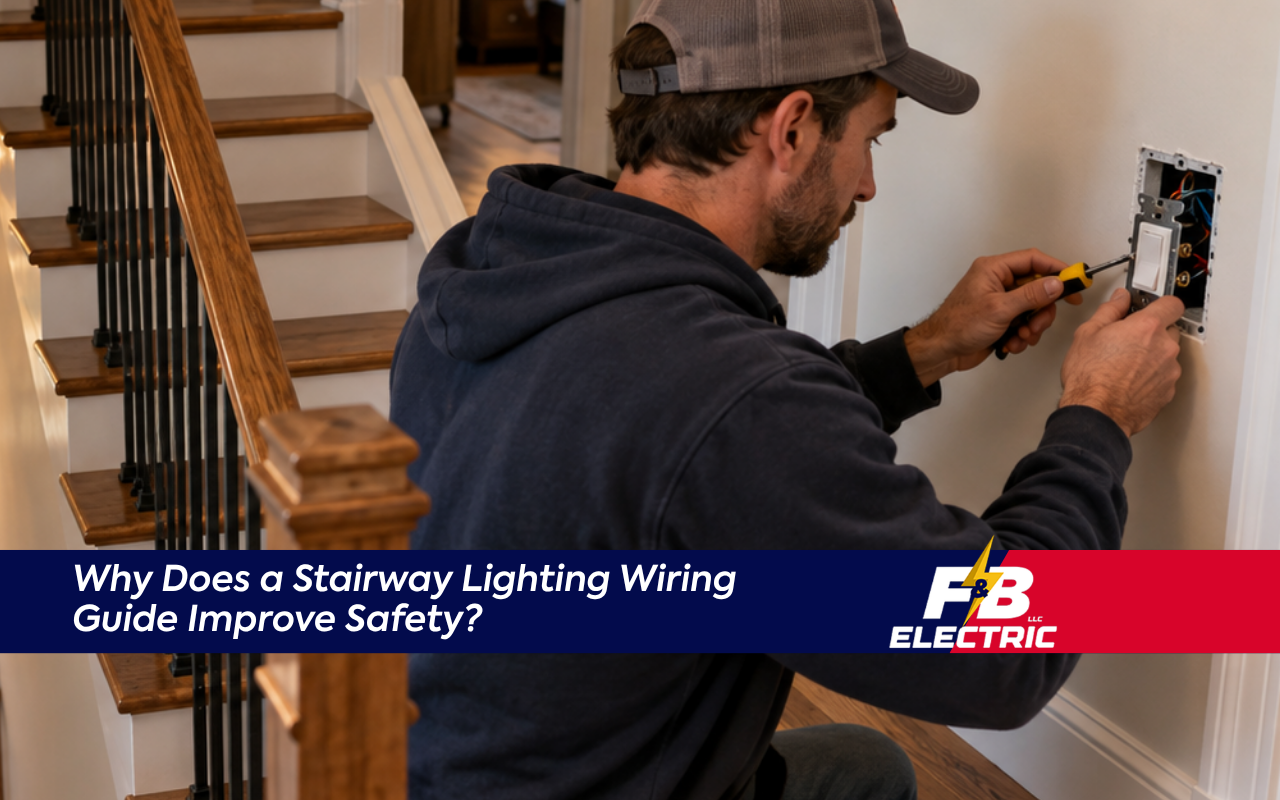
A stairway lighting wiring guide explains how switches, fixtures, cable, and power work together so users can control stair lights from useful locations. Proper planning supports safer movement and control the light from both ends. Homeowners can also review Modern Lighting Installations for Safer, Brighter Homes when planning fixture updates.
Stair lighting wiring connects one or more switches to fixtures that illuminate steps, landings, and nearby walking areas. Homeowners need it when existing controls are inconvenient, damaged, or unclear. The goal is to provide dependable light before someone enters the stairs, while avoiding unsafe guesses about existing electrical connections.
Follow Stairway Lighting Wiring Guide Basics for Better Control
Stairway light switch wiring commonly allows one fixture to respond from more than one switch location. This arrangement makes the stairs easier to light before entering them. It also helps users switch the light off after reaching the other floor without walking back.
Before touching a switch box, the correct breaker must be turned off and the circuit tested. Homeowners should verify the circuit is de-energized with a suitable tester. Wire color alone does not prove a wire’s purpose, especially in older or modified systems.
- Note where each existing conductor connects.
- Check for loose or damaged insulation.
- Use the replacement switch manufacturer’s diagram.
- Stop if the existing layout is unclear.
With F&B Electric LLC, you can start by reviewing Explore More Electrical Services | Trusted Professionals when the circuit needs broader electrical attention.
Choose Three Way Switch Stairs Controls for Convenience
A three way switch stairs setup lets the same light operate from two switch locations. One switch is usually near each end of the staircase. This gives users a practical way to turn the light on before entering and off after leaving.
Despite the name, a basic three-way arrangement normally uses two switches. Each switch changes the electrical path through the circuit. Because terminal functions matter, replacing a switch without tracking the old connections can cause confusing behavior. Identify every connection before moving it whenever the existing setup is known and safe to document.
If a light only works when one switch stays in a certain position, the circuit may need inspection. Repeated trial-and-error wiring is not a safe troubleshooting method.
Strengthen Stair Lighting Safety With Clearer Stair Visibility
Good stair lighting safety depends on seeing each tread, landing, railing, and nearby doorway before moving through the space. Controls should be easy to reach, while fixtures should reduce dark corners and harsh shadows. Reliable lighting is especially useful during nighttime movement.
The U.S. Consumer Product Safety Commission recommends light switches at both the top and bottom of stairs. It also notes that poor lighting can hide slipping and tripping hazards. That guidance supports easy switch access and consistent illumination across the walking path.
- Replace failed bulbs promptly.
- Keep stairs and landings free of clutter.
- Watch for flickering or buzzing.
- Use steady, even light without strong glare.
NFPA also lists flickering or dimming lights, burning odors, and frequent breaker problems as reasons to contact a qualified electrician.
Plan Hallway Lighting Circuit in Halethorpe, MD Confidently
A hallway lighting circuit in Halethorpe, MD should support the way people move between hallways, landings, and stairs. Switch locations and fixture coverage should make the walking path visible before someone enters a darker area. Existing wiring condition also matters before adding new controls.
Long hallways may need more than one fixture to reduce shadows. Older circuits may also have layouts that differ from newer installations. Local permit and electrical requirements should be confirmed before major circuit changes begin. Our team at F&B Electric LLC can review the concern without relying on assumptions about hidden wiring.
For location-focused electrical information, see Residential Electrician in Halethorpe, MD | Expert Service. When wiring does not match the expected layout, professional inspection is safer than guessing.
Prepare Your Stair Lighting Project With Clear Steps
A clear repair or installation process starts with the lighting problem, the switch behavior, and the areas that need better visibility. Next, the existing circuit should be reviewed before wiring changes are planned. Customers should understand the proposed next step before work begins.
When you contact F&B Electric LLC, we first need to understand what the light does now and what you want to improve. Helpful details include switch locations, flickering, breaker trips, recent fixture changes, and whether the wiring arrangement is known.
- Describe the lighting concern or project goal.
- Review switches, fixtures, boxes, and visible wiring conditions.
- Identify the likely repair or installation approach.
- Explain safe options before electrical work starts.
- Check operation from both ends after the work.
This process creates clear project expectations. To discuss the next step, use Contact Us | Expert Electrical Solutions & Support.
Frequently Asked Questions
What causes a three-way stair switch to work incorrectly?
Incorrect terminal connections, loose wiring, a worn switch, or an unexpected older circuit layout can cause unusual operation. If one switch must remain in a certain position, the system deserves inspection. Avoid moving conductors at random, because the common and traveler connections need correct identification.
When should warm stairway switches receive professional electrical attention?
Unusual heat, buzzing, burning smells, flickering, or repeated breaker trips should not be ignored. Stop using damaged electrical parts when safety is uncertain. For local residential support, review Residential Electrician in Halethorpe, MD | Expert Service and arrange an appropriate inspection.
They may be connected within the same broader lighting plan, but the correct arrangement depends on the existing circuit and planned load. A wiring review should come before changes. Homeowners considering new fixtures can explore Modern Lighting Installations for Safer, Brighter Homes for related lighting options.
Should homeowners replace unidentified wires in older stair circuits?
No wire should be moved based only on color or guesswork. Older homes can contain previous repairs or wiring methods that are not obvious at first glance. If the circuit cannot be identified confidently, review Explore More Electrical Services | Trusted Professionals and request qualified electrical help.
Do motion sensors replace switches for stair lighting safety?
Motion sensors can add convenience, but they should not make stair lighting harder to understand or control. The best setup depends on the home and existing circuit. Reliable manual control remains useful when someone needs light before stepping onto the stairs or when sensor coverage is limited.
Schedule Electrical Guidance for Safer Stairway Lighting Decisions
Using a stairway lighting wiring guide can help you understand switch control, fixture coverage, and warning signs before making changes. With F&B Electric LLC, you get a practical next step based on the circuit in front of us. If switches behave strangely or wiring is unclear, ask for help before the problem grows through Contact Us | Expert Electrical Solutions & Support.