
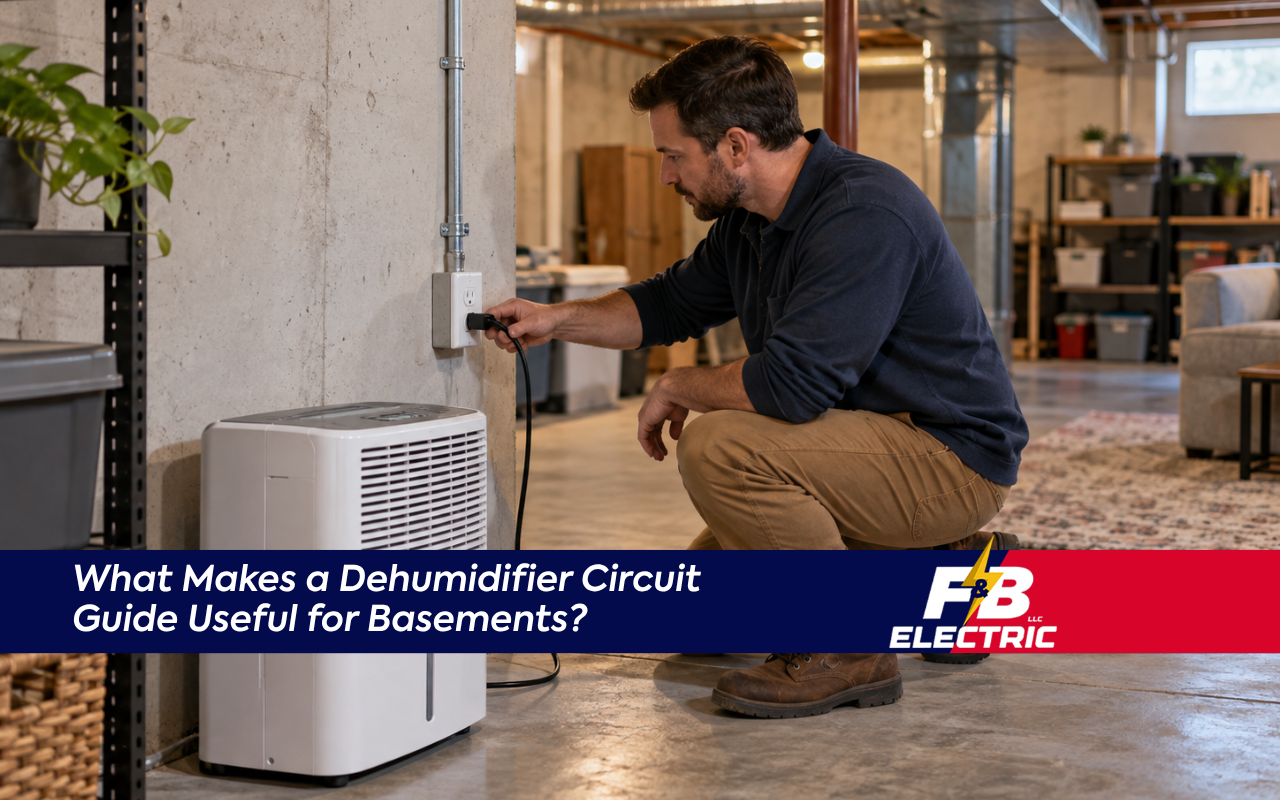
A dehumidifier circuit guide helps homeowners choose a grounded, protected outlet and confirm the circuit can support the appliance’s electrical demand. At F&B Electric LLC, we also check nearby loads, GFCI protection, moisture exposure, and warning signs before recommending a safer basement setup.
Before you plug in the unit, review our Columbia basement wiring safety tips and check the outlet, circuit, moisture exposure, and cord path. If anything looks questionable, ask us to inspect it.
Dehumidifier Outlet Requirements Protect Safer Basement Power Use
Dehumidifier outlet requirements start with a grounded receptacle in good condition, proper voltage, and a cord that reaches without strain. The outlet should stay away from standing water, leaks, and flood-prone areas. Manufacturer instructions should always guide the final connection.
With F&B Electric LLC, you can review electrical service options when an outlet location or circuit seems unsuitable. We recommend checking the appliance label before choosing a receptacle. A loose, cracked, discolored, or overheated outlet needs attention before regular dehumidifier use.
- Use a grounded receptacle that fits the plug securely.
- Keep the plug and receptacle away from possible water exposure.
- Avoid stretching the cord across walkways or under stored items.
- Plug directly into the wall unless the manufacturer allows another setup.
Basement GFCI Outlet Protection Reduces Electrical Shock Risk
A basement GFCI outlet adds protection by interrupting power when a ground fault is detected. Basements can combine electrical equipment with moisture, so GFCI protection is important. In Columbia, current local requirements should guide permanent wiring changes and receptacle protection.
Howard County lists the 2023 National Electrical Code and local amendments as effective June 3, 2024. The Electrical Safety Foundation International also identifies basements among locations where GFCI protection is required. GFCI protection can come from a receptacle or breaker, so missing TEST and RESET buttons do not prove that protection is absent.
If a GFCI keeps tripping, do not bypass it. The trip may point to moisture, appliance trouble, or another electrical fault. We can help determine what the protection is responding to.
This Dehumidifier Circuit Guide Prevents Common Basement Overloads
This dehumidifier circuit guide helps prevent overloads by treating the dehumidifier as part of the whole circuit, not an isolated device. A basement appliance circuit may also serve freezers, laundry equipment, tools, or other loads that cycle at different times.
During a circuit review with F&B Electric LLC, we check the breaker, wiring, connected equipment, and appliance rating before recommending added capacity. Repeated breaker trips are a warning sign, not a normal reset routine. Never install a larger breaker just to stop tripping because the wiring must also match that breaker.
- Read the dehumidifier label and manufacturer instructions.
- Note other appliances connected to the same circuit.
- Track which equipment is running when the breaker trips.
- Ask for a circuit review when load conflicts keep returning.
For related home concerns, our Columbia residential electrical support explains common warning signs and upgrade needs.
Warning Signs Reveal Overloaded Basement Electrical Circuit Problems
Repeated breaker trips, buzzing, unusual odors, loose plugs, visible damage, or excessive outlet heat can indicate an electrical problem. Stop using the affected equipment when you notice sparks, burning smells, or significant heat. Those conditions deserve professional inspection instead of repeated resets.
Basement conditions can make problems appear irregular because appliances cycle at different times. A freezer may start while the dehumidifier is already running. Heavy rain may also change moisture conditions around the equipment. Note what was running when the problem happened, but do not open the panel or modify internal wiring yourself.
Good moisture control electrical safety in Columbia, MD also requires keeping plugs away from drains, leaks, sump openings, and flood-prone areas. If water reaches an electrical connection, stop using the setup until it can be evaluated safely.
Electrical Reviews Prepare Your Dehumidifier Setup Before Use
A clear electrical review starts with the appliance rating, outlet condition, breaker size, connected loads, and basement moisture risks. When customers contact F&B Electric LLC, we ask what the dehumidifier is doing, when problems occur, and what else uses the same circuit.
From there, we keep the review simple and focused on the actual setup. The goal is to identify the safest practical next step without guessing about circuit capacity or outlet protection.
- Share the appliance rating and any breaker-tripping history.
- Show us the outlet and nearby moisture conditions.
- We review the circuit and connected loads.
- We explain whether the existing setup needs attention.
- Permanent changes are planned around current local requirements.
If the setup may need a new receptacle or circuit change, review our Columbia residential electrical support and ask us about a property-specific evaluation.
Frequently Asked Questions
Does a dehumidifier always need a dedicated basement circuit?
No. A dedicated circuit is not automatically required for every dehumidifier. The correct setup depends on the appliance rating, manufacturer instructions, circuit capacity, and other connected loads. Our electrical service options can help when the existing circuit seems overloaded or unsuitable.
What outlet should I use for a basement dehumidifier?
Use a grounded receptacle in good condition that matches the appliance instructions and applicable protection requirements. Keep the connection away from water and avoid loose or damaged outlets. Our Columbia basement wiring safety tips explain other concerns that matter in damp lower levels.
Why does my breaker trip when dehumidifier starts running?
A breaker may trip because the circuit is overloaded, the appliance has a problem, or another electrical fault is present. Track what else was operating at the time. For recurring trips, our Columbia residential electrical support can help you understand when professional troubleshooting makes sense.
Can I plug a dehumidifier into an extension cord?
Plug the dehumidifier directly into a suitable wall receptacle unless the manufacturer specifically allows another arrangement. Extension cords add connection points and may be exposed to damage or moisture. A permanent extension-cord setup is not a substitute for a properly located receptacle that supports the appliance safely.
When should a warm basement outlet concern homeowners?
Noticeable or excessive heat, discoloration, buzzing, burning odors, or a loose plug deserve attention. Stop using the outlet if you see sparks, smell burning, or find visible damage. Heat that keeps returning should be inspected rather than treated as a normal result of long appliance operation.
Professional Planning Strengthens Moisture Control Electrical Safety in Columbia, MD
Basement humidity control works best when the electrical setup supports the appliance safely. At F&B Electric LLC, we can review outlet condition, GFCI protection, circuit loading, and nearby moisture risks before you depend on the unit regularly. Use our contact our electrical team page when you want help planning the next step.