
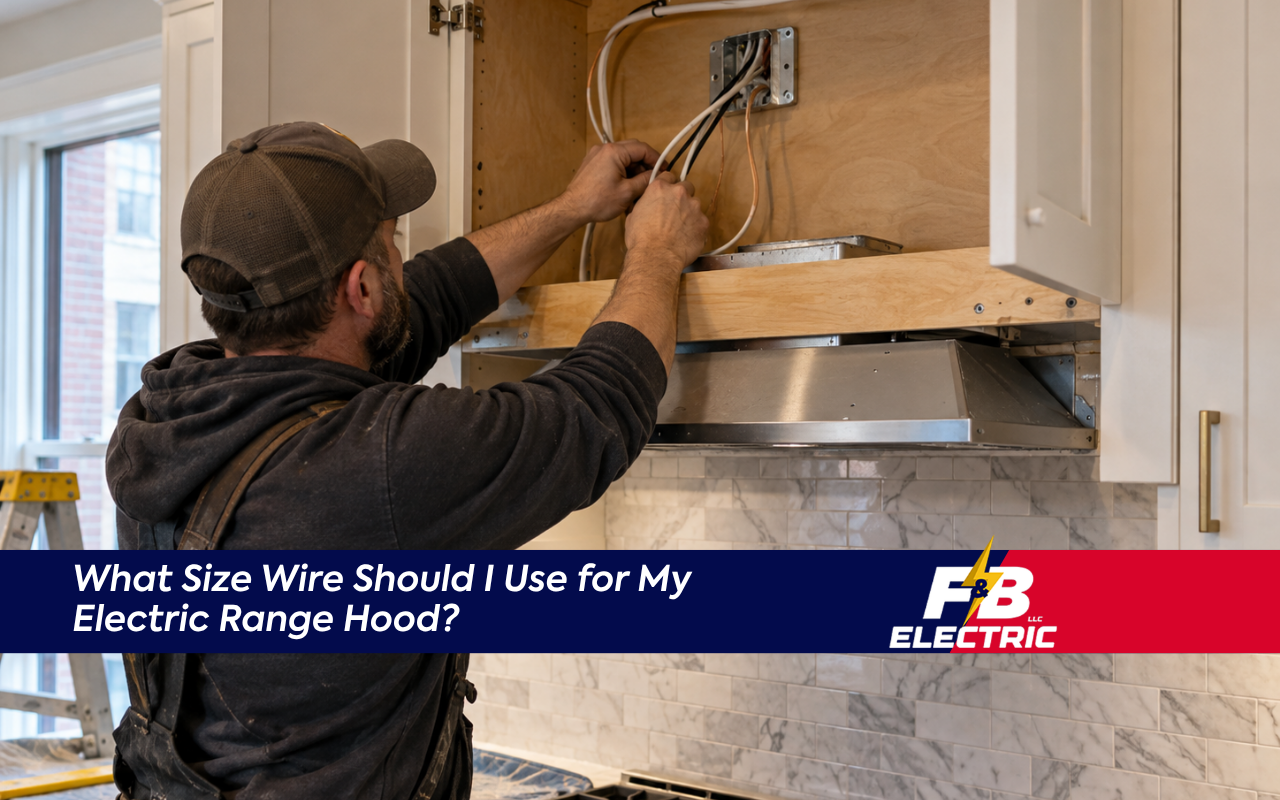
Range hood electrical wiring is safest when the connection matches the appliance instructions, branch-circuit capacity, grounding needs, and local requirements. The wiring should also stay clear of heat, sharp metal, mounting hardware, and ductwork.
Proper planning before installation reduces rework and supports dependable kitchen ventilation. Reviewing electrical services early can help you avoid blocked outlets, damaged wiring, and last-minute changes while keeping the installation easier to service later.
Match Range Hood Wiring to Power Requirements
The correct range hood power requirements come from the model’s nameplate and installation instructions. Voltage, current, connection type, and circuit guidance can vary by unit.
With F&B Electric LLC, we review those details before recommending a cable route, breaker arrangement, or connection method for the kitchen. Never size wiring from the hood’s width or appearance alone.
Key Electrical Details to Check
- The hood’s listed voltage and electrical rating
- Whether the unit is cord-connected or hardwired
- The capacity of the serving branch circuit
- Grounding and approved connection points
- Manufacturer instructions for the specific model
Homeowners who are also updating outlets can review kitchen outlet and circuit upgrades before final cabinet work begins.
Compare Outlet Wiring, Hardwiring, and Circuit Needs
The right connection depends on the appliance design, not personal preference. Range hood outlet wiring uses a receptacle placed where the cord can reach without being pinched or exposed to heat.
A hardwired hood connects fixed cable through the appliance’s approved wiring compartment and connector. In both cases, the connection should remain protected and serviceable.
Range Hood Electrical Planning Table
| Planning Area | What to Review | Why It Matters |
|---|---|---|
| Power requirements | Nameplate, voltage, amperage, and installation instructions | Prevents guessing from hood size or appearance |
| Outlet wiring | Receptacle location, cord reach, and access | Helps avoid pinched cords and blocked outlets |
| Hardwired connection | Approved wiring compartment, connector, and enclosure | Keeps fixed splices protected and serviceable |
| Kitchen hood circuit | Existing load, breaker arrangement, and grounding | Supports safer circuit planning |
| Ventilation layout | Duct route, cabinet opening, and mounting hardware | Prevents electrical wiring from competing with ductwork |
Choose Range Hood Outlet Wiring Carefully
Range hood outlet wiring works only when the hood is listed for cord-and-plug connection and the receptacle follows the appliance instructions and applicable code. The outlet should stay accessible and protected from physical damage.
For a hardwired setup, splices belong inside an approved enclosure. Sharp metal openings, cabinet hardware, and mounting screws must not damage the cable.
Kitchens combine moisture, heat, metal surfaces, and several appliances, so connection placement is a safety decision. Explore residential electrician in Baltimore, MD when a kitchen layout needs a professional electrical review.
Coordinate the Kitchen Hood Circuit With Ventilation
A kitchen hood circuit works best when the electrical route and duct path are planned together. The outlet, junction point, cabinet opening, duct, and mounting hardware can compete for the same small space.
Coordinating these details early protects wiring and keeps the power connection reachable for future service. It also reduces the chance of drilling into hidden wiring during cabinet or hood installation.
Useful Layout Decisions
- Keep cable away from duct joints and sharp edges.
- Avoid placing a receptacle behind blocked hood components.
- Mark mounting points before drilling near hidden wiring.
- Keep the electrical connection separate from moving fan parts.
- Confirm cabinet openings before closing walls.
Plan Kitchen Ventilation Wiring in Baltimore Early
Kitchen ventilation wiring in Baltimore, MD should fit the full remodeling sequence. Before closing walls, our team checks where cabinets, ductwork, and the hood body will sit.
This keeps the electrical connection from competing with ventilation space and helps preserve access for future repairs or replacement. It also helps avoid rework after cabinets and finish materials are installed.
Follow Baltimore Wiring Rules Before Closing Walls
Baltimore electrical work must follow the applicable adopted electrical code and local procedures. Property location matters because Baltimore City and Baltimore County follow separate local processes.
When you contact F&B Electric LLC, we first confirm the property location. That distinction affects which local procedures apply, especially when adding a new circuit, moving a receptacle, or changing wiring during a remodel.
The safest next step is to verify jurisdiction before work begins. If you need help reviewing a Baltimore home project, use contact our electrical team to discuss the planned scope.
Prepare Your Range Hood Wiring Appointment
A clear appointment starts with the hood model, kitchen layout, and existing electrical setup. At F&B Electric LLC, our process focuses on understanding the appliance requirements first.
Then we check the circuit, connection point, and nearby cabinet or duct conditions. This keeps the recommendation tied to the actual kitchen.
Our Planning Process
- Share the hood model and installation instructions.
- Review the planned mounting and duct location.
- Check the existing circuit and connection area.
- Explain whether outlet wiring or hardwiring fits the unit.
- Plan the approved route before installation work begins.
Before work starts, we explain the practical next step and any visible conflicts we find. If the project also includes other kitchen circuits or receptacles, we consider those needs together.
Frequently Asked Questions
What determines whether my range hood needs dedicated power?
The appliance instructions, electrical rating, existing circuit load, and local requirements determine whether separate power is appropriate. A dedicated kitchen hood circuit should not be added by assumption alone.
Can an outlet power a cord-connected range hood safely?
Yes, when the hood is listed for cord-and-plug connection and the receptacle follows the appliance instructions and applicable code. The outlet should stay accessible and protected from damage.
When should wiring be planned during a kitchen remodel?
Plan wiring before cabinets, wall finishes, and final duct placement are completed. Early planning gives the cable, box, and receptacle enough space without competing with fasteners or ventilation parts.
Why does Baltimore jurisdiction matter for electrical permit rules?
Baltimore City and Baltimore County use separate local procedures, so the property location affects which rules apply. Confirming the location before work begins helps avoid planning mistakes.
Should I replace old wiring before installing the hood?
Not automatically. Existing wiring should be evaluated for condition, capacity, grounding, and compatibility with the hood’s listed requirements.
Protect Your Kitchen With Professional Electrical Planning
With F&B Electric LLC, you get a plan built around the hood instructions, kitchen layout, circuit conditions, and local requirements. Range hood wiring is easier to manage before cabinets and ducts limit access.
If you are preparing a Baltimore kitchen project, contact our electrical team to review the connection method and next electrical steps before installation moves forward.