
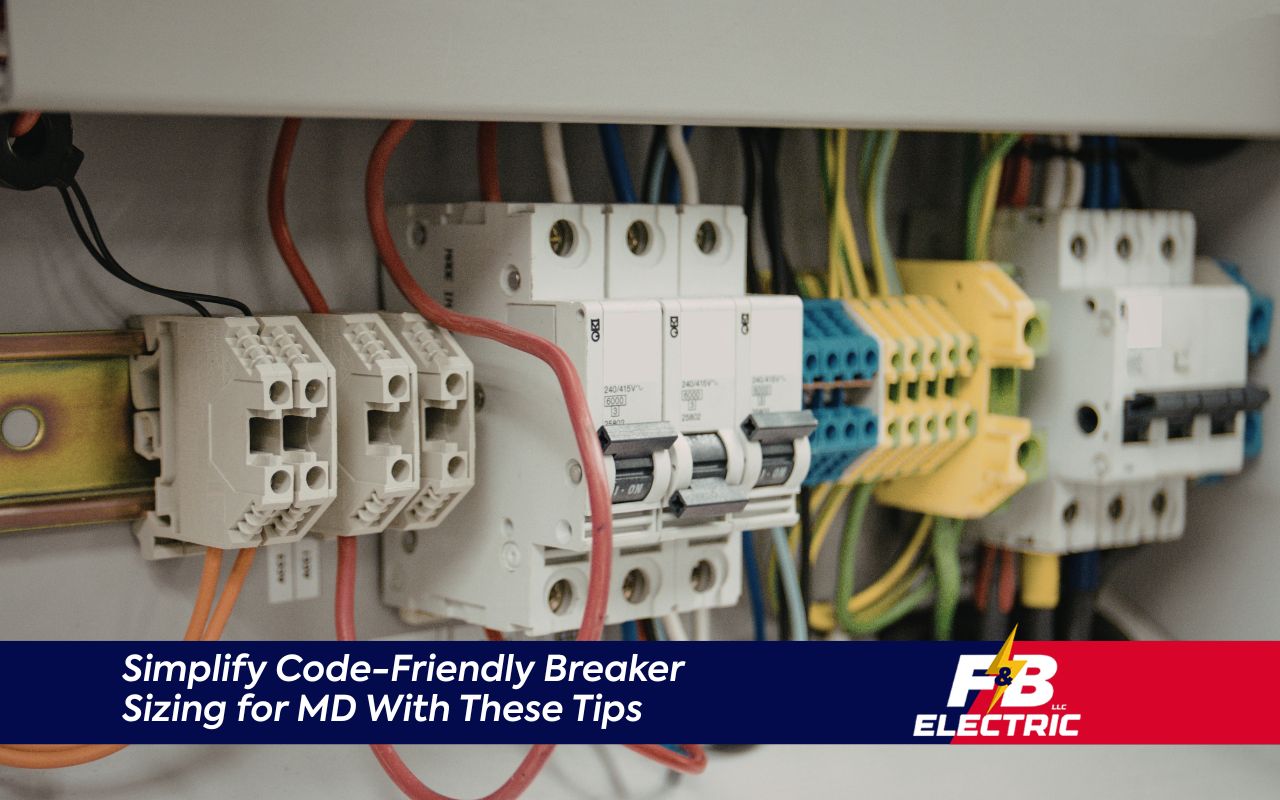
Code-compliant breaker sizing for MD can feel confusing at first, especially with many rules to follow. However, you are not alone. Many people get stuck on breaker size per circuit MD and panel load limits Maryland. Still, these basics can be easier than they seem.
Improper sizing can cause fires or damage. Therefore, learning amp ratings explained and breaker safety rules matters for everyone. This guide shares clear tips you can use right away. As a result, you can feel confident your setup is safer and meets local rules.
Understanding breaker sizing rules in Maryland
Breaker sizing starts by estimating how much power a device, or group of devices, will use. Then, you pick a breaker that shuts off before wires get too hot. In Maryland, Code-compliant breaker sizing for MD follows the National Electrical Code, plus local updates.
To begin, gather key details like wire capacity, voltage, and whether a load runs for long periods. Next, use NEC tables to find safe limits. After that, add a safety buffer, often 125% for long-running loads. This step helps reduce surprise trips and keeps wiring safer.
- List each device and its expected draw.
- Separate long-running loads from short-use loads.
- Match the breaker to the smallest wire in the run.
- Keep labels and notes inside the panel for future work.
If you are also planning a service change, review the steps for a safer setup on the electrical panel upgrade page by F&B Electric LLC.
Why amp ratings matter for safer circuits
Circuit breakers help protect wiring by stopping power when current gets too high. In simple terms, amp ratings explained means the steady current a breaker can handle. If the rating is too low, it may trip often. If it is too high, wires may overheat before it trips.
Also, it helps to know the difference between long-running and short-use loads. Long-running loads need extra headroom. Because of that, many setups use a 125% buffer. In contrast, short-use loads may match closer to 100% when the rules allow it.
- Use the correct rating for the expected load.
- Apply the 125% rule for long-running loads.
- Choose a breaker that matches the wire size.
- Avoid “just in case” oversizing.
Breaker size per circuit rules you should know
In many homes, breaker size per circuit MD follows common patterns. For example, kitchens, laundry areas, and bathrooms often need dedicated 20-amp circuits. Meanwhile, general lighting can often use 15-amp circuits. Even so, each circuit must protect the smallest wire in the run.
In addition, inspectors often check for clear labels and sensible grouping of loads. Multi-wire circuits often need tied handles. Also, some areas require added protection devices in certain rooms. If you want a helpful overview for prep work, use the electrical inspection checklist from F&B Electric LLC.
How to stay within panel load limits
Panel load limits Maryland rules focus on how much current a panel can supply without overheating. Panels often have ratings like 100, 150, or 200 amps. Therefore, you should confirm the panel’s rating before adding new circuits. Then, update your load notes after each change.
When demand grows, you may need a subpanel or a larger service. As a result, planning ahead can prevent rushed changes later. If you are unsure whether your setup meets the rules, F&B Electric LLC can help you review options during a Code-compliant breaker sizing for MD check.
Common mistakes that reduce safety
Many issues come from skipping key steps. For example, people often forget the 125% buffer for long-running loads. Others oversize breakers for convenience, which breaks breaker safety rules and can leave wiring unprotected. Also, long wire runs can cause drop in voltage, which can hide problems.
Another common mistake is mixing wire and breaker limits. Because of that, it is smart to confirm both the wire rating and the breaker rating. If you want to understand the rules that inspectors look for, review electrical code compliance with F&B Electric LLC.
- Forgetting the long-running load buffer.
- Oversizing a breaker “to stop trips.”
- Ignoring required protection devices in certain rooms.
- Skipping clear labels and load notes.
Tools and resources that make sizing easier
Several tools can help you size breakers with fewer errors. For instance, load worksheets and code tables offer clear guidance. Also, maker guides can explain how a breaker reacts to different loads. However, tools work best when your inputs are accurate and complete.
Still, when a setup is complex, a licensed electrician can help confirm safe choices. F&B Electric LLC often supports homeowners and contractors by checking loads, wiring, and panel limits. In many cases, that review helps you avoid rework before an inspection.
Tips to keep systems safe and efficient
First, keep panel labels up to date. Then, note which rooms and major devices each breaker serves. As a result, you can troubleshoot faster and avoid wiring mistakes. Also, follow breaker safety rules when working near panels, and shut off main power when possible.
Additionally, plan for future changes. Leaving space for new circuits can save time later. Moreover, balancing loads across the panel can reduce heat and improve stability. If you want a safer long-term plan, F&B Electric LLC can review upgrades linked to Code-compliant breaker sizing for MD needs.
Frequently Asked Questions
What does Code-compliant breaker sizing for MD mean in practice?
It means sizing breakers using NEC rules plus local Maryland updates, while also matching wire limits and panel capacity.
How do I apply breaker size per circuit MD rules at home?
Start by listing loads per area, then match each breaker to the smallest wire and the expected draw for that circuit.
Why are panel load limits Maryland checks important?
Because panels can overheat if total demand exceeds their rating, especially after new circuits are added over time.
Can you explain amp ratings explained in a simple way?
It is the steady current a breaker can handle. Too low trips often, while too high may not protect wiring quickly enough.
Which breaker safety rules matter most for homeowners?
Use the right breaker for the wire size, avoid oversizing, and keep labels clear. Also, shut off power before panel work.
Achieving safer, code-friendly breaker sizing
Proper sizing helps protect people and property by ensuring circuits shut off at safer current levels. Therefore, follow Code-compliant breaker sizing for MD steps, confirm breaker size per circuit MD rules, and respect panel load limits Maryland guidance. Also, keep amp ratings explained and breaker safety rules in mind during every change.
With careful load notes and clear labels, you can reduce risk and improve reliability. If you want help verifying your setup, F&B Electric LLC can support your next inspection or upgrade planning. You can also reach the team through the contact page.