

Businesses should know that commercial power distribution basics in MD involve panels, circuits, wiring, grounding, outlets, lighting, and equipment loads. A planned system helps reduce overload risks, improve safety, support daily operations, and prepare the building for future electrical needs.
What Should Businesses Know About Commercial Power Distribution Basics in MD?
Commercial power distribution basics in MD help businesses move electricity safely from the utility service to panels, circuits, outlets, lighting, and equipment. A planned system lowers overload risks, supports daily operations, and helps owners make better decisions before adding electrical demand.
Commercial power distribution is the planned path electricity follows inside a business property. It supports offices, retail spaces, warehouses, service areas, and mixed-use buildings that need steady power for daily work. This planning helps solve overload, access, labeling, equipment placement, and future expansion problems before they interrupt operations.
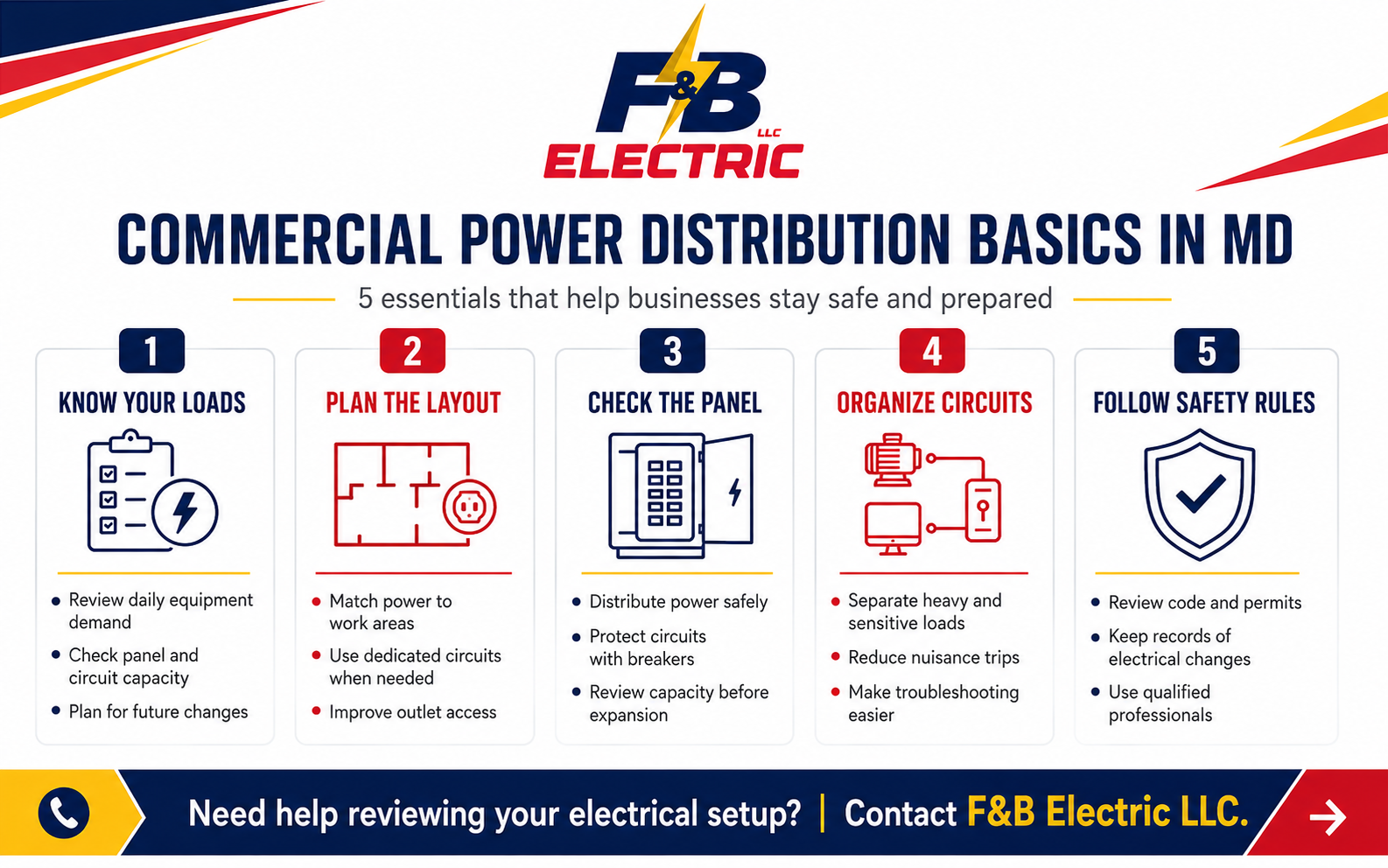
Map Commercial Power Distribution Basics in MD Around Loads
Safe power planning starts with knowing what the building uses each day. Commercial power distribution basics in MD should account for equipment loads, panel capacity, circuit paths, lighting, outlets, HVAC demand, and future changes before electrical work begins.
At F&B Electric LLC, we review how a business uses power before discussing next steps. A small office may need different planning than a retail shop, restaurant, warehouse, or medical office. Each space has different devices, peak use times, and safety concerns.
The system may include the service entrance, meter, disconnect, electrical distribution panel, breakers, conduit, wiring, junction boxes, receptacles, and grounding. Each part should support the full path from incoming power to the final device. For local support, our Commercial Electrician Services page explains how businesses can start the review process.
- Identify major equipment and daily power needs.
- Check whether key circuits are shared or dedicated.
- Review breaker labels for clear use.
- Look for signs of overloaded areas.
- Plan space for future equipment changes.
A balanced electrical plan helps reduce confusion when equipment is added or moved. It also gives business owners a clearer way to discuss repairs, upgrades, or layout changes.
Design A Business Electrical Layout For Daily Work
A business electrical layout should match how people, equipment, and work areas use power. Better layout planning can reduce unsafe cords, overloaded outlets, nuisance breaker trips, and poor access to electrical service points.
With F&B Electric LLC, commercial reviews begin with practical questions. We ask what equipment is used, where staff work, where power problems happen, and what changes are planned. This helps connect the electrical plan to real building use.
Good layout planning may place high-demand equipment on dedicated circuits. It may also improve outlet access near workstations, service counters, displays, storage rooms, or equipment areas. As a result, the building becomes safer and easier to manage.
When your current panel may not support growth, review our Electrical Panel Upgrade page. Panel capacity and layout planning should work together before major equipment is installed.
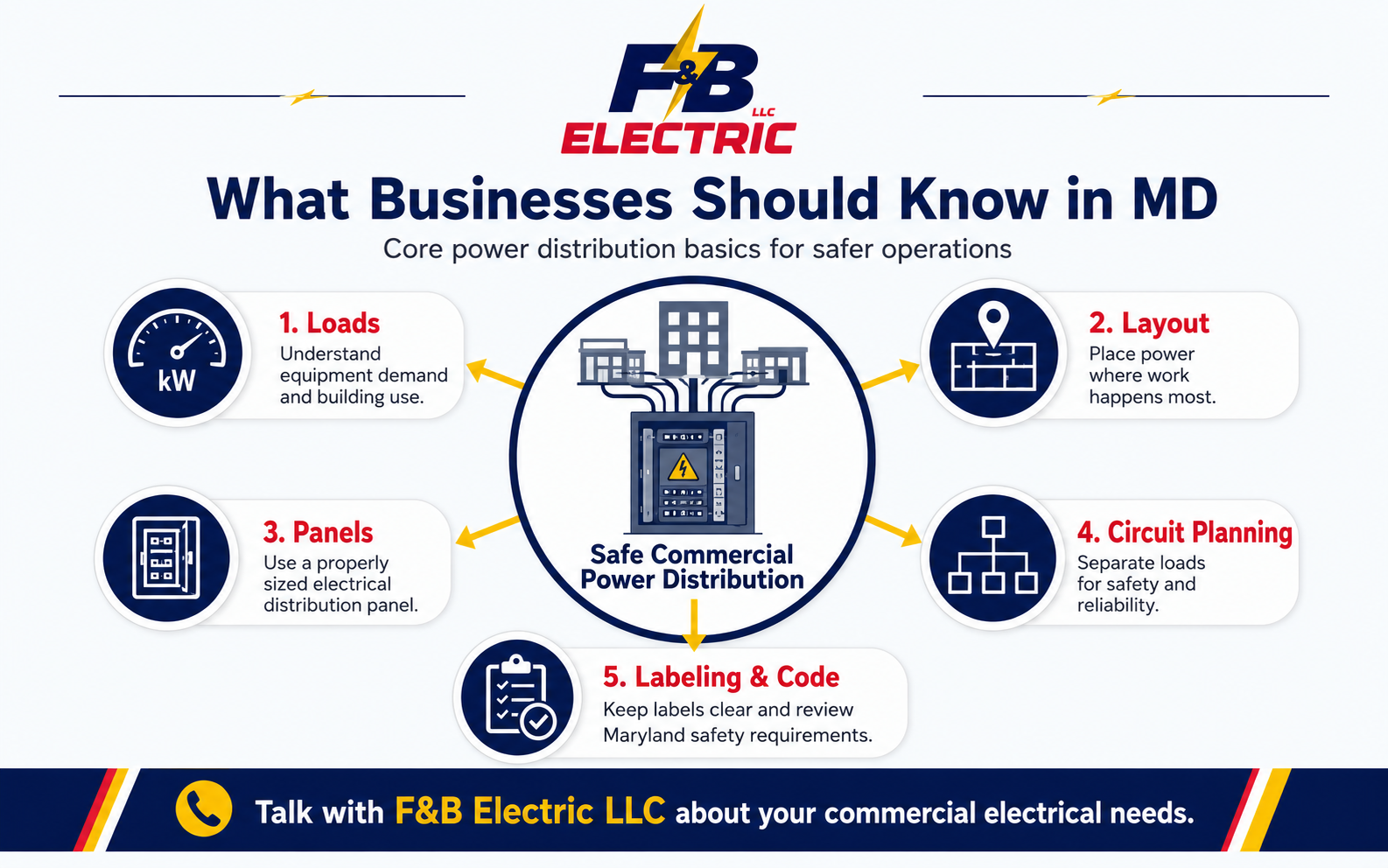
Size Each Electrical Distribution Panel For Growth
An electrical distribution panel divides incoming power into branch circuits for different parts of a commercial building. The panel should match current loads, safety needs, available space, and possible future growth.
When customers contact F&B Electric LLC, we look at the panel as part of the larger system. A panel review may include visible condition, labeling, breaker organization, access, and signs that the system needs closer evaluation.
The electrical distribution panel is the control point for many daily electrical decisions. Breakers help protect wiring when a circuit draws too much current. However, an open breaker space does not always mean the building can support more demand.
Panel planning matters before expansion because new equipment may require load calculations, circuit changes, grounding review, or permit steps. Commercial power distribution basics in MD should never depend on guesswork.
Organize Commercial Circuit Planning Around Equipment Priorities
Commercial circuit planning helps each circuit support the right equipment safely. Clear planning separates heavy loads, protects sensitive devices, improves troubleshooting, and reduces the chance of one problem affecting several work areas.
Different circuits may serve lighting, office equipment, kitchen equipment, security systems, HVAC-related loads, or warehouse tools. Each load should be reviewed based on its use, location, and effect on nearby circuits.
- Lighting circuits should match room use.
- Office electronics need organized power access.
- Heavy equipment may need dedicated circuits.
- Storage areas need safe lighting coverage.
- Future buildouts should be considered early.
Good circuit planning reduces downtime because electricians can trace issues faster. It also helps managers describe problems clearly when they notice flickering lights, warm devices, tripped breakers, or equipment interruptions.
Label Commercial Circuits Clearly For Faster Troubleshooting
Clear circuit labels help owners, managers, and electricians find the right breaker faster. Better labels reduce mistakes during maintenance, repairs, inspections, and equipment changes inside active business spaces.
Commercial panels often change over time. Walls move, tenants change, devices are added, and labels may become outdated. When labels are vague, someone may shut off the wrong area or spend extra time tracing circuits.
Useful labels should identify the area or equipment served. Labels such as “front office outlets” or “rear storage lights” are easier to use than vague numbers or old notes. For more guidance, visit Commercial Circuit Labeling Best Practices.
Clear labels support faster decisions when a breaker trips or service is needed. Employees should not perform electrical work unless qualified, but clear labels can help them explain the issue.
Review Maryland Safety Rules Before Electrical Changes
Maryland commercial electrical work should be planned with safety rules, permits, and inspection needs in mind. Electrical requirements help protect people, property, equipment, and business continuity.
The National Fire Protection Association explains that NFPA 70, the National Electrical Code, supports safe electrical installation and inspection. Local Maryland jurisdictions may also have specific requirements for commercial projects.
Code-aware planning protects business operations because unsafe or undocumented work can create delays during renovations, equipment changes, or property updates. Before work with F&B Electric LLC, we explain visible concerns and safe next steps without making assumptions.
The U.S. Department of Energy notes that commercial buildings have high energy needs and can strain power grids during peak periods. Better planning can support safer operation and more efficient energy use.
Prepare A Service Visit With Simple Steps
A service visit is easier when the electrician understands the building, the concern, and the business goal before work starts. Clear details help guide the inspection and improve recommendations.
Choosing F&B Electric LLC can help you approach commercial power distribution basics in MD with a clear process. We focus on what the building needs, what can be seen, and what should be reviewed before electrical changes begin.
- Share the business type and main concern.
- Describe breaker trips, outages, or equipment changes.
- Provide access to panels and affected areas.
- Review visible conditions during the visit.
- Ask for clear next steps before approving work.
The first inspection step often starts with listening. A tripped breaker, flickering light, or warm outlet can have more than one cause, so the next step should come from the actual condition.
Frequently Asked Questions
What are commercial power distribution basics in MD?
Commercial power distribution basics in MD include the service entry, panels, breakers, wiring, grounding, branch circuits, outlets, lighting, and equipment connections that move electricity safely through a Maryland business property.
When should a business review its electrical distribution panel?
A business should review its panel before adding equipment, changing the layout, or noticing frequent breaker trips. A panel review can show whether more capacity or better organization may be needed. Learn more at Electrical Panel Upgrade.
How does commercial circuit planning reduce downtime?
Commercial circuit planning reduces downtime by separating loads, supporting key equipment, and making problems easier to trace. Clear labels also help during service. Read Commercial Circuit Labeling Best Practices.
Why does a business electrical layout matter?
A business electrical layout affects outlet access, equipment placement, lighting, safety, and workflow. When the layout matches daily use, teams can work with fewer interruptions and fewer unsafe cord setups.
Who should handle commercial electrical changes in Maryland?
Commercial electrical changes should be handled by qualified electrical professionals who understand panels, circuits, safety rules, and inspection needs. To discuss your building, use our Contact Our Electrical Team page.
Start Smarter Electrical Planning With Clear Next Steps
Commercial power distribution basics in MD help owners plan safer panels, circuits, labels, and layouts before small issues grow. To review your building and discuss the next step, contact us through Contact Our Electrical Team.