
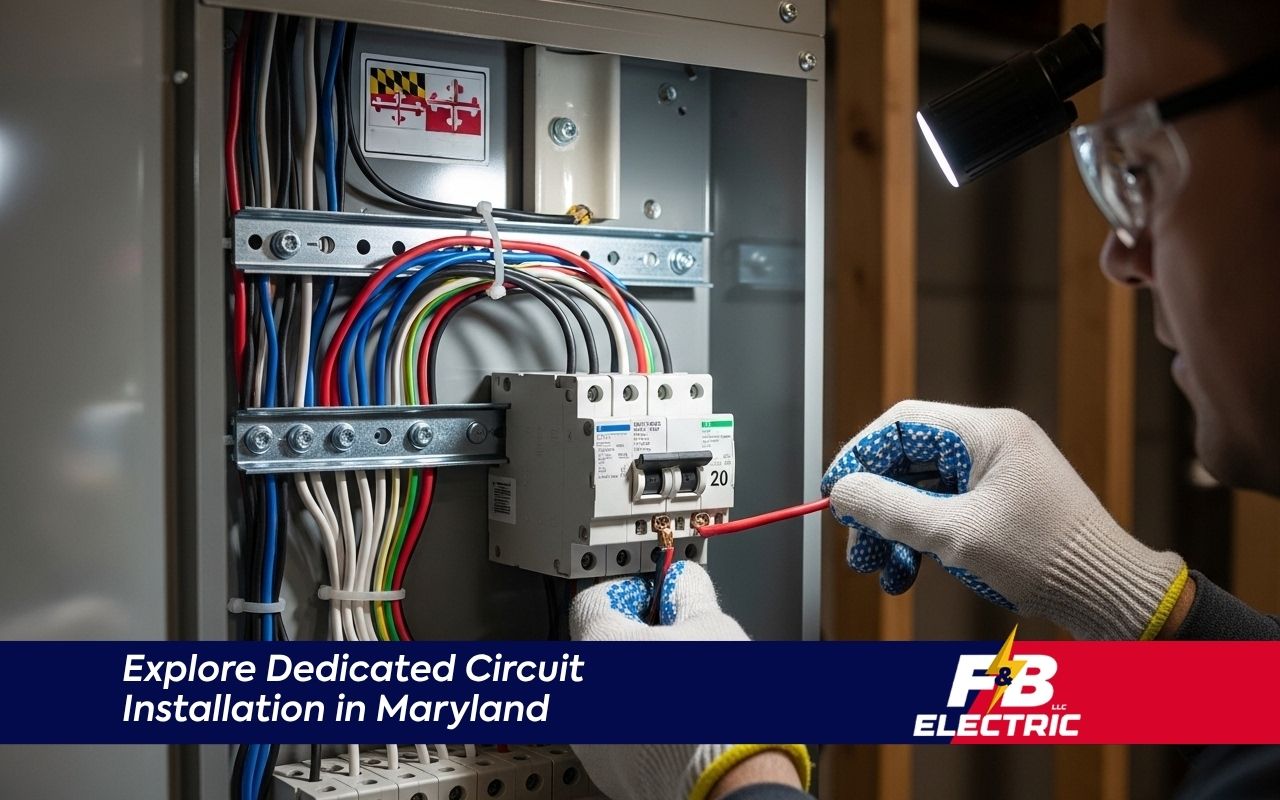
Modern homes and offices need steady power for appliances, devices, and daily work. At F&B Electric LLC, we know a clear dedicated circuit installation guide in Maryland can help you understand safer electrical choices without confusing terms.
A dedicated circuit gives one appliance or equipment group its own power line. As a result, your microwave, office devices, or larger home systems can run with fewer trips, less stress, and better safety.
Why Dedicated Circuits Matter in Maryland Homes
Dedicated circuits help protect your home by keeping high-demand appliances away from shared outlets. When too many devices use one circuit, breakers may trip, wires may heat up, and daily comfort can suffer.
A dedicated appliance circuit in Maryland is often needed for major items like refrigerators, washers, ovens, and HVAC units. Smaller items can also need special care when they use a lot of power during normal use.
Maryland Rules That Guide Safe Circuit Work
Maryland electrical work follows national code rules, along with local permit and inspection needs. Our team at F&B Electric LLC keeps these details in mind so your project can be safer and easier to complete.
- Kitchen countertop outlets often need 20-amp circuits and GFCI protection.
- Laundry, garage, bathroom, and outdoor areas may need added safety devices.
- New circuit work usually needs permits and a final inspection.
This dedicated circuit installation guide in Maryland is a helpful starting point, but local rules can vary by county or city. That is why a licensed electrician should review the project before work begins.
Main Parts of a Dedicated Circuit
Every dedicated circuit starts at the electrical panel. From there, the right breaker, wire size, outlet, and safety device work together to send power where it is needed.
- The breaker protects the circuit from too much current.
- The wire size must match the breaker and appliance load.
- GFCI or AFCI protection may be required in certain rooms.
- Clear labels help make future service easier and safer.
For many homeowners, these parts may look simple from the outside. However, a small mismatch can create safety risks, so correct planning matters before any wire is installed.
How Many Dedicated Circuits Do You Need?
The right number depends on your appliances, daily power use, and panel space. A kitchen with a microwave, refrigerator, dishwasher, and disposal may need several separate circuits for safe performance.
A dedicated circuit for microwave can help prevent flickering lights and breaker trips during heating cycles. In the same way, a dedicated circuit for office equipment can support computers, printers, scanners, and other devices more reliably.
Choosing the Right Amperage for Each Appliance
Circuit amperage tells you how much power the circuit can safely carry. Many standard outlets use 15 or 20 amps, while larger appliances may need 30 amps, 40 amps, or more.
F&B Electric LLC can help match the breaker, wire, and outlet to the appliance rating. This step is important because a breaker that is too large may not protect the wiring as it should.
Most home devices use 120 volts, while dryers, ovens, and some larger systems use 240 volts. The correct setup helps the appliance run safely and keeps the work ready for inspection.
Safe Installation Steps for Dedicated Circuits
A safe project starts with planning, power shutoff, and testing. This dedicated circuit installation guide in Maryland also reminds homeowners that panel work should be handled with care because live electrical parts can be dangerous.
- Review the appliance rating and expected power demand.
- Check panel space and total electrical load.
- Choose the right breaker, wire, box, and outlet type.
- Install required GFCI or AFCI protection.
- Label the new circuit clearly after testing.
You can also review our electrical services to see how we support safe wiring needs in local homes and businesses.
Frequently Asked Questions
When should I add a dedicated circuit?
You should consider one when an appliance trips breakers, needs a manufacturer-required circuit, or uses more power than a shared outlet can safely provide.
Does a microwave need its own circuit?
Many kitchens benefit from a dedicated circuit for microwave use, especially when the unit is large or used often with other countertop appliances.
Some light devices can share an outlet, but a dedicated circuit for office equipment is better when computers, printers, and scanners run together for long periods.
Do I need a permit for a new circuit in Maryland?
Most new circuit work needs a permit and inspection. This helps confirm the breaker, wiring, grounding, and safety devices meet local requirements.
Who should install a dedicated circuit?
A licensed dedicated circuit electrician in Maryland should handle panel work, wiring, permits, and testing. F&B Electric LLC can review your needs and explain the next steps clearly.
Reliable Help for Code-Ready Circuit Installation
A well-planned circuit can make your home or workplace safer, steadier, and easier to use. With the right help, you can avoid overloaded outlets, repeated breaker trips, and unsafe shortcuts.
F&B Electric LLC is ready to help you plan code-ready electrical work with care. Learn more about our residential electrical services, review panel support through our electrical panel upgrade service, or use our contact page to request help with your project.