
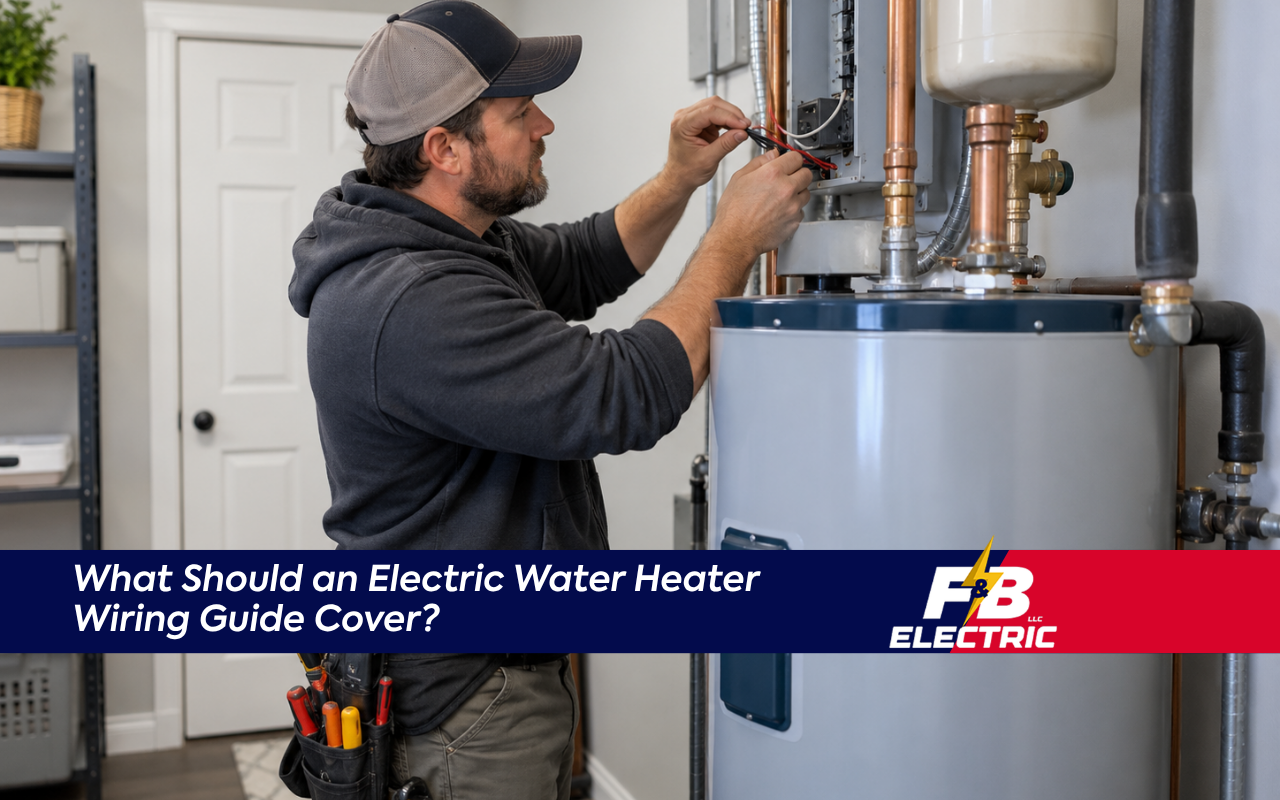
An electric water heater wiring guide should cover the dedicated circuit, breaker size, wiring type, disconnect, grounding, and final testing. It should also explain when a licensed electrician should handle the work, especially when code, panel capacity, or 240-volt wiring is involved.
For related home wiring support, visit our Electrical Services page.
Safe Wiring Starts With the Correct Heater Components
Every safe electric water heater setup starts with knowing the tank, heating elements, thermostat, junction box, conduit, and disconnect. Each part affects how power reaches the unit and how safely the system can be shut off during maintenance or an emergency.
Most standard electric water heaters use heating elements inside an insulated tank. The thermostat controls when those elements turn on and off. The junction box holds the incoming wires, while the conduit protects the cable path. At F&B Electric LLC, we check these parts before explaining the safest next step.
- Tank and heating elements warm the stored water.
- Thermostats control heating cycles.
- Junction boxes hold wire connections.
- Conduit protects the cable from damage.
- A water heater disconnect allows safer shutoff access.
According to the U.S. Department of Energy, consumer water heaters include products that use electricity to heat potable water. That makes safe electrical planning a key part of the installation.
Dedicated Circuits Reduce Overload Risks in Columbia Homes
An electric water heater circuit should usually be dedicated to the heater only. Large appliances draw heavy current, so sharing power with other loads can cause breaker trips, overheated wiring, or unsafe performance inside the panel.
Many homes in Columbia use 240-volt service for high-demand appliances. The Electrical Safety Foundation International explains that larger appliances, including water heaters, often require a 240-volt circuit. This setup uses a double-pole breaker and correctly matched conductors.
A dedicated circuit helps the breaker protect the wire before heat becomes a danger. If your panel has crowded spaces, old labels, or signs of previous repair work, schedule a review with a Residential Electrician in Columbia MD.
- Frequent breaker trips may point to overload or faults.
- Warm panel areas need prompt attention.
- Loose labels make future service harder.
- Old wiring may not match the heater load.
Correct Breaker Sizing Protects Wires and Heating Elements
The correct water heater breaker size depends on the heater’s data plate, amperage, wire gauge, and local code requirements. A breaker that is too large may not protect the wire, while a breaker that is too small may trip often.
Many residential electric water heaters use a 30-amp, 240-volt circuit with properly rated wire. However, the heater label must guide the final choice. Our team at F&B Electric LLC reviews the data plate, panel condition, conductor size, and disconnect placement before recommending changes.
Breaker size and wire gauge must work together because the breaker protects the wire from unsafe current. For Maryland-focused planning, review Code-compliant breaker sizing for MD.
- Match the breaker to the heater rating.
- Match the wire gauge to the breaker.
- Confirm the panel can support the load.
- Check the circuit before restoring power.
Never increase breaker size to stop tripping unless the wire and equipment are rated for that change.
Careful 240v Connections Keep the Installation Code Ready
240v water heater wiring requires secure hot conductors, proper grounding, protected cable entry, and a closed junction box. The work should follow the manufacturer’s instructions and local electrical code before power is restored to the unit.
Before touching wires, power must be shut off at the panel and tested with a voltage tester. A water heater disconnect should also be used when present. Testing confirms that the circuit is not live before the junction box is opened.
Inside the heater box, the hot conductors connect to the hot terminals. The bare or green conductor connects to the ground screw. Cable clamps help stop pulling and rubbing at the entry point. With F&B Electric LLC, customers get clear guidance before any work begins.
Safe wiring is not only about making the heater turn on. It is about tight connections, protected conductors, proper grounding, and safe shutoff access. These details help reduce shock and fire risks.
Our Booking Process Clarifies the Safest Wiring Plan
When you contact us about an electric water heater wiring guide, we first ask about the heater, panel, breaker, wiring path, and current problem. Then we explain what should be checked before repair, replacement, or installation work begins.
When customers contact F&B Electric LLC, we keep the process simple and focused on safety. We do not guess from one detail. Instead, we review the full setup so the electric water heater circuit can be checked properly.
- We ask for the heater model and location.
- We review the panel, breaker, and disconnect details.
- We check for signs of overheating or tripping.
- We explain safe repair or wiring options.
- We confirm the next step before work begins.
If you are unsure about your water heater disconnect, breaker label, or wire size, use the Contact Us page to request help. Clear information before work begins helps prevent unsafe shortcuts.
Frequently Asked Questions
Does an electric water heater need its own circuit?
Yes, most electric water heaters need a dedicated circuit because they draw heavy current. Sharing that circuit can overload wires or trip the breaker. A dedicated line also makes inspection, maintenance, and shutoff safer when the heater needs service.
What breaker size does a water heater use?
The water heater breaker size depends on the heater data plate and wire gauge. Many standard units use a 30-amp breaker, but that is not universal. Review Code-compliant breaker sizing for MD before making changes.
Is 240v water heater wiring safe for homeowners?
240v water heater wiring can be dangerous without testing, tools, and code knowledge. Homeowners can learn the basics, but live wiring, grounding, breaker changes, and disconnect work should be handled carefully. For help, schedule a Residential Electrician in Columbia MD.
Where should a water heater disconnect be installed?
A water heater disconnect should be placed where power can be shut off safely and clearly. The exact location depends on the installation, code rules, and panel access. During a review, the electrician checks visibility, reach, labeling, and safe service access.
Why does my water heater breaker keep tripping?
A tripping breaker may point to a loose connection, wrong breaker size, damaged element, short circuit, or overloaded wiring. Do not keep resetting it. Use our Contact Us page so the issue can be checked before damage gets worse.
Schedule Safer Water Heater Wiring Guidance Today
An electric water heater wiring guide is useful, but hands-on electrical work needs the right checks. With F&B Electric LLC, you can ask questions, review your setup, and plan the safest next step. Explore our Electrical Services or reach out when your heater wiring needs professional attention.