
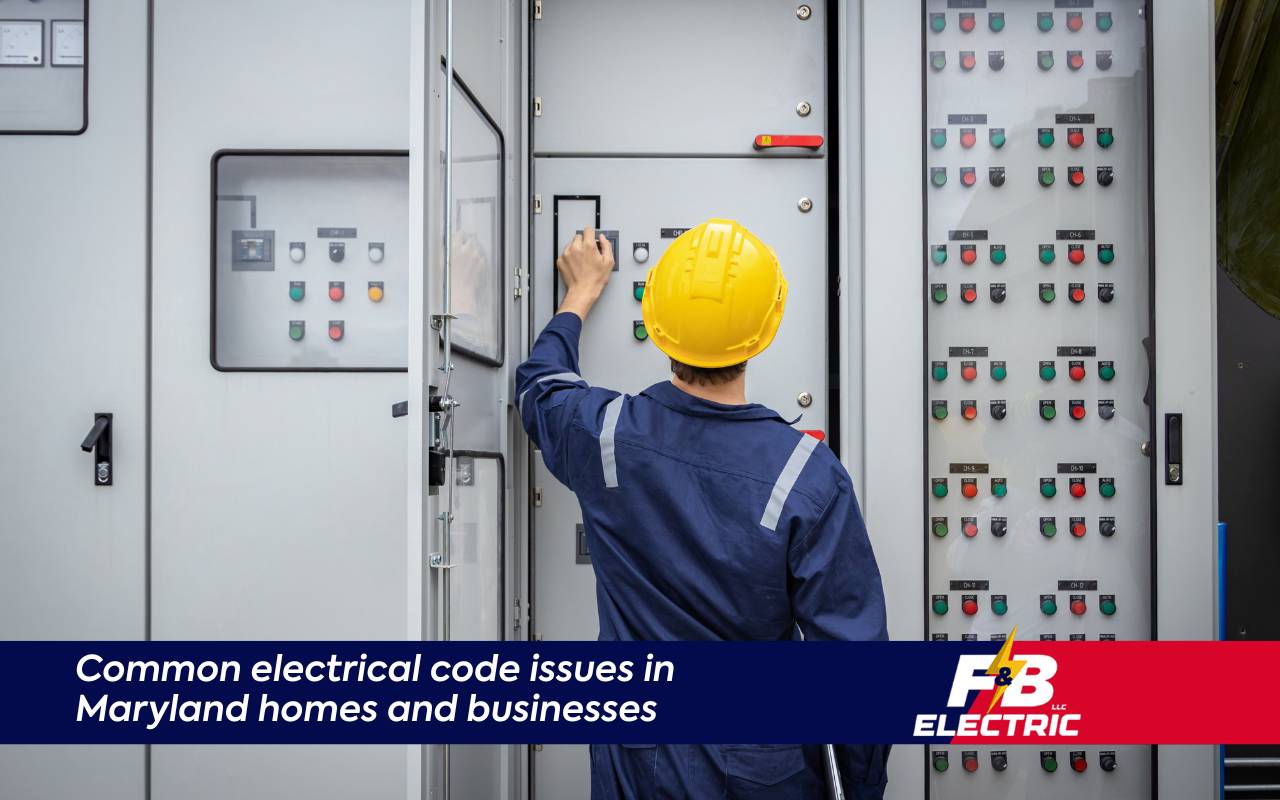
Electrical Code Violations to Avoid in MD are common in older Maryland homes and busy commercial spaces. When you step into a charming older property with wood trim and original fireplaces, hidden electrical risks may exist behind the walls.
These Electrical Code Violations to Avoid in MD often start with wiring and panels that were installed decades ago. As a result, they may not match today’s safety rules, which can lead to shocks, fires, or expensive repairs if ignored.
Importance of up-to-date electrical systems in Maryland
Maintaining a modern electrical system in Maryland is vital for daily safety and comfort. Old wiring can break down over time, which may cause short circuits, overheating, or tripped breakers, especially when you plug in many modern devices.
Older Maryland buildings often still use wiring installed before many current NEC code issues in MD existed. Moreover, updating your system usually improves energy efficiency, supports today’s electronics, and can make insurance and lending approvals much smoother.
Understanding National Electrical Code (NEC) standards
The National Electrical Code sets the basic safety rules for wiring methods, materials, and safe installation practices. In Maryland, local inspectors use these rules during new construction and major renovations to check if the work is safe and legal.
When you understand the main NEC ideas, you can ask better questions and avoid unsafe shortcuts. In addition, you can work with an electrician who follows these rules so that permits, inspections, and final approvals all move more smoothly.
GFCI and AFCI codes in Maryland
Modern codes require special devices that cut power when they detect trouble. Ground Fault Circuit Interrupter outlets help protect people from shock, especially in bathrooms, kitchens, laundry rooms, garages, and outdoor areas that often involve water.
Because GFCI and AFCI code in MD focuses on shock and fire prevention, these devices need regular testing. Arc Fault Circuit Interrupter breakers help stop dangerous arcs inside walls that could otherwise start a fire without warning.
- Test GFCI outlets monthly using the built-in “test” and “reset” buttons.
- Install AFCI protection in living areas like bedrooms, family rooms, and hallways.
- Replace any outlet or breaker that fails a test or feels damaged or loose.
Identifying outdated wiring in Maryland properties
Spotting early warning signs of problem wiring can prevent major issues later. Watch for flickering lights, frequent breaker trips, buzzing sounds, or outlets and switches that feel warm or look discolored during normal use.
Some Maryland properties still have cloth-covered wiring or knob-and-tube systems hidden above ceilings or behind walls. These signs often point to outdated wiring problems that no longer match modern safety expectations and may not support heavy electrical loads.
- Look for brittle or cracked insulation on visible wires in basements or attics.
- Notice any burning smell near outlets, panels, or light fixtures.
- Pay attention to extension cords used as permanent wiring, which is unsafe.
Common Electrical Code Violations to Avoid in MD
Common Electrical Code Violations to Avoid in MD often appear during routine inspections or small renovation projects. Typical issues include missing covers on junction boxes, overloaded circuits, and loose connections made without approved fittings or boxes.
When you address Electrical Code Violations to Avoid in MD early, you reduce fire risk and surprise outages. Furthermore, clearly labeled panels, properly secured cables, and correct breaker sizes help protect both people and expensive appliances from damage.
- Improper grounding or bonding of the electrical system and metal parts.
- Too many devices on one circuit, causing frequent tripping.
- Splices outside proper junction boxes or hidden behind walls and ceilings.
Panel Clearance Violations and Their Risks
Keeping space around the electrical panel clear is more important than many property owners realize. Maryland follows rules that require at least 36 inches of clear working space in front of panels and about 30 inches of width.
When boxes, shelves, or stored items block this space, electricians cannot reach breakers quickly in an emergency. Additionally, poor access makes repairs slower and riskier, especially during power problems or fire events where every second matters.
Steps to rectify electrical code issues in Maryland
Fixing electrical problems starts with a careful review of your current system. A licensed electrician can perform a detailed inspection and list any violations, safety concerns, and suggested upgrades that match today’s Maryland and national rules.
Next, create a repair plan that tackles Electrical Code Violations to Avoid in MD in order of safety risk. High-priority items usually include damaged wiring, missing GFCI or AFCI protection, and any issues that raise a strong fire or shock risk.
- Schedule a professional inspection and request a written report of all issues.
- Prioritize repairs based on safety level and potential impact on your home or business.
- Replace damaged wiring, add required protection devices, and correct panel spacing.
- Arrange a follow-up inspection to confirm all repairs meet current code.
Hiring a professional electrician for code compliance
Choosing an experienced electrician is essential when you want safe, code-compliant work. Look for licensed and insured professionals who regularly work on Maryland projects and understand local inspection practices and common problem areas.
For detailed guidance on inspections and repairs, you can review electrical code compliance in Maryland. A skilled electrician will explain options in clear language and help you plan upgrades that fit your budget and timing.
Benefits of ensuring electrical code compliance in Maryland
Bringing your electrical system up to code offers both safety and financial advantages. A well-designed system reduces the chances of fire, protects sensitive electronics, and makes daily life more comfortable in homes and workplaces across Maryland.
Moreover, code-compliant systems often make home sales smoother and support better insurance terms. Owners of older homes can explore electrical code updates for older homes to understand common upgrades that boost value and buyer confidence.
Frequently Asked Questions
How do I know if my Maryland home has serious electrical code issues?
Warning signs include frequent breaker trips, flickering lights, warm outlets, or older wiring types like knob-and-tube. If you notice these problems or have not had an inspection in years, contact a licensed electrician for a full review.
How often should GFCI and AFCI devices be tested?
Most manufacturers recommend testing GFCI outlets monthly using the “test” and “reset” buttons. AFCI breakers also have test buttons that you should use regularly. If a device fails a test, schedule repair or replacement right away.
Do all electrical upgrades in Maryland require a permit and inspection?
Many major projects, such as panel changes, new circuits, and large renovations, do require permits and inspections. Your electrician can explain local rules for your town. When in doubt, ask the building department before starting any work.
Can I fix minor electrical code issues myself?
Simple tasks, like replacing a damaged outlet cover, may be safe for some owners. However, wiring, panel work, and breaker changes should be left to licensed electricians to avoid injury and further code problems.
Who should I contact if I suspect electrical hazards on my property?
If you suspect an immediate danger, turn off power to the area if it is safe to do so. Then, as soon as possible, contact our licensed Maryland electricians to inspect the system and recommend safe repairs.
Prioritizing safety through electrical code compliance
Upholding Maryland’s electrical rules is about more than passing inspections; it is about protecting people and property every day. By fixing Electrical Code Violations to Avoid in MD and updating aging systems, you create safer, more reliable spaces.
With regular inspections, timely repairs, and help from a trusted local electrician, you can keep your wiring in top condition. In the long run, these steps bring peace of mind and stable power for every Maryland home and business you care about.