
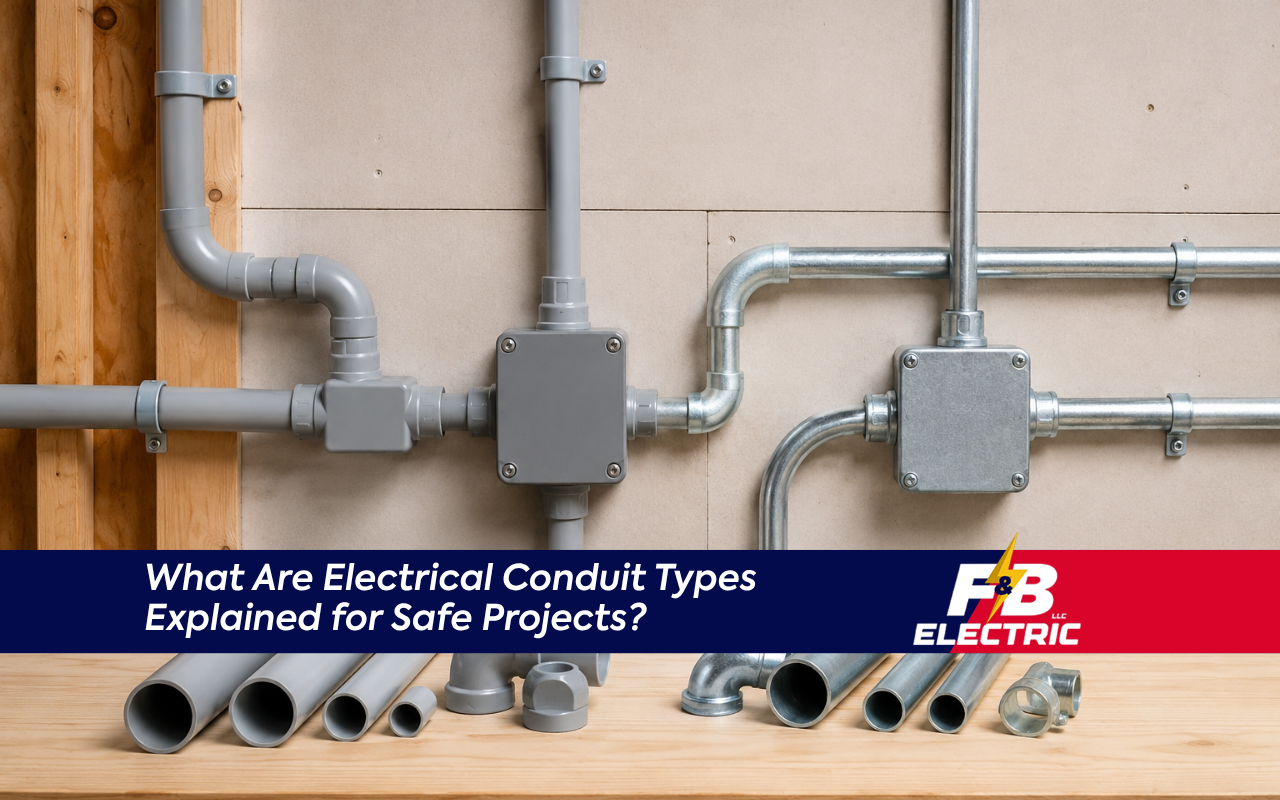
Electrical conduit types explained helps you compare PVC, metal, flexible, outdoor, and commercial raceway options so wiring can stay protected, accessible, and code-conscious. The right conduit depends on location, moisture, physical damage risk, grounding needs, and whether the work requires a licensed electrician.
What Are Electrical Conduit Types Explained for Safe Projects?
At F&B Electric LLC, we help property owners understand safe wiring paths before work begins. You can also review our complete electrical service options when planning a repair, upgrade, or new installation.
Electrical conduit is a protective pathway for wires. Homeowners, property managers, and business owners use conduit when wiring needs protection from impact, moisture, heat, pests, or exposure.
PVC conduit vs metal conduit guides safer material choices
PVC and metal conduit both protect wiring, but each material fits different conditions. PVC often works well where corrosion resistance matters. Metal conduit is better when wiring may face impact, heat, or grounding needs. With F&B Electric LLC, you get clear guidance before material choices affect safety.
We compare location, load needs, cable path, and future access before recommending a conduit type. Material choice should match the environment, not just the easiest installation method.
| Conduit Type | Best Use | Main Advantage | Key Limit |
|---|---|---|---|
| PVC conduit | Wet, underground, or corrosion-prone areas | Lightweight and rust-resistant | May need expansion planning outdoors |
| EMT metal conduit | Indoor commercial or exposed areas | Strong and easy to route | Needs proper fittings and bonding |
| Rigid metal conduit | High-impact or demanding locations | Very strong physical protection | Heavier and harder to install |
| Flexible conduit | Equipment connections or tight spaces | Bends around obstacles | Not always right for wet areas |
Outdoor conduit wiring protects exposed circuits from weather
Outdoor conduit wiring needs materials and fittings rated for moisture, sunlight, temperature changes, and physical contact. Exterior wiring can face rain, soil, landscaping tools, and movement. The National Fire Protection Association publishes the National Electrical Code, which guides safe electrical installations across many conditions.
Outdoor conduit is not only about covering wires. It must help keep water out, support the conductors, and protect the run from damage. For related outdoor safety points, review our Maryland outdoor outlet safety guide.
- Use fittings listed for damp or wet locations.
- Protect above-ground conduit from physical impact.
- Plan expansion for long PVC runs in sunlight.
- Call 811 before digging for underground work.
- Keep junction boxes accessible for inspection.
Outdoor conduit should be selected before wire is pulled, because fittings, burial depth, and box ratings affect the whole project.
Electrical conduit code in MD shapes approved installations
Electrical conduit code in MD depends on state rules, local amendments, permit needs, and inspection requirements. The Maryland Department of Labor notes that the State Fire Marshal has authority over state electrical code adoption, while some local jurisdictions may adopt their own electrical codes.
That is why we check the project location before giving conduit guidance. A wiring method that seems simple may still need the right box, support spacing, grounding, and inspection path. Our electrical code compliance guidance explains why code planning matters for homes and businesses.
- Permits may apply when adding circuits or changing wiring.
- Local rules can affect conduit, boxes, and inspections.
- Wet areas need listed materials and proper sealing.
- Metal conduit may need bonding and grounding checks.
Electrical conduit types explained should always include code context, because safe material selection and approved installation are connected.
Commercial conduit installation requires careful licensed project planning
Commercial conduit installation often needs a licensed electrician because business wiring can support lighting, equipment, panels, data systems, and safety devices. These projects may involve larger conduit runs, more conductors, tighter schedules, and stricter access needs than many home projects.
Commercial spaces also change over time. We look at work areas, equipment loads, exposed pathways, and future service access before routing conduit. Good conduit planning reduces disruption when a business adds circuits, moves equipment, or updates a space.
Common commercial conduit concerns include:
- Protection in storage rooms, shops, and corridors.
- Clear pathways above ceilings or along walls.
- Support for lighting, outlets, and equipment circuits.
- Access for maintenance without major demolition.
- Code-conscious routing around fire-rated assemblies.
When a business project affects daily operations, our team explains practical options before work starts.
Clear booking steps prepare your conduit project review
Conduit projects go better when the electrician understands the location, purpose, and wiring path before the appointment. When customers contact F&B Electric LLC, we ask simple questions, review the electrical need, and explain what information helps us plan the safest next step.
The process changes by project type, but the goal stays the same. We want you to understand what will be checked, why conduit may be needed, and which choices affect safety.
- Share the project goal, such as outdoor power or equipment wiring.
- Tell us where the wiring will run.
- Point out moisture, impact, or access concerns.
- We review conduit type, route, and code needs.
- Before work begins, we explain the practical plan.
Our team at F&B Electric LLC reviews the space, checks visible conditions, and helps you decide whether repair, replacement, or new conduit installation is the right path.
Frequently Asked Questions
Which conduit is better for outdoor wiring projects?
PVC is common outdoors because it resists rust and moisture. Metal conduit may be better where impact, heat, or grounding needs are higher. The safest choice depends on location, exposure, fittings, and code. You can review our Maryland outdoor outlet safety guide for related exterior planning.
Does PVC conduit need special fittings outside?
Yes. Outdoor PVC conduit usually needs listed fittings, weather-rated boxes, proper seals, and expansion planning when temperature changes affect long runs. Small gaps can let water enter, so the full conduit system matters, not only the pipe.
When should metal conduit be used instead?
Metal conduit is often used where wiring needs stronger protection from impact, heat, or exposed conditions. EMT and rigid metal conduit can also support grounding when installed correctly. For broader project help, explore our complete electrical service options.
Can homeowners install conduit without an electrician?
Some minor work may seem simple, but conduit mistakes can create shock, fire, moisture, or inspection problems. A licensed electrician should handle new circuits, outdoor wiring, panel-related work, and commercial conduit installation. Local permit rules should be checked first.
How do I know if my conduit meets code?
Look for proper support, correct fittings, safe wire fill, accessible boxes, and materials rated for the location. However, code details vary by project and jurisdiction. For a safer review, use our electrical code compliance guidance before changing wiring.
Choose safer conduit planning before wiring work begins
After you reach F&B Electric LLC, we help you understand conduit materials, outdoor protection needs, code concerns, and the right next step for your property. Electrical conduit types explained is most useful when it leads to safer choices. To discuss your project, contact our team for practical guidance.
References
- NFPA 70 (NEC) Code Development
- Plumbing, Electrical and Mechanical Codes – Building Codes Administration