
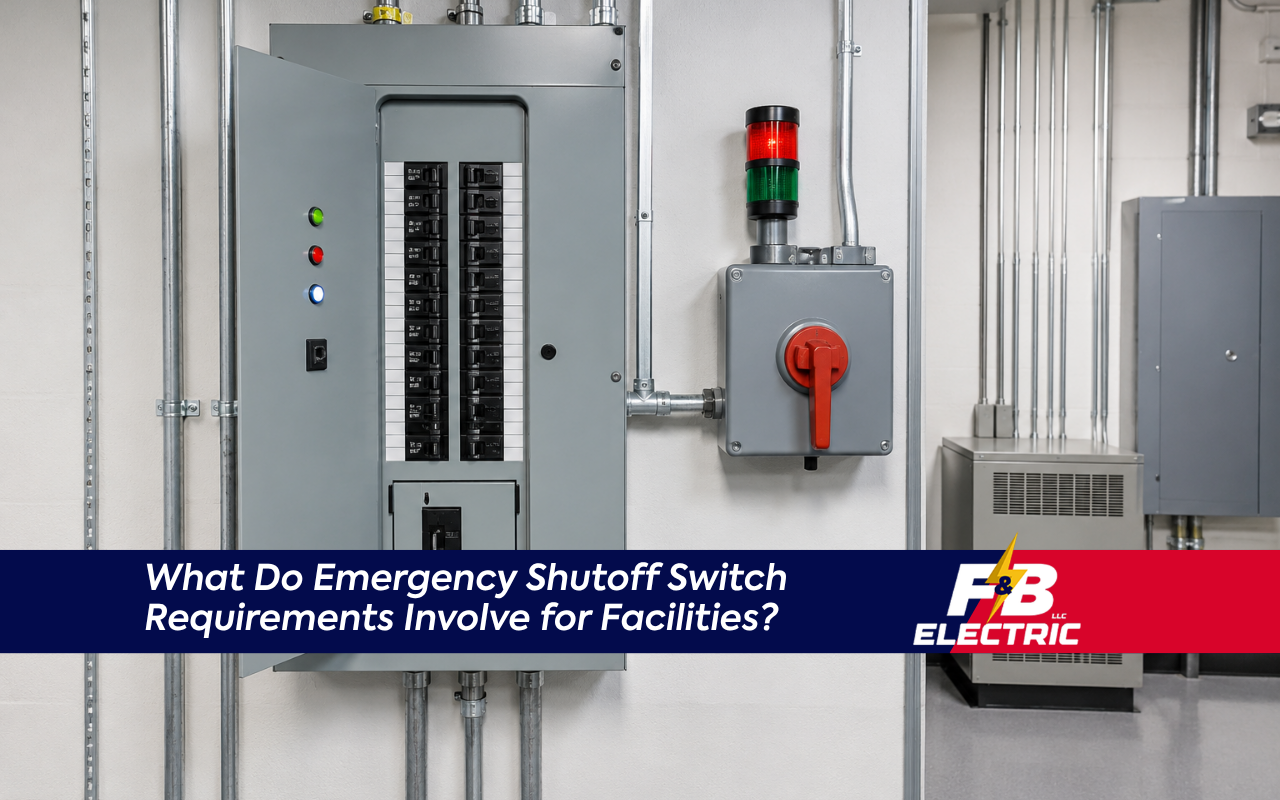
Emergency shutoff switch requirements explain when a switch, disconnect, label, or access point is needed to stop power quickly during a hazard. These rules help protect workers, equipment, buildings, and first responders during electrical or equipment emergencies.
What Do Emergency Shutoff Switch Requirements Involve for Facilities?
An emergency power shutoff is a safety control that can stop electrical energy to specific equipment or areas. Facility owners, managers, kitchens, shops, and commercial spaces may need one when equipment creates fire, shock, or injury risks. Correct shutoff planning solves access, response, and code compliance concerns.
For related system planning, review our Electrical Code Compliance guidance.
Recognize Emergency Power Shutoff Needs Before Hazards Grow
Emergency power shutoff planning starts by identifying equipment that could place people at risk if power stays on during a malfunction. High-load appliances, motors, fuel-connected equipment, and commercial systems may need fast shutoff access based on use, location, and code review.
During a compliance review, we look for clear access to disconnects, safe working space, visible labels, and equipment that may need a dedicated control point. The National Fire Protection Association explains that certain emergency disconnects are intended to help first responders shut down power before entering unsafe conditions.
- Commercial kitchen cooking equipment
- Motors, compressors, and pumps
- HVAC and rooftop equipment
- Boilers and mechanical rooms
- Exterior service disconnect locations
With F&B Electric LLC, customers get practical guidance before changes are made, so the next step is based on safety and inspection needs.
Compare Equipment Disconnect Switch Choices for Safer Access
An equipment disconnect switch must match the equipment, power source, location, and user access needs. The right choice depends on whether the switch controls one unit, multiple units, a service, or a system that requires fast manual operation.
Some switches are simple manual disconnects. Others may include covers, locks, signage, or automatic features. OSHA describes disconnecting means as important because they allow a circuit to be opened, stopping electrical flow to help protect workers and equipment.
- Manual switch: useful when trained staff can reach it fast.
- Lockable disconnect: useful when access must be controlled.
- Clearly marked disconnect: useful for inspections and response.
- Weather-rated switch: useful for outdoor equipment locations.
Before selecting hardware, review the equipment nameplate, load, location, and authority requirements. A wrong switch may fail inspection or create unsafe shutdown conditions.
Apply Commercial Shutoff Code Details With Clear Placement
Commercial shutoff code decisions usually focus on visibility, reach, labeling, and the exact equipment controlled. A disconnect that is hidden, blocked, unlabeled, or too far away may not support safe action during an emergency.
Commercial kitchens, workshops, retail spaces, and mechanical rooms often have different risks. Grease, moisture, heat, moving parts, and customer access can all affect switch type and placement. We review these details through Explore More Electrical Services when broader electrical work is part of the project.
- Keep shutoffs easy to see and reach.
- Avoid storage in front of disconnects.
- Use labels that identify controlled equipment.
- Protect switches from moisture and impact.
- Confirm access during inspections and drills.
Clear placement helps employees, technicians, and responders act without guessing which switch controls the hazard.
Review Emergency Disconnect Requirements in MD Carefully
Emergency disconnect requirements in MD depend on the adopted code edition, local enforcement, equipment type, and property use. Maryland facilities should treat national code language as the starting point, then confirm local requirements before installation or renovation work begins.
Local inspectors may review service disconnects, commercial equipment, mechanical systems, access, and identification. County or city rules can also affect permit steps. At F&B Electric LLC, we ask about property use, equipment location, and planned work before explaining likely compliance needs.
For Maryland properties, do not assume one rule fits every building. A restaurant, warehouse, office, and residential service upgrade can all have different shutdown concerns. If code compliance is part of your project, our Electrical Safety Guidelines can help you understand safer planning basics.
Prepare Compliance Reviews Through a Simple Inspection Process
A compliance review helps confirm whether existing shutoffs are visible, labeled, accessible, and matched to the equipment they control. This process also helps identify outdated wiring, missing disconnects, blocked access, or installation concerns before an inspection issue becomes costly.
When customers contact F&B Electric LLC, we first ask what equipment is involved, where it is located, and whether the concern came from an inspection, renovation, or safety review. Then we explain the next practical step without promising results before we see the system.
- Share the equipment type and location.
- Send photos of panels, switches, and labels when helpful.
- Review any inspection notes or correction notices.
- Check access, condition, and visible markings.
- Explain repair, replacement, or code review options.
After the review, we help customers understand what should be corrected and what may need approval from the local authority.
Frequently Asked Questions
When are emergency shutoff switches usually required for equipment?
Emergency shutoff switches are usually needed when equipment creates a serious fire, shock, mechanical, or operational risk if power remains on. The requirement depends on equipment type, location, code edition, and local inspection rules. A qualified review can confirm whether a dedicated disconnect is needed.
Where should an emergency disconnect be placed safely?
An emergency disconnect should be visible, reachable, and clearly tied to the equipment it controls. It should not be blocked by storage, doors, furniture, or equipment. For code-related placement concerns, our Electrical Code Compliance page explains why inspections matter.
Can one disconnect switch control multiple equipment units?
Sometimes one disconnect can control grouped equipment, but that depends on the system design, labeling, code rules, and safety risk. Shared disconnects can confuse users during emergencies. A review helps confirm whether separate controls would make shutdown safer and easier to understand.
What signs show a shutoff system needs review?
Warning signs include missing labels, damaged covers, blocked access, corroded switch boxes, unclear equipment control, or failed inspection notes. Property owners can review general safety concerns through our Electrical Safety Guidelines before scheduling a closer electrical review.
Who should evaluate emergency disconnect requirements in Maryland?
A licensed electrical professional should evaluate emergency disconnect requirements in Maryland because local enforcement can affect the final answer. For help planning a review, use our Contact Us page and share photos, inspection notes, or equipment details.
Plan Safer Shutoff Access With Confident Next Steps
Emergency shutoff switch requirements protect people only when switches are correctly selected, labeled, placed, and maintained. At F&B Electric LLC, we can review your equipment disconnect concerns and explain safer compliance options. Start with Contact Us when you need clear guidance before your next inspection or electrical project.