
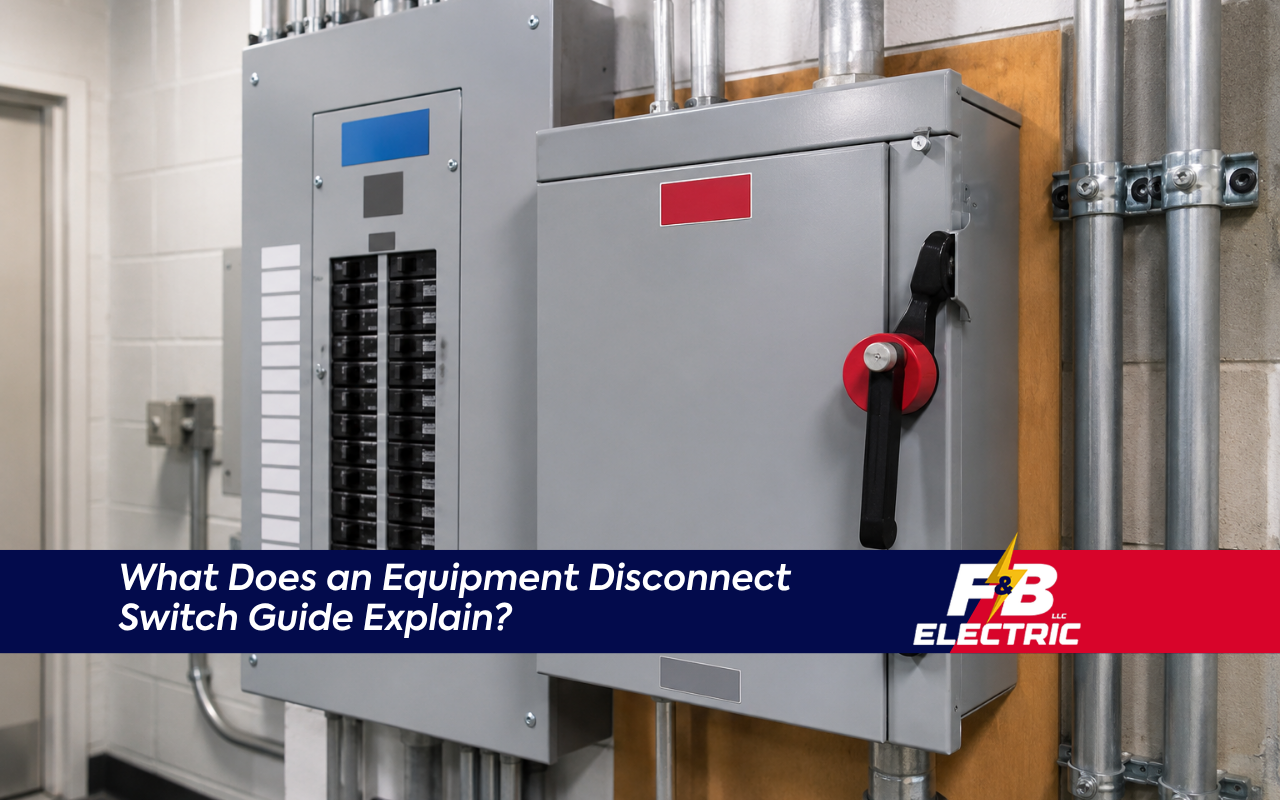
An Equipment disconnect switch guide explains how a local shutoff point helps stop power to equipment before repair, inspection, or replacement. It also helps property owners understand safer placement, labeling, and wiring decisions before speaking with a qualified electrician.
What Does an Equipment Disconnect Switch Guide Explain?
A disconnect switch is a dedicated control point that separates equipment from its power source. Homeowners, facility managers, and business owners use it when equipment needs safe maintenance, emergency shutdown, or replacement. The switch solves a simple problem: it gives people a clear way to stop power near the equipment.
Ask for electrical safety guidelines before work begins.
Identify Safer Shutoff Points Before Equipment Work Starts
Every disconnect should be easy to find, clearly marked, and close enough to support safe equipment work. This matters because a person should not guess which breaker or switch controls a unit during a repair, inspection, or emergency.
With F&B Electric LLC, we review the equipment location, panel source, and access path before recommending a shutoff option. The goal is clear power control, not confusion during a stressful moment. A disconnect may serve air conditioning equipment, motors, pumps, appliances, machinery, or other fixed electrical loads.
- Place the switch where it can be reached safely.
- Keep the area free from stored items.
- Use clear labels for the controlled equipment.
- Protect outdoor switches with suitable enclosures.
An Equipment disconnect switch guide should always connect safety, access, and proper identification. If the existing shutoff is hard to find, damaged, or unlabeled, ask for a professional review.
Compare Disconnect Switch Installation Needs By Property Type
Disconnect switch installation is different for homes, shops, offices, and commercial spaces. The right setup depends on equipment load, location, exposure, code rules, and how people will shut off power before work begins.
Residential projects often focus on safe access, weather protection, and simple labeling. Commercial spaces may need stronger planning because equipment can affect staff, customers, production, or building operations. For business properties, commercial electrician support can help owners plan safer shutoff access around daily operations.
- Residential use: HVAC units, pumps, appliances, and service upgrades.
- Commercial use: machinery, kitchen equipment, motors, and building systems.
- Outdoor use: weather-rated boxes and corrosion-resistant parts.
- Maintenance use: lockable options for safer repair control.
At F&B Electric LLC, we help customers understand whether the switch location, enclosure, and wiring path fit the equipment and the property.
Plan Equipment Shutoff Wiring With Code Awareness
Equipment shutoff wiring should be planned before conductors are pulled, terminals are tightened, or equipment is restarted. Safer planning includes circuit size, disconnect rating, wire condition, grounding, bonding, labeling, and local inspection expectations.
According to OSHA, lockout and tagout rules help control hazardous energy during machine service and maintenance. That is why many commercial disconnect requirements focus on preventing unexpected startup while people are working on equipment.
Maryland also requires electrical work to be performed by properly licensed electrical workers. For homeowners, residential disconnect safety in MD should include safe access, clear labels, and a professional review before replacing or adding disconnect equipment. If your home needs a larger safety update, review residential service upgrades.
When customers contact F&B Electric LLC, we ask what equipment the switch controls and whether the work is part of a repair, replacement, or upgrade.
Recognize Warning Signs That Require Professional Review
Disconnect equipment should be checked when it looks damaged, feels loose, smells hot, or no longer shuts equipment off fully. These warning signs can point to unsafe connections, worn parts, moisture damage, or an incorrect setup.
Do not open a disconnect box just because the lever is off. Power may still be present on the line side. A trained electrician can test the correct points and explain the safest next step. Contact us when you notice burn marks, buzzing, rust, heat, loose covers, missing labels, or equipment that keeps running after the switch is moved off.
- Switch handle feels stiff or loose.
- Enclosure has rust or water marks.
- Labels are missing or unclear.
- Fuses show discoloration or damage.
- Equipment does not shut down fully.
Our team at F&B Electric LLC checks the switch condition, wire terminations, enclosure, and equipment response before explaining repair or replacement options.
Prepare For A Clear Disconnect Switch Appointment
A disconnect appointment should help you understand what the switch controls, where power comes from, and which safe options fit the equipment. A clear process reduces guesswork before repair, replacement, or installation begins.
Before work starts, we ask about the equipment type, location, symptoms, and recent changes. Then we review the shutoff point, inspect visible wiring conditions, and explain whether the existing setup supports safe operation. This Equipment disconnect switch guide helps you know what to expect before contacting contact our electrical team.
- We ask which equipment needs shutoff control.
- We check access, labels, and visible condition.
- We explain safe repair or upgrade options.
- We complete approved work with careful testing.
- We review the shutoff function after completion.
At F&B Electric LLC, we focus on safe shutoff function, clear communication, and practical recommendations that match the property.
Frequently Asked Questions
Where should an equipment disconnect switch be installed?
A disconnect switch is usually placed near the equipment it controls, where it can be reached safely. The exact location depends on the equipment, code rules, clearances, and site conditions. For location-specific help, review electrical safety guidelines.
Can homeowners replace a disconnect switch themselves in Maryland?
Maryland rules require electrical work to be handled by properly licensed electrical workers. Homeowners should avoid guessing with live electrical parts, equipment shutoff wiring, or panel connections. A licensed review helps protect people, equipment, and the property.
What equipment commonly needs a local disconnect switch?
Common examples include HVAC equipment, motors, pumps, commercial kitchen equipment, and some fixed appliances. The need depends on equipment type and code requirements. If your home panel or service setup is outdated, residential service upgrades may help improve safety.
Why do commercial disconnect requirements often feel stricter?
Commercial settings may involve staff safety, equipment downtime, lockout procedures, inspections, and higher power loads. Clear disconnect access helps workers stop power before service. Business owners can use commercial electrician support when planning safer shutoff wiring.
How often should disconnect switches be checked for problems?
Disconnect switches should be visually checked during routine maintenance and whenever equipment acts unusual. Look for rust, heat, damaged labels, loose covers, or poor switch movement. A professional inspection is safer when the enclosure must be opened.
Choose Safer Shutoff Planning Before Problems Grow
A safer electrical system starts with clear shutoff access and careful planning. If your switch is damaged, unlabeled, hard to reach, or missing, contact F&B Electric LLC for guidance. You can also explore local electrical services to plan the right next step for your home or business.