
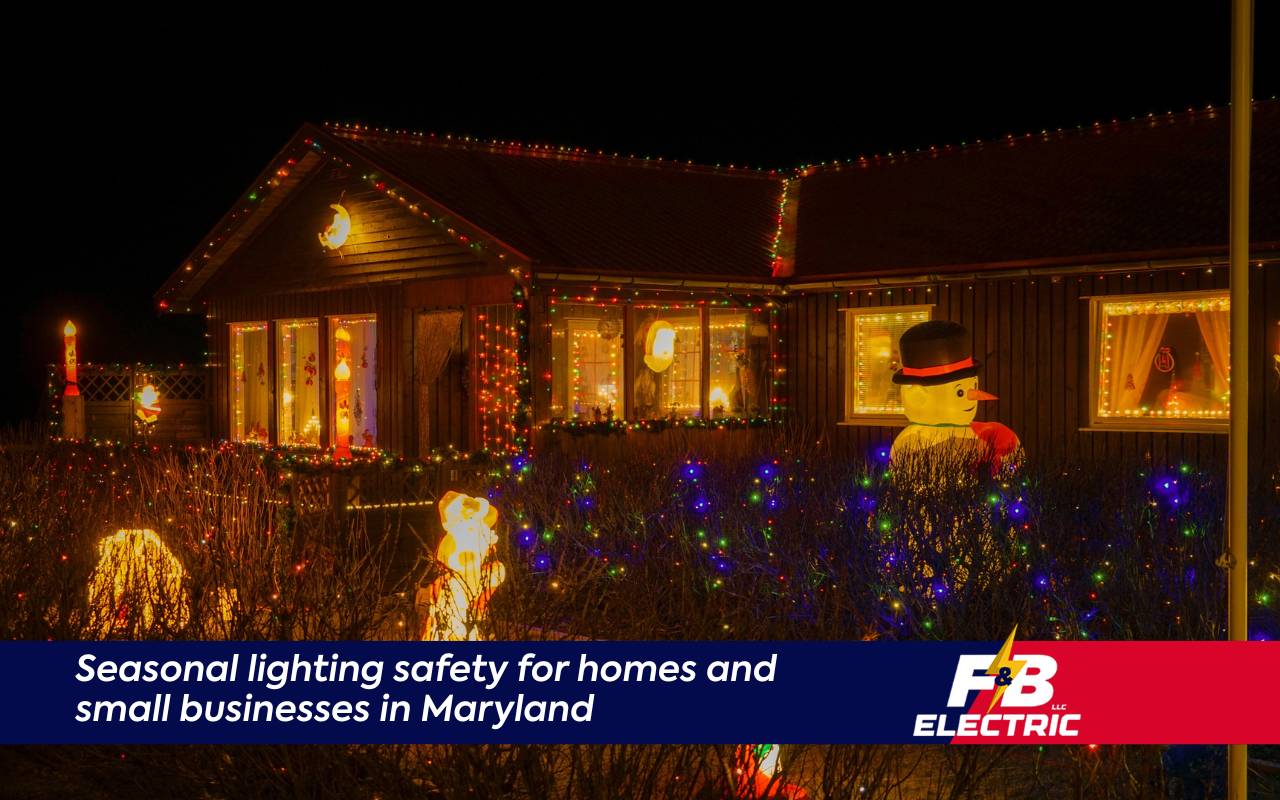
Holiday Lighting Electrical Safety Tips in MD help you illuminate your home and small business safely this holiday season. With Maryland’s enchanting winter landscapes as your backdrop, it is tempting to decorate every corner with twinkling lights and festive displays.
However, before you plug in that first string of lights, consider the hidden risks behind holiday decorating. Preventing holiday outlet overload and checking that your extension cords are ready for the job is crucial for a safe celebration.
These safety steps are not just for peace of mind; they are essential. When you follow smart seasonal lighting habits, you enjoy the season and keep hazards away. A GFCI can be your best friend, and understanding its role can make a big difference.
Whether you set up a cozy light show at home or decorate your business to attract holiday shoppers, safety matters. By taking a little time to plan, you can let your holiday lights shine brightly without worries and keep this Maryland season secure.
Importance of Holiday Lighting Electrical Safety Tips in MD
Creating a festive atmosphere with lights brings warmth to cold winter nights, but without proper care, displays can become dangerous. Electricity and moisture do not mix, and icy conditions make wires easier to damage.
A safe holiday lighting setup in MD requires attention to simple details. You must choose the right products, secure cords properly, and use ground-fault protection. Ignoring these steps may lead to shocks, fires, or trips that end a celebration early.
Many homeowners and business owners overlook hidden hazards like overloaded circuits or frayed wires. In Maryland, snow and rain can seep into connectors and raise the risk of short circuits.
By following clear Holiday Lighting Electrical Safety Tips in MD, you protect your property and the people you care about. Simple routines such as examining lights before installing, unplugging decorations when not in use, and keeping cords off wet ground make a big difference.
- Inspect light strings for damage before hanging them.
- Keep all connections away from snow, puddles, and ice.
- Use outdoor-rated equipment for every outdoor display.
For more everyday guidance, review detailed electrical safety tips that support safer choices all year.
Understanding GFCI for Holiday Lighting
Ground Fault Circuit Interrupters shut off power when they detect a difference between incoming and outgoing electrical current. Known as GFCI for holiday lights, these devices guard against shocks caused by faulty wiring or moisture.
Installing GFCI outlets or using plug-in GFCI adapters offers reliable protection in damp outdoor settings. When you decorate, especially outside, they add an important extra layer of safety.
Knowing how and where to install a GFCI unit is key. Outdoor lights, inflatables, and any display near water should connect through GFCI outlets.
Before each season, test the built-in “test” and “reset” buttons to confirm the device works correctly. After snowfall or rain, check GFCI outlets again to stay confident in your holiday display’s safety.
- Use GFCI outlets for all outdoor holiday lighting.
- Test each outlet before and during the season.
- Replace any GFCI device that fails a test.
If you are unsure where to start, consider installing GFCI outlets with help from a licensed electrician.
Holiday Lighting Safety Tips for Homes
Homeowners can enjoy the season without problems by planning a safe holiday lighting setup in MD. When you follow Holiday Lighting Electrical Safety Tips in MD, you make every part of your safe holiday lighting setup in MD easier.
Begin by inspecting each set of lights for cracked insulation or exposed wires. Replace any damaged strings and never try a quick repair with tape. Outdoor fixtures must be labeled for outdoor use, and plugs need to fit snugly into weather-resistant outlets.
- Choose outdoor-rated lights and extension cords for exterior displays.
- Use weatherproof covers on outdoor outlets.
- Unplug indoor and outdoor lights before you leave home or go to bed.
Next, keep cords high and dry. Hanging lights with plastic hooks prevents punctures that metal staples can cause. Avoid running cables across walkways or driveways to reduce trip hazards.
Additionally, use a timer or smart plug to switch lights off at bedtime. This habit cuts power use and helps prevent overheating. Following these safe extension cord tips helps guard your family and home from common holiday lighting problems.
Holiday Lighting Safety Tips for Small Businesses
Retailers and café owners often rely on festive displays to draw customers, but commercial setups need even greater care. These Holiday Lighting Electrical Safety Tips in MD help small businesses create welcoming displays without extra electrical risk.
First, verify that all lights carry UL or ETL approval for outdoor use. Indoor displays should never use outdoor-rated lights in enclosed, heated spaces, because temperature changes can damage wiring over time.
- Confirm all decorations are rated for their location.
- Keep wires away from doors, shelves, and moving equipment.
- Train staff to spot and report damaged cords or plugs.
Secure decorations at a safe height to avoid contact with pedestrians. Place extension cord connections off the ground, ideally in weatherproof junction boxes.
Moreover, protect outlets with GFCI for holiday lights and post simple notice signs where wiring crosses walkways. When possible, unplug displays after business hours to lower energy use and reduce holiday outlet overload risk.
If you notice frequent electrical issues, consider scheduling a visit instead of guessing. You can easily contact F&B Electric LLC to discuss business lighting safety.
Choosing the Right Type of Lights
Selecting the right lighting can make installations safer and more durable. LEDs use far less power than incandescent bulbs, which reduces strain on circuits and lowers electricity use. They also stay cooler, which reduces fire risk.
Look for lights marked “outdoor-rated” so they can handle moisture and temperature swings common in Maryland winters. This small choice supports long-lasting displays.
- Pick LED strings to cut power use and heat.
- Choose products clearly marked for indoor or outdoor use.
- Check packaging for safety labels like UL, ETL, or CSA.
Always check for trusted safety certifications such as UL, ETL, or CSA. Low-voltage LED systems paired with transformer kits deliver bright displays without high power draw.
Battery-operated options offer flexibility in remote spots, but remember to replace or recharge batteries regularly. By choosing quality lights, you reduce the chance of shorts and enjoy decorations with less stress.
Proper Installation Techniques
Installing holiday lights safely means planning ahead for power sources and cord management. Never pinch or crush cables; they should hang in gentle curves between hooks rather than tight lines.
Secure lights with plastic clips or insulated staples, and avoid sharp metal fasteners that can cut insulation. If you need to reach higher spots, use a stable ladder on firm ground and ask a helper to hold it steady.
- Set ladders on level, dry surfaces.
- Keep cords away from doors and moving parts.
- Use clips designed for gutters and shingles.
Follow safe extension cord tips by selecting outdoor-rated, heavy-duty cords. Match cord length to the job; too much slack can cause tangles, while tight cords may pull out of outlets.
Furthermore, keep plug connections off wet surfaces by lifting them on blocks or using covered receptacles. With careful installation, you can enjoy a bright, safe display all season.
Preventing Outlet Overload
Overloading outlets is one of the leading causes of holiday lighting problems. Connecting too many light strands to a single outlet raises the holiday outlet overload risk, which can lead to overheating and possible fire.
To avoid this danger, spread your display across multiple circuits. Use the manufacturer’s guidelines on how many strings you can safely connect.
- Check package instructions for maximum string counts.
- Use multiple outdoor outlets when possible.
- Do not daisy-chain power strips or adapters.
Power strips with surge protectors provide extra safety but still have limits. Calculate the total wattage of your lights before plugging them in.
If you need more outlets, consider installing additional outdoor-rated receptacles or using a licensed electrician. Balancing your load ensures each circuit handles a safe amount of current, so your decorations shine without trouble.
Inspecting and Maintaining Light Displays
Regular checks keep your lights working well all season. Once installations are complete, turn on your display during daylight to spot loose bulbs or flickering sections.
Address issues right away; a single bad bulb in some series-wired sets can dim the entire strand. Replace damaged sockets and frayed wires immediately instead of waiting.
After storms or heavy snowfall, inspect connections for moisture. Gently shake off ice or snow to prevent extra weight from straining fasteners.
Additionally, clean lens covers and reflectors to improve brightness. A little upkeep each week helps you avoid surprises and extends the life of your festive lighting.
Creating a Safety Checklist for Holiday Lighting
Building a written safety checklist makes setup easier and keeps hazards in focus. Start by listing simple tasks, such as unpacking lights, inspecting for damage, choosing proper outlets, testing GFCI for holiday lights, and securing cords.
Assign deadlines for each step so you avoid last-minute rushing when bad weather arrives. This planning habit keeps you on schedule.
- List each decorating task and needed tools.
- Include reminders to test GFCI outlets.
- Add a final walk-through to check cords and timers.
Next, include points on load calculations, ladder use, and turning off lights nightly. Share the checklist with family or staff to split duties and ensure accountability.
When your team follows a simple plan, decorations go up faster and more safely. You then have more time to enjoy the season’s events.
Frequently Asked Questions
These common questions about seasonal lighting safety can help Maryland homeowners and business owners decorate with more confidence and less stress.
What are the most important Holiday Lighting Electrical Safety Tips in MD for older homes?
Older homes may have limited circuits and aging wiring, so start with a careful inspection. Avoid overloading outlets, use LED lights, and plug outdoor displays into GFCI outlets.
Additionally, consider having an electrician inspect your panel and circuits. You can review helpful electrical safety tips to support safer choices.
How often should I test my GFCI for holiday lights?
Test every GFCI outlet before you install any holiday lights. Then, test again after major storms, heavy snow, or if you notice tripping.
Press the “test” button to shut power off and the “reset” button to restore it. If the outlet does not respond, stop using it and schedule a repair.
How can I tell if I am close to a holiday outlet overload risk?
Signs of overload include warm outlet covers, flickering lights, or breakers that trip more than once. You may also notice buzzing sounds from outlets or power strips.
To reduce holiday outlet overload risk, move some decorations to another circuit and follow the limits listed on the light packaging.
Are indoor extension cords safe for outdoor holiday lighting?
Indoor extension cords are not designed for moisture, cold, or sunlight. When used outside, they can crack, short out, or shock someone.
Always choose outdoor-rated, heavy-duty cords for exterior displays. Following safe extension cord tips helps prevent fires and injuries around your home or business.
When should I call an electrician in Maryland about my holiday lighting?
You should call a professional if breakers trip often, outlets feel hot, or you see damaged wiring. Also, seek help if you need more outdoor receptacles or guidance on GFCI locations.
Instead of guessing, safely contact F&B Electric LLC to discuss your holiday lighting plans and any electrical concerns.
Ensuring a Merry and Safe Holiday Season
By taking time to plan and follow these electrical safety tips, you can turn your home or business into a festive wonderland without added risk. From understanding the role of GFCI for holiday lights to mastering safe extension cord tips, every step helps protect your property and loved ones.
Implementing a simple safety checklist, inspecting displays regularly, and choosing the right equipment all make a difference. This season, let your lights shine brightly and safely across Maryland, so you can focus on enjoying every holiday moment.