
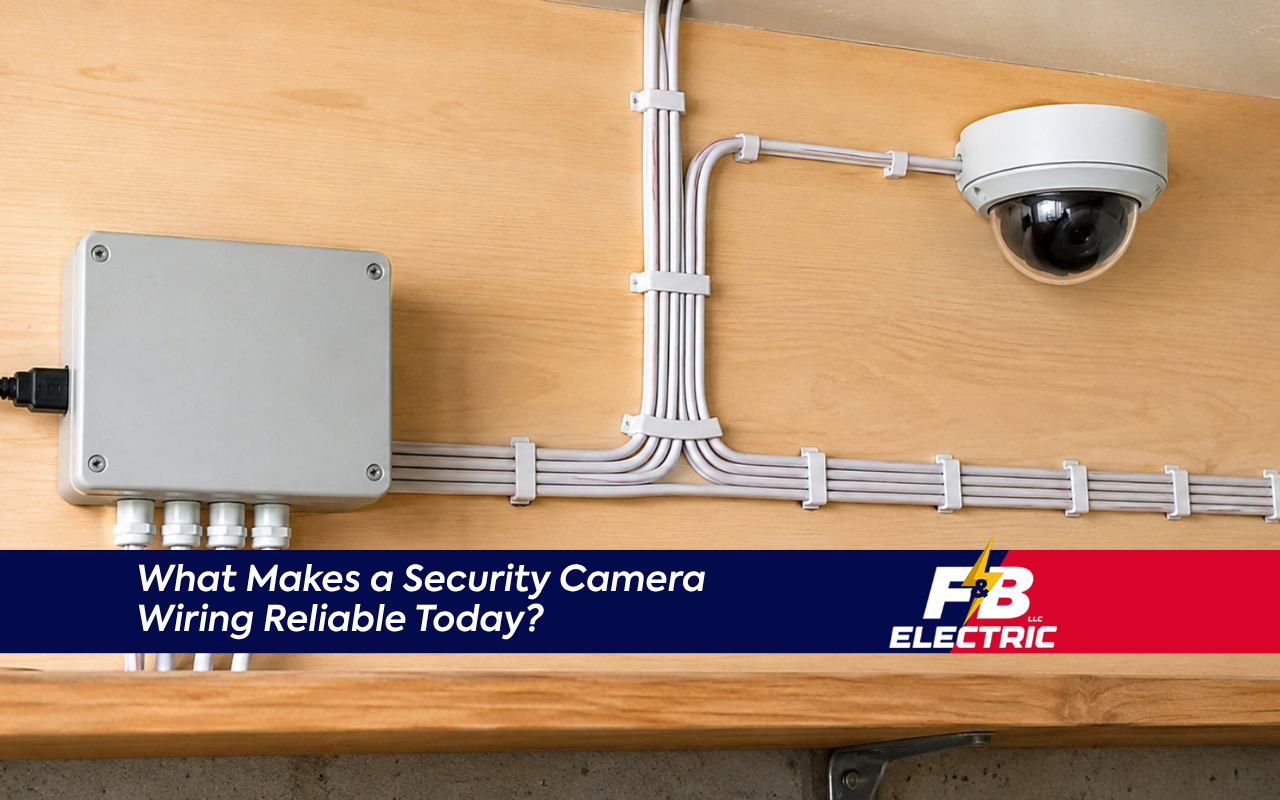
A Security camera wiring guide is reliable when it explains cable types, safe power connections, clean routing, and proper testing. Good wiring helps cameras stay powered, record clear video, and cover the areas that matter most.
You can also review our Explore More Electrical Services page for related electrical support.
A Practical Security Camera Wiring Guide Protects Reliable Coverage
A clear wiring plan helps every camera reach power, signal, and recording equipment without weak links. Before any cable is placed, the layout should match the areas you need to watch, including doors, driveways, halls, storage rooms, or parking areas.
Good planning starts with camera placement, recorder location, and cable distance. CISA explains that physical security depends on protecting specific spaces and reducing risks. That idea matters for camera layouts because wiring should support the areas with the most value or concern.
- Mark each camera location before drilling.
- Keep cable paths short when possible.
- Avoid sharp bends that damage wires.
- Leave access for future testing.
With F&B Electric LLC, you get guidance that keeps the setup practical, safe, and easier to maintain.
CCTV Wiring Basics Support Clear Video Signals Indoors
CCTV wiring basics help you understand how cameras send video and power to the recorder. Analog cameras often use coaxial cable with separate power wiring, while IP cameras usually use Ethernet cable for data and sometimes power.
Coaxial cable can work well for analog systems when the connectors are tight and the cable is protected. Ethernet cable, such as Cat5e or Cat6, is common for IP cameras. Power over Ethernet can reduce clutter because one cable can carry both data and power.
Useful cable choices include:
- Coaxial cable for many analog cameras.
- Cat5e or Cat6 for IP systems.
- Outdoor-rated cable for exposed areas.
- Conduit for added cable protection.
For business properties, our Commercial Electrician in Halethorpe, MD page explains electrical support for commercial spaces.
Safe Power Planning Prevents Camera Shutdowns And Flicker
Security camera power wiring must support the camera load, cable distance, and power source. Weak planning can cause flickering video, random shutdowns, or cameras that fail during the moments you need them most.
Many cameras use low voltage power, but low voltage does not mean careless wiring is safe. NFPA notes that electrical safety is important during design, installation, and maintenance. That applies to camera power planning because poor connections can create avoidable risks.
Before scheduling with F&B Electric LLC, you can gather the camera model, number of cameras, recorder location, and power source details. This helps us review safe power options and explain what should be checked before work begins.
Security camera power wiring should be protected from moisture, strain, and loose terminations. Outdoor connections need special care because water, heat, and movement can shorten system life.
Low Voltage Camera Wiring Keeps Installations Cleaner
Low voltage camera wiring helps reduce clutter while keeping cameras connected to stable power and signal paths. It is common for cameras, door devices, access controls, and some security accessories in homes and businesses.
Clean wiring also supports easier troubleshooting later. If cables are labeled, secured, and protected, it becomes simpler to find the correct camera line. Our team checks routes, explains connector choices, and recommends practical protection where wires pass through walls, ceilings, or exterior surfaces.
Important safety-focused details include:
- Use rated cable for the location.
- Seal exterior wall openings.
- Keep wires away from damage points.
- Label both ends of each cable.
- Protect wires with conduit when needed.
For broader safety planning, review our Electrical Safety Guidelines before starting a wiring project.
Organized Wiring Steps Prepare Your Camera Installation Correctly
A simple process helps property owners feel ready before the camera installation begins. When customers contact F&B Electric LLC, we ask about the property, camera locations, recorder setup, power access, and any areas where wiring may be difficult.
After that, the next step is reviewing practical needs. We look at cable routes, safe entry points, connection areas, and possible obstacles. Then we explain what should happen before work starts, including how wires may be secured and protected.
- Review camera goals and coverage areas.
- Check power and recorder locations.
- Plan cable paths and entry points.
- Secure wires, connectors, and labels.
- Test camera views and signal quality.
These security system wiring tips Halethorpe, MD property owners can use help reduce mistakes before installation day. A neat process also makes future service easier.
Careful Mounting Improves Coverage Across Halethorpe Properties Today
Camera placement affects what your system can actually capture. Even well-wired cameras may miss key details if the angle, height, or lighting is wrong. Good mounting supports better faces, vehicle views, entrances, and activity zones.
Mounting should account for glare, shadows, weather exposure, and tampering risks. Cameras often work better when placed high enough to stay protected but low enough to capture useful detail. Wire entry points should also be sealed so moisture does not reach the cable path.
Our team at F&B Electric LLC, during planning, reviews camera angles with the wiring path in mind. That helps avoid unnecessary holes, exposed cable runs, and coverage gaps. If you need help choosing safe locations, Contact Our Team for guidance.
Frequently Asked Questions
What wire is best for security camera systems?
The best wire depends on the camera type. Analog cameras often use coaxial cable with power wiring. IP cameras usually use Cat5e or Cat6 Ethernet cable. Outdoor cameras need rated cable and protected paths. Review Explore More Electrical Services for related wiring support.
Camera wiring can often be hidden inside walls when the cable type, route, and entry points are planned correctly. The wire should be protected from sharp edges, moisture, and strain. Safe routing also makes the finished installation cleaner and easier to inspect later.
Does low voltage camera wiring still need care?
Yes, low voltage camera wiring still needs careful planning. Poor cable choices, loose connectors, and unsealed outdoor points can cause camera failures. For safety reminders before planning any wiring, visit our Electrical Safety Guidelines.
Why does my camera video flicker at night?
Night flicker can happen when the camera does not receive steady power, especially when infrared lights turn on. Long wire runs, weak adapters, or loose power connections may also cause problems. Testing voltage and checking connectors can help find the issue.
Who should I contact for wiring help locally?
Property owners who want safer wiring, cleaner cable paths, or help with power planning should speak with a qualified electrical team. For local guidance in Halethorpe, use our Contact Our Team page and share your camera setup details.
Choose Safer Wiring Support For Better Camera Performance
A reliable Security camera wiring guide helps you plan cleaner connections, safer power, and better coverage before problems appear. At F&B Electric LLC, we explain practical options and help property owners avoid rushed wiring choices. For support with security system wiring tips Halethorpe, MD customers can use, reach out through Contact Our Team.