
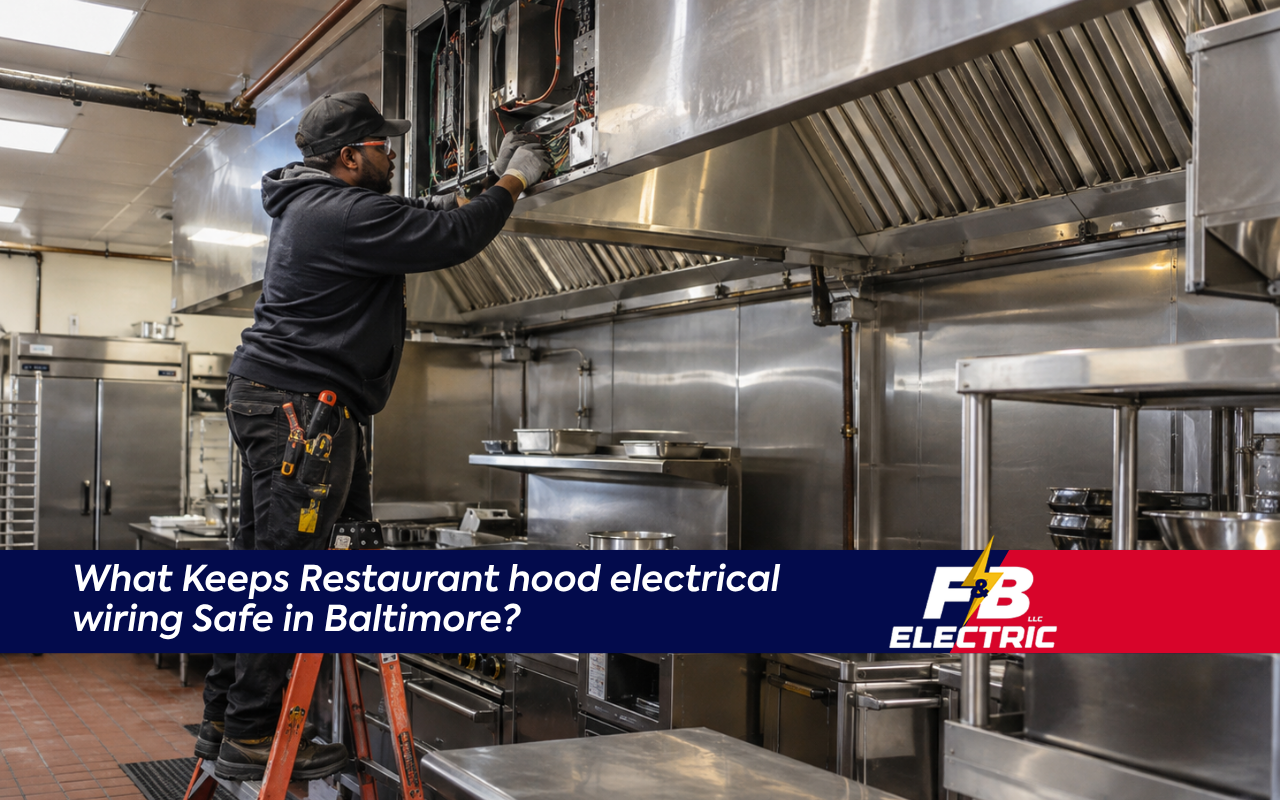
Restaurant hood electrical wiring stays safe when circuits, controls, fan power, and disconnects are installed for commercial kitchen demand. At F&B Electric LLC, we check load needs, wiring condition, and control function so kitchen exhaust equipment can run safely during service.
For related electrical support, review our Commercial Electrical Services before planning repairs, upgrades, or inspections.
Protect Restaurant hood electrical wiring from Costly Kitchen Downtime
Safe hood wiring keeps exhaust equipment running when the kitchen is busy. Poor wiring can cause breaker trips, fan shutdowns, weak airflow, and unsafe heat buildup. Reliable electrical planning helps protect staff, food operations, and customer service from avoidable interruptions.
Many Baltimore kitchens add ovens, fryers, warmers, or prep equipment over time. However, the hood system may still depend on older circuits. With F&B Electric LLC, we review whether restaurant ventilation power matches the real load before problems grow.
- Dedicated power helps exhaust fans run without shared circuit strain.
- Correct wire sizing reduces overheating and voltage drop risks.
- Secure terminations limit arcing, flickering, and sudden shutdowns.
- Clear disconnect access supports safer inspection and repair work.
NFPA explains that commercial cooking ventilation and fire protection systems need proper design, installation, inspection, and maintenance. That guidance matters because grease, heat, and electrical faults can become a serious risk in active kitchens.
Spot Hood Fan Electrical Wiring Warning Signs Early
Warning signs often appear before a hood system fails. Breaker trips, buzzing, burning smells, weak fan speed, or flickering lights near the hood area can point to loose wiring, overloaded circuits, damaged insulation, or failing controls.
Hood fan electrical wiring should not be ignored when exhaust performance changes. A fan that starts slowly, hums, or stops during cooking may have voltage problems or worn components. In addition, grease inside electrical areas can damage insulation and terminals.
- Repeated breaker trips during cooking hours
- Burning odor near panels, switches, or junction boxes
- Fan motors that hum, buzz, or run unevenly
- Discolored covers, warm boxes, or damaged conduit
- Controls that fail to start exhaust equipment
When these signs appear, shut down affected equipment if safety is a concern. Then schedule a qualified electrical review before the damage gets worse.
Match Restaurant Ventilation Power to Kitchen Equipment Demand
Restaurant ventilation power must match the cooking equipment, fan motor load, and control requirements. A hood system can struggle when new appliances are added without reviewing circuit capacity, panel space, and exhaust wiring needs.
Commercial kitchens use power in layers. The exhaust fan, make-up air, lighting, cooking line, refrigeration, and controls all affect the electrical plan. Our team at F&B Electric LLC checks these connections so the hood system is not treated as an isolated device.
For larger changes, review Restaurant Electrical Load Planning in MD. Load planning helps restaurant owners understand whether existing power can support new kitchen equipment before installation begins.
OSHA notes that local exhaust ventilation can help control heat and moisture where high heat is produced. In a restaurant, steady exhaust power supports worker comfort and helps move heat, smoke, steam, and grease-laden air away from the cook line.
Plan Hood Control Wiring for Safer Daily Operation
Hood control wiring links switches, starters, control panels, fans, and related safety devices. When controls are wired clearly, staff can start exhaust equipment, maintain airflow, and reduce confusion during opening, closing, inspections, or repair work.
Control wiring should be easy to understand for trained technicians. Labels, clean routing, and protected connections help reduce mistakes during service. Also, clear controls make it easier to test whether the hood fan and related equipment respond correctly.
- Control panel condition and labeling
- Switch function and safe access
- Fan starter and motor connection points
- Conduit protection near heat and grease areas
- Coordination with fire and ventilation equipment
For commercial support beyond the hood system, visit our Commercial Electrician Baltimore MD page. A full review can help connect hood performance with the rest of the building’s electrical needs.
Review Commercial Kitchen Exhaust Wiring Before Upgrades
Commercial kitchen exhaust wiring should be reviewed before adding cooking equipment, replacing a fan, changing controls, or remodeling the kitchen line. A review helps confirm whether the existing electrical setup can support safe operation after the change.
When customers contact F&B Electric LLC, we first ask about the hood equipment, current problem, recent kitchen changes, and any breaker or fan issues. Then we review the electrical path and explain practical next steps without making unsupported promises.
- First, we ask what equipment is connected to the hood system.
- Next, we inspect panels, breakers, wiring paths, and controls.
- Then, we explain repair or upgrade options in simple terms.
- Before work begins, we review safe access and project needs.
- After completion, we help customers understand what changed.
This process helps restaurant owners feel prepared. It also reduces guesswork before a repair appointment, kitchen upgrade, or scheduled electrical project.
Frequently Asked Questions
What causes restaurant hood breakers to trip during cooking?
Breaker trips can come from overloaded circuits, loose connections, failing fan motors, or damaged wiring. Grease, heat, and moisture may also affect nearby electrical parts. If trips happen more than once, schedule a professional review through our Contact F&B Electric LLC page.
When should hood wiring be checked by an electrician?
Hood wiring should be checked when fans slow down, controls fail, breakers trip, or cooking equipment changes. A review is also smart before remodeling a kitchen line. Early checks can prevent unsafe heat buildup, wiring damage, and service interruptions.
Can new kitchen equipment affect hood electrical performance?
Yes. New cooking equipment can change electrical load, heat output, and ventilation demand. That change may affect fan power and controls. Before adding appliances, review Restaurant Electrical Load Planning in MD to understand power needs.
Why does my hood fan buzz or hum loudly?
A buzzing hood fan may point to voltage issues, loose connections, worn motor parts, or control problems. The sound should not be treated as normal. Turn attention to the issue early, especially if airflow drops or the fan starts unevenly.
Who handles commercial hood wiring in Baltimore restaurants?
A commercial electrician should handle hood wiring because restaurant kitchens involve heat, grease, exhaust equipment, and code-sensitive systems. For local help, visit Commercial Electrician Baltimore MD and request guidance for your kitchen setup.
Schedule Safer Hood Wiring Support for Your Kitchen
Safe kitchen exhaust power starts with a clear electrical review. When customers contact F&B Electric LLC, we listen to the problem, check the system, and explain the next safe step. Use our Contact F&B Electric LLC page to request help with Restaurant hood electrical wiring in Baltimore.