
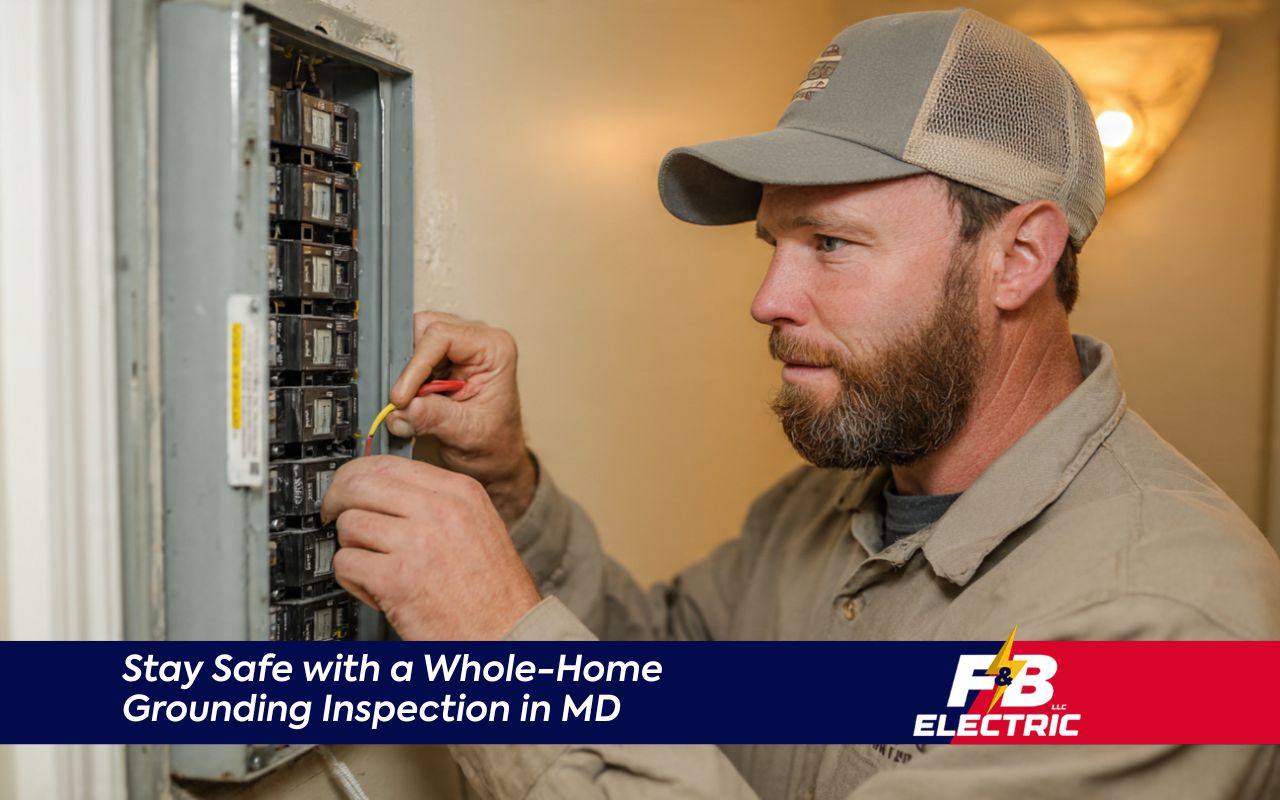
Consider the unseen helper behind your walls, keeping your home safer. It guides extra electricity into the earth. However, many Maryland homeowners do not know when it needs a closer look. A whole-home grounding inspection in MD matters because it helps protect your family and property from sudden electrical danger.
Each day, you charge devices, flip switches, and run appliances. So, you depend on a steady system. Without proper grounding, normal tasks can become risky. Have you wondered how well your system protects you? Grounding wire safety MD also brings peace of mind, because your home’s electrical base stays solid.
Why Grounding Matters in Maryland Homes
Every home needs a working grounding system to help protect people and electronics. It gives extra electrical current a direct path into the earth. As a result, it lowers shock risk and reduces damage to devices. In Maryland, grounding code Maryland also expects reliable rods, wiring, and bonding connections.
So, regular checks help you avoid problems and keep your system up to date. If you want a broader view of home checks, you can also explore this electrical inspection checklist.
- It guides fault current away from people.
- It helps protect sensitive electronics from surges.
- It supports safer use of outlets and appliances.
How a Whole-Home Grounding Check Works
When you schedule a whole-home grounding check, a licensed electrician tests the path from wiring to the grounding rod. They also check outlet grounding and key connections. Therefore, issues like loose clamps or worn wires can be found early. This is why a whole-home grounding inspection in MD can reduce hidden risks.
If you want to learn how inspectors review home systems, see this guide to a residential electrical inspection.
- They test continuity from outlets to the grounding system.
- They check clamps, wires, and rods for wear or rust.
- They confirm key connections are firm and complete.
Bonding vs Grounding in Simple Terms
Many homeowners ask about bonding vs grounding, and the difference is useful to know. Grounding sends fault current into the earth. Meanwhile, bonding connects metal parts so they share the same voltage. As a result, it reduces shock paths through pipes, panels, and metal parts.
- Grounding: moves extra current into the earth.
- Bonding: links metal parts to reduce voltage gaps.
- Together: they create a safer electrical network.
Signs Your Grounding System Needs an Inspection
Some warning signs are easy to miss, yet they matter. For example, flickering lights or dimming during heavy appliance use can point to weak connections. Also, frequent tripped breakers, outlet sparks, or small shocks may signal grounding wire safety MD concerns. Buzzing outlets can also hint at unsafe current paths.
- Lights flicker or dim when big appliances start.
- Breakers trip often, or outlets spark.
- You feel minor shocks when touching appliances.
Why Faulty Grounding Can Be Dangerous
A broken ground path can raise shock risk quickly. When grounding fails, metal parts can carry live current without warning. Moreover, heat from uncontrolled current can raise fire risk near flammable materials. Faulty grounding can also harm electronics during surges, because extra voltage has no safe exit.
To stay aligned with grounding code Maryland and other key rules, it helps to review guidance on electrical code compliance.
Benefits of Regular Grounding Inspections
Regular checks offer safety and long-term savings. They can catch loose fittings and worn parts before they become costly repairs. Also, a strong grounding system can support insurance needs and improve home value. So, planning a whole-home grounding inspection in MD is a smart step for many homeowners.
- Find small issues before they grow.
- Support safer protection from surges.
- Improve confidence during home sales.
How to Get Ready for an Inspection
Before the visit, share any past electrical issues and recent changes. Also, gather notes from old repairs if you have them. Clear access around the main panel and outdoor rods. Trim grass and move items blocking the panel door. As a result, the electrician can work faster and spot issues sooner.
Frequently Asked Questions
How often should I schedule a grounding inspection?
Generally, it helps to check after major storms, renovations, or when warning signs appear. Many owners also include it in routine home upkeep.
Can a grounding problem damage my electronics?
Yes. Without a good path to the earth, surges may harm devices. So, proper grounding supports better protection.
Is an outlet tester enough for a full check?
It helps as a quick screen. However, it cannot confirm every connection or bonding point. A pro test is more complete.
What if my home has older wiring?
Older setups may not match newer grounding code Maryland needs. So, an inspection can show what updates are worth doing.
When should I call a professional electrician?
If you notice shocks, sparks, buzzing outlets, or frequent breaker trips, it is safer to call soon. A whole-home grounding inspection in MD can clarify the cause.
Make Safety a Priority Today
A solid grounding system helps protect your family, your home, and your devices. So, keep an eye on warning signs and stay proactive. When you are ready, F&B Electric LLC can help you plan the right next step. For questions or scheduling, reach out through the contact page.
If you want added peace of mind, a whole-home grounding inspection in MD is a simple step that can reduce real risk. F&B Electric LLC also supports clear guidance, safer choices, and better home protection.