
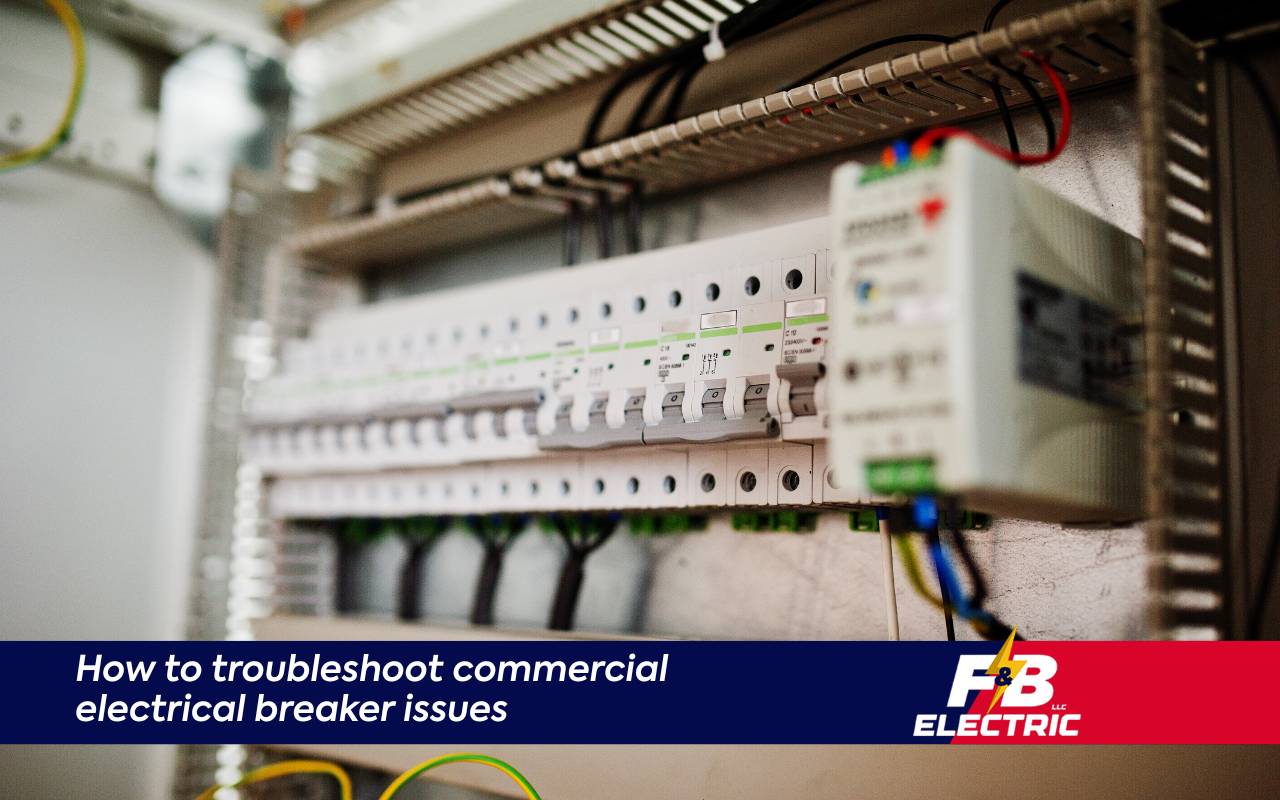
Commercial Breaker Troubleshooting in Columbia helps you keep your business running when electrical problems suddenly appear. When power fails, work stops, customers wait, and stress rises for everyone on your team.
Tripped breakers and faulty panels can interrupt sales, production, or services. These issues can cause lost income and long delays. Whether you manage a small shop or a large site, learning simple checks keeps your building safer and more reliable.
This guide explains how to spot common problems, use basic tools, and follow safe steps. You will also learn when to stop and call a licensed electrician so your business power issues in Columbia do not turn into big emergencies.
Understanding Commercial Breaker Troubleshooting in Columbia
To start any Commercial Breaker Troubleshooting in Columbia, you first need to understand how commercial electrical breakers work. A breaker is a safety switch that stops power flow when it senses too much current.
In a business building, breakers protect both your equipment and your wiring from damage. These commercial devices handle higher power loads than home breakers, so they are stronger and more durable. When current goes above safe levels, the breaker trips and shuts off power to prevent fires or broken equipment.
Knowing the basics of industrial panel diagnostics helps you find small issues before they become serious. Each breaker controls one circuit, such as lights, heating and cooling, or machines. By tracking which breakers trip often, you can spot overloaded circuits or bad wiring.
Also, check that labels and panel diagrams match the real circuits. Clear and correct labels save time during an outage and lower downtime for business power issues in Columbia.
Common Causes of Tripped Breakers
Many things can cause a tripped breaker commercial in Columbia. However, some problems appear more often than others. When you understand these main causes, you can prevent many power interruptions.
- Overloads: Too many devices use power on one circuit.
- Short circuits: A hot wire touches a neutral or ground wire.
- Ground faults: Current takes an unsafe path to the ground.
- Old parts: Worn breakers trip faster than they should.
Overloads happen when many tools, computers, or machines share one line. Extension cords and power strips often make this worse when they support several devices at once. Short circuits create a sudden surge of power that makes the breaker trip right away.
Ground faults appear when wires touch metal surfaces or damp areas. Moisture inside panels or damaged wire covering often causes them. Older breakers can also weaken with age and may trip even under normal use. With these points in mind, Commercial Breaker Troubleshooting in Columbia becomes more focused and less stressful.
Tools Needed for Troubleshooting
Having the right tools nearby makes breaker repair tips in MD and surrounding areas much easier to follow. You do not need advanced gear, but you do need safe and simple items that give clear readings.
- Multimeter for checking voltage and basic tests
- Non-contact voltage tester to find live wires safely
- Flat and Phillips screwdrivers for panel covers
- Insulated gloves to lower shock risk
- Wire strippers and electrical tape for small fixes
- Flashlight and small mirror for dark or tight spots
- Portable breaker finder to match outlets with breakers
These tools make industrial panel diagnostics faster and more accurate. For example, a non-contact tester lets you confirm if a wire still carries power without touching metal parts. A breaker finder quickly shows which breaker serves a certain outlet or light, saving time during checks.
Safety Precautions Before Starting
Before you remove any panel cover, you must think about safety. Electricity can be dangerous, even at normal building levels. A few careful steps reduce the risk of shock, burns, or fire.
Always switch off the main disconnect to stop power to the entire panel. When possible, follow lockout and tagout steps so nobody turns power back on while you work. Wear safety goggles, insulated gloves, and long sleeves made from sturdy fabric.
Use a non-contact tester to make sure the panel and circuits are truly off. Look for loose wires, burn marks, dark areas, or melted plastic. Good lighting and a stable ladder also keep you safe. With these habits, your Commercial Breaker Troubleshooting in Columbia stays controlled and well organized.
Step-by-Step Troubleshooting Process
A clear step-by-step method makes every inspection smoother. It also helps you avoid missing important details while you work through business power issues in Columbia.
First, identify the problem circuit. Turn off other breakers and focus on the one that keeps tripping. Make a list of all equipment and outlets on that circuit. Then, unplug or switch off each item so you can test them one by one.
Next, gently check the breaker for signs of damage, such as cracks, burn marks, or a loose handle. If the breaker seems weak or noisy, it may need replacement. Use your multimeter to test voltage on both the incoming and outgoing sides of the breaker.
If the breaker trips again under a normal load, test each device on the circuit until you find the faulty one. Write down your tests and results. This simple record supports future industrial panel diagnostics and helps your electrician if you later need professional help.
How to Identify Malfunctioning Commercial Panels
Sometimes the problem is not the single breaker but the entire panel. Finding early signs of a bad panel can prevent larger failures and long outages.
Look for rust, moisture, or stains around the panel door and inside the box. These signs show that water or damp air may be entering the space. Corrosion can cause poor connections, which may lead to strange trips, flickering lights, or hot spots.
Listen for buzzing, crackling, or clicking sounds when power is on. Warm or hot areas on the panel surface can also mean trouble. A simple heat camera, used by many electricians, can reveal hidden hot spots without touching live parts.
Finally, read the panel schedule and compare it to the actual loads. If one phase or section carries much more power than others, you may need an electrical panel upgrade to balance the system and improve safety.
Fixing Minor Electrical Issues
Some simple problems are safe enough for trained building staff to handle. However, you must always turn off the main breaker first and confirm that the panel is not live.
One of the easiest breaker repair tips in MD is to tighten loose terminal screws. Loose parts can cause tiny sparks and heat that lead to trips. Check for worn wire covering and replace small damaged sections using wire strippers, wire nuts, and electrical tape.
Replacing a clearly worn breaker is another basic task. After power is off, gently remove the old breaker and install an identical new one. Then, restore power and test the circuit under a normal load.
These minor fixes help you handle straightforward Commercial Breaker Troubleshooting in Columbia. Still, do not attempt work that feels unclear or unsafe.
When to Call a Professional Electrician
Even with helpful breaker repair tips in MD and Columbia, some situations require a licensed commercial electrician. Knowing when to call is just as important as knowing basic checks.
Call a professional if breakers trip often, lights flicker, or you smell burning near the panel. Hidden wiring problems, damaged pipes that hold wires, and overloaded panels are not safe do-it-yourself tasks.
Upgrades, new circuits, and major layout changes must meet electrical code rules. A qualified electrician can perform detailed industrial panel diagnostics and suggest smart upgrades. If your building is older, they may also recommend rewiring for older buildings to improve safety and support modern equipment.
Whenever you feel unsure, it is wise to contact experienced commercial electricians who understand local rules and business needs.
Preventive Maintenance Tips for Commercial Electrical Systems
Preventive care is one of the best ways to avoid unexpected breakdowns and keep your panel working well for many years.
- Plan regular visual checks of breakers, wires, and panel covers.
- Clean dust and debris from around the panel area.
- Tighten loose connections during scheduled shutoffs.
- Use heat scans when possible to find hot spots early.
- Keep a simple log of inspections and repairs.
Balance heavy equipment across different circuits whenever you can. If certain breakers always run near their limits, consider shifting loads or planning an electrical panel upgrade. Replace very old breakers before they fail and cause an outage.
Train key staff each year on safe Commercial Breaker Troubleshooting in Columbia. Teach them how to spot warning signs and when to stop and call a professional. With these habits, your business power issues in Columbia should happen less often and be easier to manage.
Frequently Asked Questions
Why do my commercial breakers keep tripping?
Most breakers trip because of overloads, short circuits, or ground faults. Sometimes the breaker is old or weak. A simple check of loads, cords, and visible wiring usually reveals the main cause.
Is it safe to reset a tripped breaker commercial in Columbia?
Yes, it is usually safe to reset a breaker once. However, if it trips again right away, turn it off and investigate the cause. If you cannot find the problem quickly, call a licensed electrician.
What signs show that my electrical panel needs an upgrade?
Common signs include frequent trips, warm panel covers, buzzing sounds, or a full panel with no space for new circuits. In these cases, consider scheduling an expert panel upgrade.
Can I handle basic breaker repair tips in MD on my own?
You can handle simple tasks, such as tightening screws or replacing a clearly worn breaker, if power is fully off. However, wiring changes, new circuits, and repeated trips should always be left to professionals.
When should my business schedule professional electrical maintenance?
Most businesses benefit from a yearly full inspection and smaller checks during the year. High-use sites, such as restaurants or workshops, may need more frequent visits to prevent serious business power issues in Columbia.
Conclusion
Effective Commercial Breaker Troubleshooting in Columbia begins with understanding how breakers and panels work in your building. By using basic tools, following safe steps, and keeping up with regular inspections, you can solve many simple problems and prevent future outages.
However, major wiring faults, panel upgrades, and repeated trips require expert help. When you partner with trained commercial electricians, you protect your staff, equipment, and income while keeping your power system ready for daily business demands.