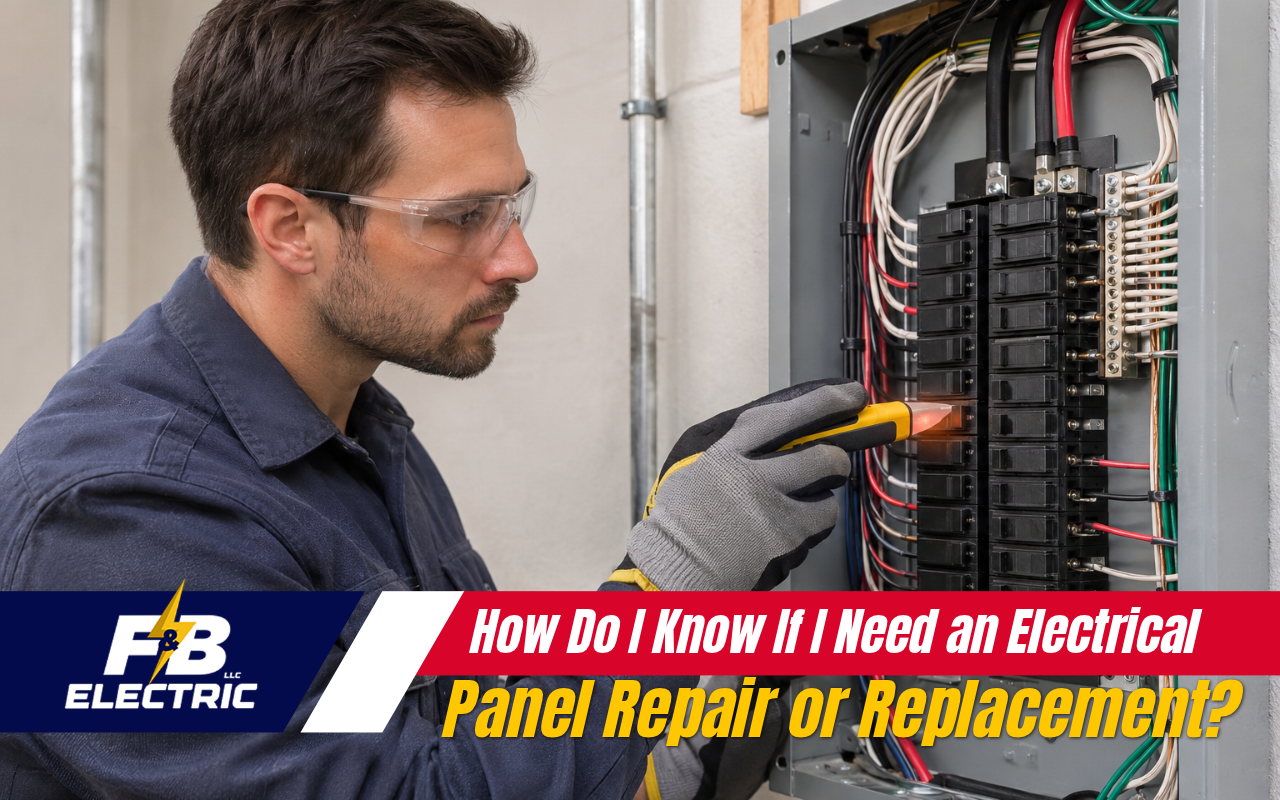
Frequent breaker trips, flickering lights, burning smells, or an outdated panel may indicate electrical problems. Minor issues might require repairs, while damaged or overloaded panels often need replacement. A licensed electrician can evaluate your system and recommend the safest option. Learn about our professional electrical panel installation services to improve your home’s electrical safety and reliability.
A Repair Needs a Clear and Limited Target
A reasonable repair starts with an identified defect. The electrician needs to determine what failed and whether the surrounding equipment remains suitable. A damaged breaker, for example, calls for more than finding another breaker with the same amperage printed on it.
The replacement component must suit the specific panel and installation. The assessment also needs to address why the original component failed. Otherwise, a replacement can leave the original cause unresolved. Ask whether the recommendation covers the cause, the damaged part, and any affected connections.
Replacement Addresses Broader Equipment Limitations
Electrical panel replacement signs can include significant damage or a configuration that cannot support the required work. Equipment condition, compatible parts, and future changes all influence the decision. A lack of spare spaces alone does not establish the home’s available electrical capacity.
At F&B Electric LLC, we bring over 20 years of experience to electrical concerns. When comparing recommendations, ask what would remain unchanged after replacement. A new panel does not automatically replace old branch wiring, correct every outlet issue, or increase the utility service capacity.
That distinction matters when a quote describes an upgrade. Confirm whether the word means newer equipment, more breaker spaces, increased service amperage, or a combination. Specific language makes the proposal easier to evaluate.
Building Use Changes the Planning Conversation
A business may need to coordinate shutdowns around employees, equipment, and customer access. A home may need different arrangements for refrigeration or medical equipment. If your Baltimore project concerns commercial equipment, Review Commercial Panel Planning.
Describe the building’s actual use before discussing equipment size. A small office, workshop, and retail space can have different demands even with similar floor areas. The evaluation should follow the loads and condition, rather than the building label alone.
For occupied properties, clarify who needs notice and who controls access. Ask whether the proposal includes coordination with the utility or permitting authority when needed. These details affect project planning even when the physical equipment appears straightforward.
Compare the Two Paths by Scope
| Decision point | Repair discussion | Replacement discussion |
|---|---|---|
| Identified problem | Specific defect with a suitable repair | Damage or limitations affecting the larger assembly |
| Capacity objective | May leave capacity unchanged | Requires separate confirmation of any service increase |
| Related wiring | Address affected portions as needed | Clarify which existing circuits remain |
| Future equipment | Check whether the repair supports the plan | Evaluate planned demand before selecting scope |
Use this comparison to organize questions, not to diagnose your panel from a description. Only an assessment can connect the condition of your equipment to an appropriate project. Two similar symptoms may lead to different recommendations.
Cost Comparisons Need Matching Assumptions
Electrical panel repair cost makes sense only alongside that scope. A low repair figure does not answer whether related damage exists. Request a description of the limits of the repair and the findings that could require a different approach.
Compare proposals that cover the same work. One estimate may include permits and related equipment, while another lists only a panel change. Ask each contractor to identify exclusions and the conditions that could add work.
- Which components does the price include?
- Does the scope change service amperage?
- Who handles required approvals and inspections?
- Does wall repair appear in the proposal?
- What findings could change the agreed scope?
A useful estimate explains the problem it intends to solve. Avoid treating a repair price as a direct substitute for replacement when the proposals address different conditions. Ask for a written comparison if both approaches remain viable.
Future Plans Can Change Today’s Best Choice
Deciding whether to repair or upgrade an electrical panel also means looking ahead. Tell the electrician about an EV charger, kitchen renovation, heat pump, or workshop you actually plan to add. Proposed equipment specifications help make this discussion concrete.
Separate confirmed projects from possibilities. A planned appliance with a known rating provides stronger design information than a vague intention to add more equipment someday. However, discussing likely changes can still prevent a repair decision that conflicts with a near-term project.
Our team at F&B Electric LLC is licensed and insured. Bring both your current concerns and upcoming plans to the conversation so the scope can address the right objective.
Conflicting Recommendations Need Matching Evidence
If two contractors recommend different paths, compare their findings before comparing their conclusions. One may have identified damage that the other proposal does not mention. Ask whether both assessments considered the same equipment and intended loads.
Request an explanation of why the less extensive option would or would not address the concern. If the disagreement remains unclear, a further professional assessment can help define the unresolved question. Keep the discussion tied to specific evidence rather than treating the number of recommendations as proof that one approach suits the property.
Keep a Record of the Final Decision
Before approving electrical panel repair in Baltimore, MD, keep the findings, proposed work, and exclusions together. If replacement is recommended, ask why a repair would leave the core concern unresolved. The explanation should connect directly to your specific Baltimore property.
Choose a practical repair or replacement path you can understand and document. A clear, written proposal helps you plan the budget, expected interruption, and later projects without guessing what the word upgrade includes. To discuss the replacement side of that decision with our team, Plan Your Panel Upgrade.