
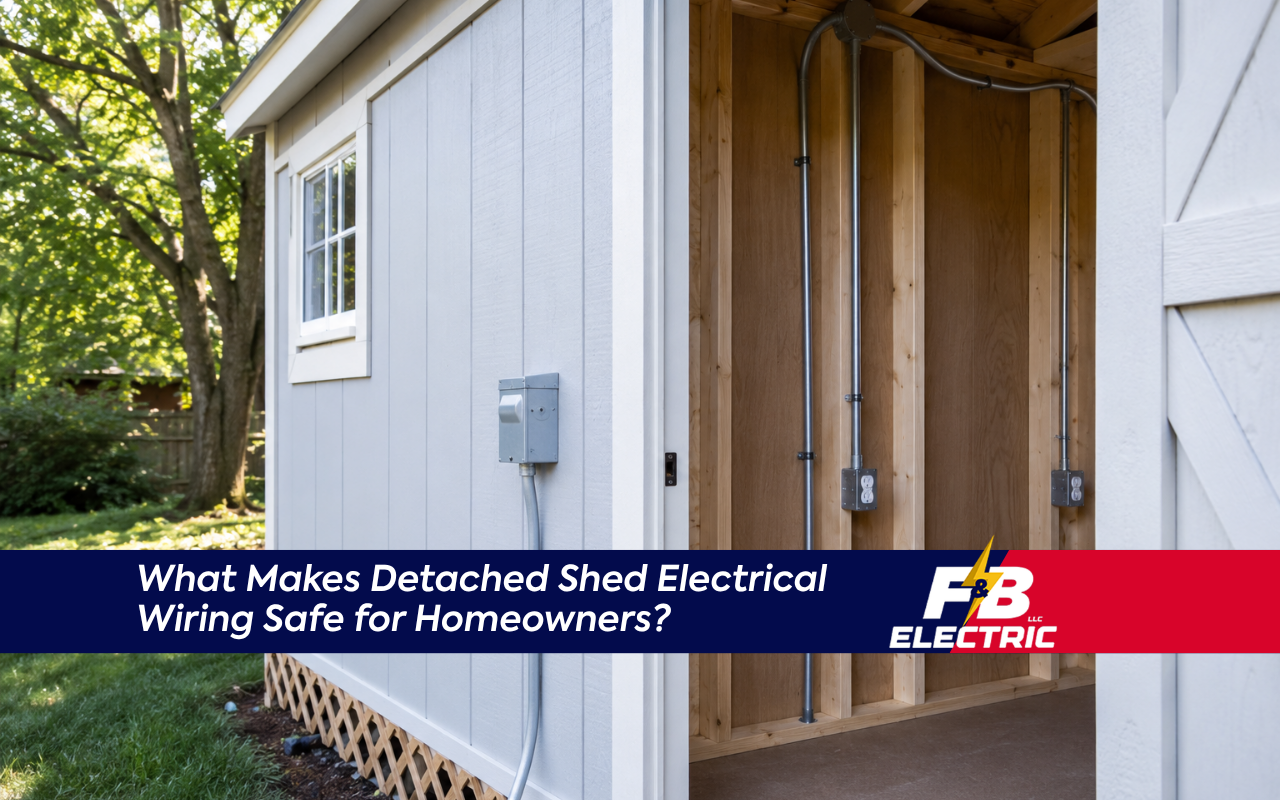
Detached shed electrical wiring is safe when the circuit, protection, grounding, outlets, and lighting match the shed’s use. Homeowners should plan power needs first, then use proper outdoor-rated materials, GFCI protection, and local code guidance before adding electricity to a detached structure.
What Makes Detached Shed Electrical Wiring Safe for Homeowners?
For many homeowners, wiring a shed involves sending protected power from the home to a separate outdoor structure. It may support lights, outlets, tools, chargers, or workbenches. The goal is to create useful power while reducing shock, fire, moisture, and overload risks.
For related home projects, our residential electrical support can help homeowners understand safer options before work begins.
Safe Shed Wiring Requirements Start With Clear Planning
Shed wiring requirements depend on the shed’s purpose, the expected electrical load, and the path from the home’s panel. Before work begins, we review how the space will be used, what equipment needs power, and whether lighting, outlets, or a small subpanel are needed.
In Halethorpe, MD, homeowners should treat a wired shed as part of the home’s electrical system. At F&B Electric LLC, we look at distance, load, moisture exposure, and panel capacity before recommending a setup. Baltimore County Government also lists electrical permits, which is important when electrical work changes or extends power.
- Tool use affects circuit size and outlet placement.
- Moisture exposure affects box, cover, and wiring choices.
- Panel capacity affects whether the home can support the load.
- Future use affects whether extra capacity makes sense.
Outdoor Structure Wiring Protects Power From Weather Exposure
Outdoor structure wiring needs protection from soil, rain, pests, movement, and temperature changes. Because the wiring leaves the main home, the materials must be suitable for outdoor conditions, and the connection points must be sealed and supported correctly.
Buried wiring may use approved conduit or outdoor-rated cable, depending on the project. We check the route before digging so the plan avoids unsafe shortcuts. The Electrical Safety Foundation International explains that GFCIs help shut off power during ground faults, which can happen when electricity and moisture meet.
Weather also affects everyday use. Covers, boxes, fittings, and fixture ratings matter because sheds can get humid, dusty, or damp. For code-focused questions, our electrical code compliance guidance can help you understand safer next steps.
Shed Outlet Installation Supports Tools Without Overloaded Circuits
Shed outlet installation should match where homeowners actually work, store tools, and charge equipment. Better outlet planning reduces extension cord use, keeps walkways clearer, and helps prevent overloaded receptacles during common shed tasks.
When homeowners call F&B Electric LLC, we ask what devices will be used in the shed. A few chargers and lights may need a simpler layout. Larger tools may need different planning. We do not guess at the load because overloaded circuits can create heat and nuisance tripping.
- Place outlets near benches and tool zones.
- Avoid relying on long extension cords.
- Use GFCI protection where required.
- Choose weather-resistant covers where exposure exists.
For homeowners comparing options, our Halethorpe residential electrician page explains local residential support in clear terms.
A Shed Lighting Circuit Improves Daily Workspace Visibility
A shed lighting circuit Halethorpe, MD homeowners can rely on should make the space easier to use without overloading outlets. Good lighting helps with tool work, storage, cleaning, and safer movement when natural light is limited.
Lighting should fit the size and purpose of the shed. Workbench areas may need brighter task lighting, while storage sheds may need simple overhead lighting. With F&B Electric LLC, you get help choosing placement that reduces shadows and keeps switches easy to reach.
Fixture ratings matter because sheds often face humidity and dust. We check where lights will be mounted, how switches should be placed, and whether fixtures need damp-location ratings. Clear lighting placement makes the shed safer and more useful after sunset.
Our Booking Process Prepares Every Detached Shed Electrical Wiring Project
A clear process helps homeowners understand what will happen before detached shed electrical wiring begins. We first gather the project details, then review the shed, power needs, panel condition, route, protection needs, and code questions before explaining the safest available options.
During a project review with F&B Electric LLC, we focus on practical details. We may ask about the shed size, planned tools, desired outlet locations, lighting needs, and whether trenching is involved. Before work begins, the first planning step is making sure the design matches real use.
- Tell us how the shed will be used.
- Show where outlets and lights are needed.
- Review the path from the home to the shed.
- Discuss protection, grounding, and code needs.
- Confirm the next step before work starts.
This process keeps the project easier to understand. It also helps avoid rushed decisions that can make outdoor wiring harder to maintain later.
Frequently Asked Questions
Do I need a permit for shed power work?
Many shed power projects need permit review because electrical work may extend power from the home. Rules can vary by property and project. Our electrical code compliance page can help you understand what to ask before starting.
Can one circuit run lights and outlets safely?
One circuit may work for light use, but the decision depends on the load. Lights, chargers, and small tools may not need the same setup as larger equipment. A licensed electrician should review the planned use before choosing circuit size.
What outlet type works best inside a shed?
The right outlet depends on exposure, load, and placement. Many shed outlets need GFCI protection, and some locations need weather-resistant covers. Our residential electrical support can help homeowners plan safer outlet locations.
Where should shed switches and lights be placed?
Switches usually work best near the entry, while lights should cover walking paths, storage areas, and work zones. A workbench may need task lighting. The best layout reduces shadows and keeps controls easy to reach when entering the shed.
Why should a licensed electrician review shed wiring?
A licensed electrician can check load needs, grounding, outdoor protection, and code concerns before wiring begins. That review helps reduce safety risks and repair problems. To discuss your shed plans, use our contact our electrical team page.
Plan Safer Shed Power With Local Electrical Guidance
Detached shed electrical wiring works best when the plan fits the shed, the property, and the homeowner’s daily needs. When you contact F&B Electric LLC, we explain practical options, review safety concerns, and help you choose a clear next step through our contact our electrical team page.