
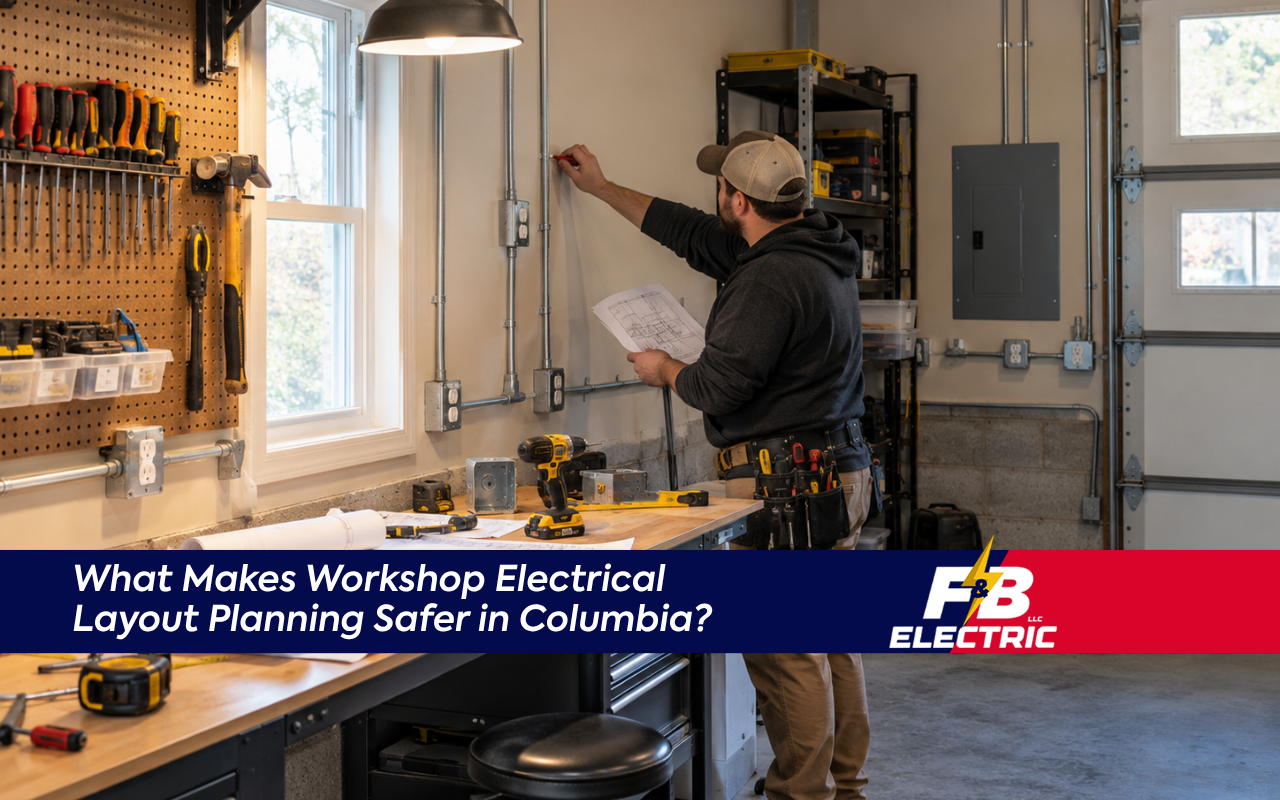
Workshop electrical layout planning makes a Columbia workspace safer by matching outlets, lighting, circuits, and tool loads to the way the shop is used. With F&B Electric LLC, we review the equipment, work areas, and power needs before recommending a practical layout.
With complete electrical service options, a better plan starts before wiring begins. The goal is simple: safer power, cleaner work zones, and outlets where projects actually happen.
Smart Outlet Placement Reduces Cord Hazards Around Workbenches
Well-planned workshop outlet placement keeps power close to the areas where tools are used most. Shorter cord runs reduce trip risks, limit clutter, and make the shop easier to clean, move through, and use during detailed work.
Start by walking the shop like you are working on a real project. Mark the bench, saw station, assembly table, charging shelf, and dust collection area. Then decide where outlets will help instead of where they only look convenient.
- Place outlets near fixed benches and tool stands.
- Keep cords away from doors and walkways.
- Use enough receptacles for chargers and small tools.
- Plan GFCI protection where moisture may be present.
At F&B Electric LLC, we look at daily tool movement, wall space, and existing circuits before discussing outlet locations. Good placement should support the workflow, not force the workflow around the wiring.
Power Tool Circuit Planning Protects Heavy Equipment Performance
Power tools circuit planning helps prevent overloaded breakers, voltage drops, and weak tool performance. Larger machines need circuits sized for their load, while smaller tools often need well-spaced general-purpose power throughout the shop.
Many workshop problems start when several high-draw tools share one circuit. A table saw, compressor, dust collector, or heater can pull more power than expected. When those loads overlap, breakers may trip or motors may strain.
During planning, we review each tool nameplate, voltage need, and likely use pattern. A dedicated circuit installation guide can help explain why some equipment should not share power with lighting or general outlets.
Clear circuit planning also helps with future upgrades. If you may add more equipment later, extra panel capacity can make the next improvement easier to review.
Dedicated 240V Workshop Outlet Choices Support Larger Machines
A 240V workshop outlet may be needed for welders, larger compressors, cabinet saws, or other heavy-duty equipment. The outlet, breaker, wire size, grounding, and location must match the machine and local electrical requirements.
Not every workshop needs 240V power. However, guessing can be risky. Check the manual or nameplate before buying equipment, then plan the circuit around the actual load. This helps reduce overheating, nuisance trips, and unsafe adapter use.
- Use 120V power for many hand tools and chargers.
- Use 240V power only when equipment requires it.
- Place larger-machine outlets near the equipment location.
- Label voltage clearly to avoid wrong connections.
When customers contact F&B Electric LLC, we ask which machines will stay in place and which tools may move. That review helps us explain safe outlet options before work begins.
Balanced Workshop Lighting And Outlets Improve Daily Visibility
Workshop lighting and outlets should work together because safe work depends on both power access and clear visibility. Good lighting reduces shadows near blades, benches, clamps, and layout lines, while outlets keep task lights and tools usable.
Plan lighting by work zone instead of only by room size. Overhead fixtures can spread light across the shop, while task lighting helps with sanding, cutting, measuring, and finishing. The Occupational Safety and Health Administration notes that damaged cords and poor cord use can create serious shock risks, so permanent power planning matters.
Useful lighting choices often include:
- Bright overhead fixtures for full-room coverage.
- Task lights near benches and detailed work areas.
- Separate lighting circuits when practical.
- Switches near entries and main work paths.
With F&B Electric LLC, you get guidance that connects lighting, outlets, and circuits into one plan. The goal is clean visibility and steady power, not just more fixtures.
Clear Booking Steps Prepare Your Project Before Wiring
A clear electrical review helps us understand the shop before any wiring work begins. The process should cover tool loads, outlet needs, lighting goals, panel condition, and future equipment plans so the layout fits real use.
When you reach out, we first ask about the workshop size, current problems, tools, and desired upgrades. Photos, equipment manuals, or a simple sketch can help. Then we review the safest next steps and explain what may need on-site inspection.
- Share your tool list and main work zones.
- Point out breaker trips, dark areas, or cord issues.
- Review outlet, lighting, and 240V needs.
- Discuss practical options before wiring starts.
For Columbia homeowners, our residential electrician services can support garage, basement, and home workshop electrical needs. This step keeps the project focused on safe function before installation.
Frequently Asked Questions
How many outlets should a small workshop include?
The right number depends on the bench layout, tools, chargers, and fixed equipment. A better rule is to place outlets where work happens, not only where walls are open. For related help, review our available electrical services.
Do larger tools always need dedicated electrical circuits?
Not always, but many larger tools perform better on dedicated circuits. Compressors, saws, dust collectors, and welders may draw enough power to affect other devices. A load review helps decide which equipment should stay separate.
Where should lighting switches go inside a workshop?
Lighting switches should be easy to reach at the main entry and near common work paths. This setup helps you turn lights on before crossing the shop. For project questions, use our electrical contact page.
Can extension cords replace better workshop outlet placement?
Extension cords should not replace permanent outlet planning. The Electrical Safety Foundation International explains that cords must match the tool rating and should be used safely. Permanent outlets reduce clutter, lower trip risks, and make daily work easier.
When should I plan a 240V shop outlet?
Plan a 240V outlet before buying or placing larger equipment. Check the machine manual first, then review circuit needs with an electrician. Our dedicated circuit planning guide explains why bigger loads need careful planning.
Safer Planning Starts With A Clear Electrical Review
Workshop electrical layout planning works best when outlets, lighting, circuits, and equipment needs are reviewed together. At F&B Electric LLC, we help you plan a safer Columbia workspace with fewer cord problems and better daily function. Use our schedule an electrical project review page to share your shop goals.