
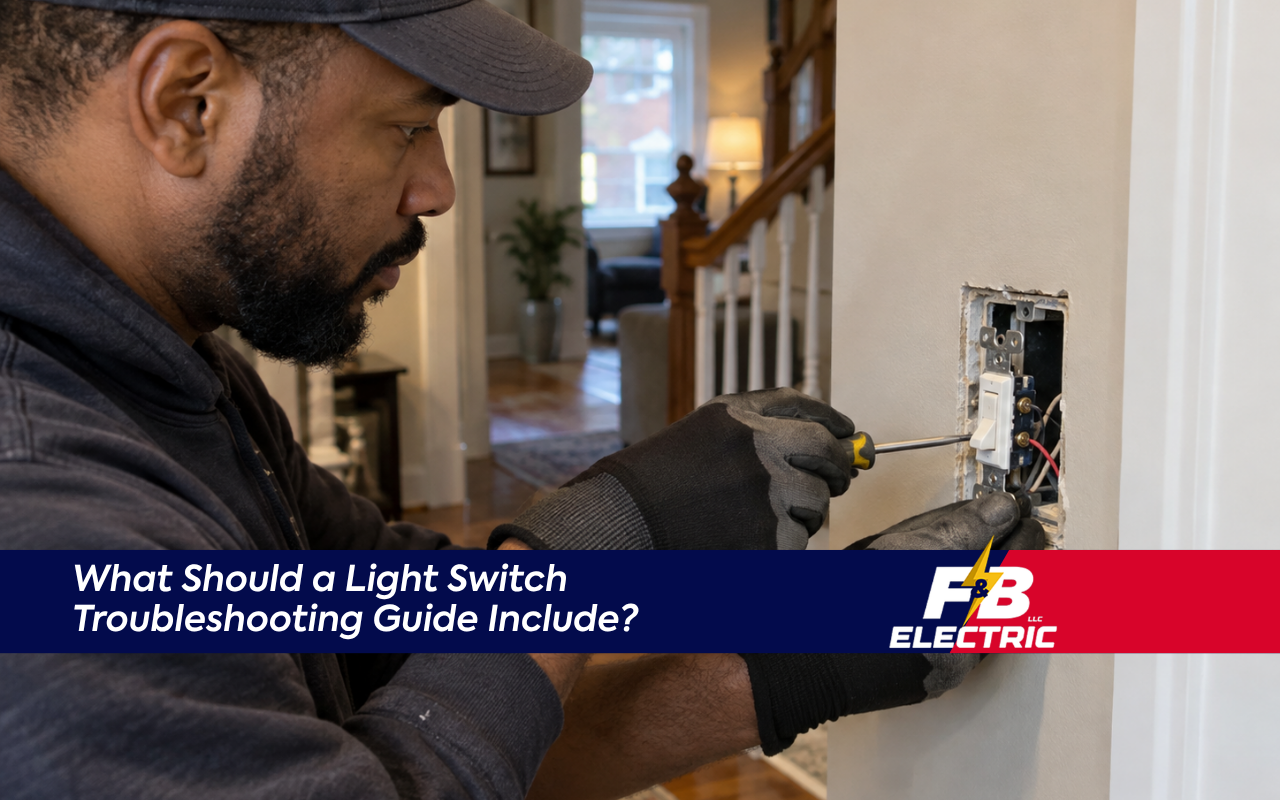
A light switch troubleshooting guide should explain warning signs, basic safety checks, when to stop testing, and when to call an electrician. It should help homeowners recognize buzzing, heat, flickering, or loose wiring without taking unsafe risks inside the wall.
For homeowners who need residential electrical support, our team at F&B Electric LLC can explain what the warning signs may mean before the issue grows.
Recognize warning signs before switches create larger risks
Light switch problems often show up through sound, heat, flickering, or a loose feel. These signs may point to worn contacts, poor connections, overloaded circuits, or damaged parts behind the wall plate.
At F&B Electric LLC, we look at the full symptom, not only the switch face. A buzzing light switch may come from worn internal parts or a poor connection. A hot light switch may signal resistance, overload, or damaged wiring. According to the NFPA, flickering lights and warm wall outlets are reasons to call a qualified electrician.
- Buzzing or crackling when the switch turns on
- Heat on the plate or around the switch
- Lights that flicker after the switch is touched
- A switch that feels loose, rough, or unstable
- Burning smells, discoloration, or visible sparks
When these signs appear, turn the switch off and avoid repeated testing. Then contact a qualified electrician for a safer inspection.
Compare common switch symptoms to safer next steps
Different symptoms need different responses. A flickering switch problem may have a simple bulb cause, but heat, sparks, or burning smells need faster attention from an electrical professional.
With F&B Electric LLC, we ask what happened, when it started, and whether the problem affects one light or several rooms. That helps us decide whether to check the switch, fixture, breaker, or wiring path. The CPSC warns that home wiring hazards should be found before they cause fire or shock.
- Buzzing sound: stop using the switch and request inspection
- Hot switch: turn it off and avoid touching the plate again
- Flickering light: test the bulb only if the switch stays cool
- Loose switch: avoid tightening parts while power is on
- Breaker trips: leave the circuit off until it is checked
You can also review our electrical service options when a switch issue may connect to wiring, lighting, or panel concerns.
Separate simple switch checks from risky electrical repairs
Some checks are safe for homeowners, but wiring repairs are different. A light switch troubleshooting guide should help you know where simple observation ends and electrical repair begins.
Start with what you can see, hear, and smell without removing wires. Check whether the bulb is seated correctly. Notice whether the switch feels loose or warm. Listen for buzzing only from a safe distance. Do not remove the switch from the box unless you are trained to work with electrical wiring.
Loose switch wiring can create arcing, heat, and unstable power. That risk is why our team checks terminals, switch condition, box space, and related wiring before explaining repair choices. A switch that feels warm, smells burnt, or sparks should be treated as a safety concern, not a small inconvenience.
For general prevention tips, visit our home safety reminders before deciding what to do next.
Follow our repair appointment process in Baltimore homes
A clear repair process helps homeowners feel prepared. When customers contact F&B Electric LLC, we first ask about the switch symptom, location, timing, and any related breaker or lighting changes.
After we understand the concern, we guide the next step. For a hot light switch, we may recommend leaving the switch off. For buzzing, flickering, or loose parts, we explain what information helps us prepare for the appointment.
- We ask which room or circuit is affected.
- We ask whether the switch is hot, buzzing, or flickering.
- We review related signs, such as breaker trips or odors.
- We inspect the switch, wiring, fixture, and connections.
- We explain repair or replacement options before work begins.
During the appointment, we check for safe wire connections, damaged switch parts, and signs of overheating. Then we help you understand what was found and what should happen next. To schedule help, use our contact our team page.
Prevent repeat switch problems with safer home habits
Good habits reduce repeat switch problems. Homeowners should avoid overloading circuits, ignoring flickering lights, or using damaged switches after heat, buzzing, or loose movement appears.
A light switch troubleshooting guide works best when paired with routine awareness. Notice changes after new fixtures, dimmers, smart switches, or higher-load devices are installed. Dimmers must match the lighting type. Three-way switches need correct wiring at both locations. Smart switches may need proper neutral wiring and stable power.
Our team checks whether the switch matches the load and use. We also look for signs that a small issue may be part of a wider electrical concern. A flickering switch problem in one room may be local. Flickering across several rooms may need a broader electrical inspection.
Safe lighting starts with early action. If a switch changes how it feels, sounds, or performs, do not wait for the symptom to become normal.
Frequently Asked Questions
Why does my light switch buzz when turned on?
A buzzing light switch may come from worn contacts, loose wiring, dimmer mismatch, or internal switch damage. Turn it off if the sound continues. Then request professional help through our electrical appointment request page before using it again.
Is a hot light switch always a serious concern?
A hot light switch should be treated carefully because heat may point to resistance, overload, or damaged parts. A slightly warm dimmer can be normal, but heat that feels strong, sudden, or unusual needs inspection from a qualified electrician.
What causes lights to flicker at one switch?
Flickering at one switch can come from a loose bulb, worn switch contacts, loose switch wiring, or fixture wiring. If the flicker changes when you touch the switch, stop using it and review our repair and wiring services.
Can I tighten loose switch wiring myself safely?
Loose switch wiring should not be handled unless you are trained to work safely with electrical systems. Turning off a breaker is important, but hidden wiring can still create risks. For safer next steps, read our electrical safety guidance.
When should I replace a worn light switch?
A worn switch should be replaced when it crackles, sticks, feels loose, heats up, sparks, or fails to control the light correctly. Replacement should match the circuit, switch type, and load. A proper inspection helps prevent repeat failures.
Schedule safer electrical help for switch concerns today
Switch problems can start small, but they deserve careful attention. With F&B Electric LLC, you get clear guidance before work begins and practical help for safer lighting in Baltimore homes. If your switch buzzes, heats up, flickers, or feels loose, schedule electrical help before the problem spreads.