
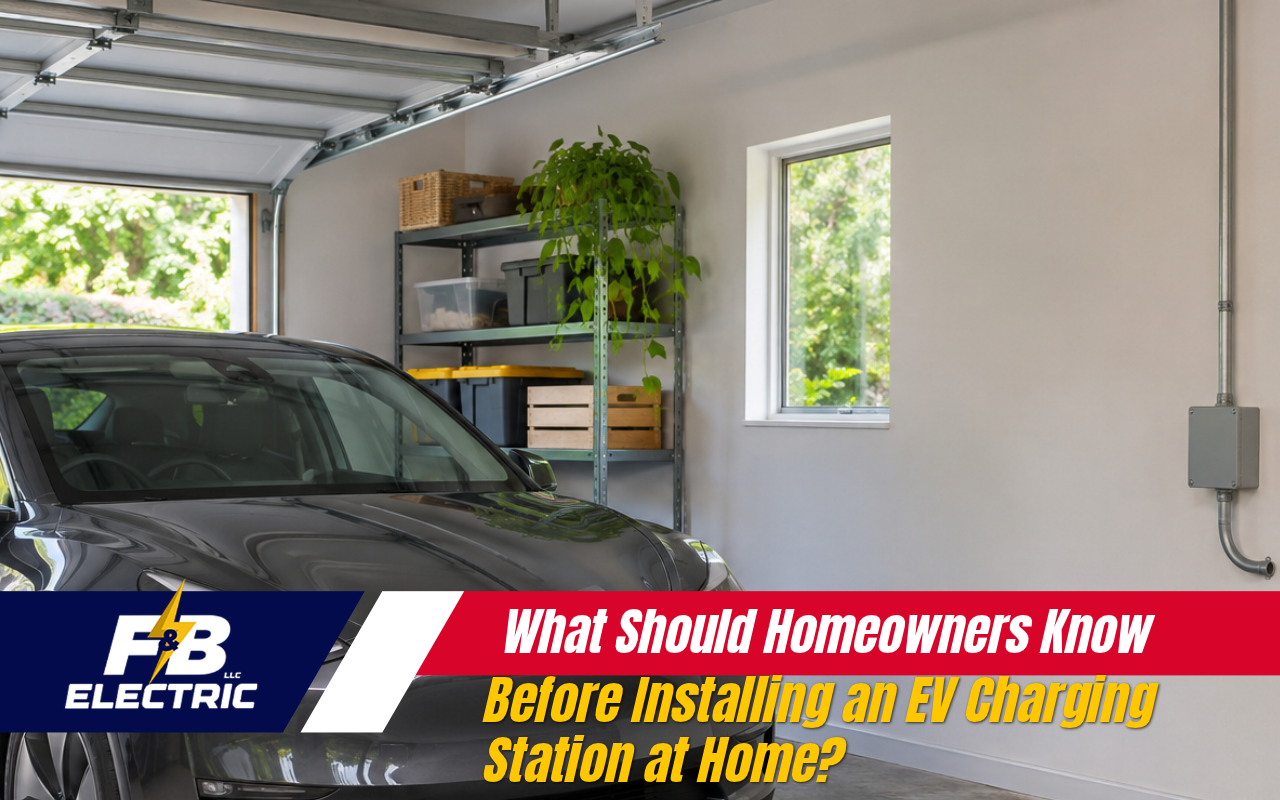
Before installing an EV charging station, homeowners should check their electrical panel capacity, charger compatibility, parking location, and available power supply. Some installations require dedicated circuits, permits, or electrical upgrades. A licensed electrician can evaluate these requirements and ensure safe installation. Explore our professional EV charger installation services to prepare your home for convenient, reliable electric vehicle charging.
The Vehicle and Parking Space Must Work Together
Begin with the vehicle’s charging specifications and the space where you normally park. The charging connector must suit the vehicle or use a manufacturer-approved arrangement. The cable also needs to reach the charging port without crossing a walkway or interfering with a door.
Check the parking position with the car in place. A location that works when you reverse into the driveway may fail when another household member parks differently. Include both normal parking habits and any likely second vehicle in the planning conversation.
Electrical Capacity Requires More Than an Empty Slot
An unused breaker position does not establish enough capacity for charging. An electrician needs to evaluate the service, existing demand, and proposed charging load. A panel can have physical room while the overall system still needs a different design.
Bring information about major electrical appliances and planned additions. Charging equipment may operate for hours, so its circuit design needs to account for the sustained load. The appropriate charging setting should match the approved installation rather than the charger’s highest advertised output.
The Circuit Design Must Match the Equipment
Level 2 charger electrical requirements involve the circuit, wiring method, protective equipment, and manufacturer instructions. Our team at F&B Electric LLC is licensed and insured. For help discussing the compliance side of your project, Review Your Installation Requirements.
A plug-in model and a hardwired model do not create identical installation plans. The electrician needs the selected equipment’s instructions before finalizing the connection method. An existing receptacle’s appearance alone does not prove that its wiring, protection, or condition suits EV charging.
- Share the exact charger model and installation manual.
- Confirm the approved charging output.
- Review the route from the electrical equipment to the parking area.
- Ask which connection method fits that model and location.
Home charging circuit requirements also need to fit the equipment instructions. A feature list does not establish compatibility with the existing electrical system. Before ordering, ask which specifications the installer needs and whether any selected features affect the proposed design.
Charging Output Can Fit Your Routine
A capacity review can also identify alternatives. A lower charging rate may meet your daily driving needs. Approved load management may offer another path where suitable. Neither option should be selected without checking the actual equipment and installation requirements.
Permit Requirements Follow the Property Address
EV charger permit requirements vary with the jurisdiction and project. For a Halethorpe address, confirm the applicable permitting authority and submission requirements before work begins. Do not borrow a neighboring county’s process because the charger model is the same.
Ask who will obtain required permits and arrange inspections. The proposal should distinguish installation labor from fees, related upgrades, and any utility coordination. If another contractor handles part of the project, clarify how the responsibilities connect.
Identify who owns the proposed mounting area and cable route. A private garage presents different approval questions from a shared parking space. Gather association requirements early when they apply. Ownership permission and electrical approval are separate parts of the project.
Permit approval does not replace permission to use shared property. Similarly, association approval does not replace electrical approval. Keep the documents together so the installer can see the agreed location and any limits on exterior work.
Equipment Ratings Must Suit the Installation Location
Choose charging equipment with appropriate safety certification and a rating suitable for its location. Outdoor equipment needs an outdoor-rated arrangement. A sheltered driveway still exposes equipment to conditions that differ from an interior room.
Consider cable storage, everyday access, and protection from vehicle contact. The most convenient mounting height on paper may create an awkward cable path in practice. Show the electrician where doors, shelving, garden equipment, and other parked vehicles normally sit.
Do not use extension cords or improvised adapters to solve a reach problem. Moving the mounting point or revising the route is a planning issue for the installer. It should not become a workaround after the equipment arrives.
Completion Includes Testing and User Instructions
A complete installation handoff should explain the approved settings and normal operation. Ask how to recognize a fault indication, where to store the cable, and which manufacturer instructions to retain. Keep the model information with the project records.
- Confirm the installed equipment matches the approved plan.
- Review the charging output and connection arrangement.
- Ask about required inspections and their completion status.
- Understand any remaining restrictions before regular use.
- Keep the installer and manufacturer information accessible.
If charging repeatedly stops, a connection shows heat damage, or an error returns, stop using the equipment and seek guidance. Do not raise charging settings to overcome slow performance without checking the circuit design.
Every Driver Needs the Same Settings
Make sure every driver understands the approved routine. Show household members the cable storage location and the normal connection sequence in the manufacturer’s instructions. Keep charging settings consistent with the installation handoff so a later app change does not quietly undermine the agreed operating plan.
A Clear Brief Makes Installation Planning Easier
For EV charger installation in Halethorpe, MD, prepare the vehicle model, charger specifications, parking sketch, and future equipment plans. These details help turn a general request into a defined project. Include questions about access, approvals, and the proposed wiring route.
At F&B Electric LLC, we offer a free estimate for proposed electrical work. If the assessment indicates that panel work belongs in the plan, discuss that scope before buying charging equipment. To begin that conversation, Assess Your Panel Options.