
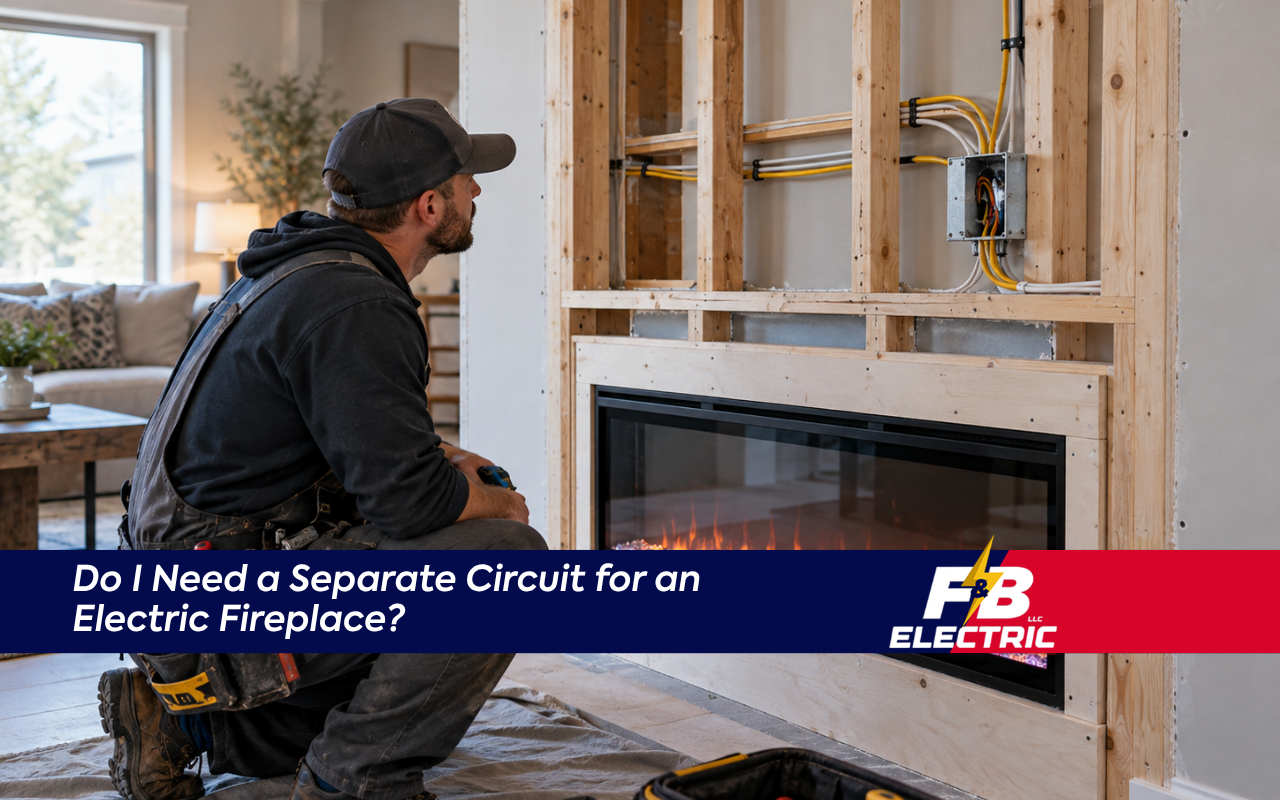
A safe electric fireplace wiring guide matches the unit’s electrical rating with suitable wiring, breaker protection, grounding, and outlet placement. It also follows the manufacturer’s approved connection method.
A licensed electrician should confirm the final setup when circuit capacity, concealed wiring, or local electrical rules need professional review. For related home projects, review our electrical services before choosing your next step.
Match Electric Fireplace Wiring to Circuit Loads
An electric fireplace circuit should match the voltage, load, and connection method listed for the specific fireplace. This electric fireplace wiring guide starts there because heating elements can demand more power than decorative flame effects.
A nearby outlet should never be assumed suitable without reviewing other connected loads. At F&B Electric LLC, we review the unit information, existing wiring, breaker panel, and connected loads before recommending changes.
Our dedicated circuit installation guide explains why higher-demand equipment may need separate electrical capacity.
Start With These Checks
- Check the product label for voltage and electrical load.
- Review the manufacturer’s installation instructions.
- Identify other lights, outlets, or appliances on the same circuit.
- Confirm whether the unit is plug-in or approved for hardwiring.
- Treat repeated breaker trips as a reason for inspection.
Use This Electric Fireplace Planning Table
A fireplace electrical plan should compare the appliance rating, outlet location, wiring method, and branch-circuit capacity before installation. Planning these details early helps reduce unsafe cord use and last-minute wall changes.
Electric Fireplace Wiring Planning Guide
| Planning Area | What to Review | Why It Matters |
|---|---|---|
| Electrical rating | Voltage, amperage, wattage, and manufacturer instructions | Confirms the load before circuit decisions are made |
| Outlet location | Reach, access, grounding, and heat exposure | Helps avoid stretched cords or hidden connections |
| Wall-mounted setup | Mounting bracket, wall opening, and wiring route | Prevents wiring conflicts after the fireplace is mounted |
| Existing circuit | Other devices sharing the same branch circuit | Shows whether the circuit may be overloaded |
| Dedicated circuit need | Fireplace load, breaker trips, and panel capacity | Helps determine whether separate power is practical |
Position Fireplace Outlet Requirements for Safer Use
Fireplace outlet requirements depend on the fireplace design, approved connection type, and installation location. A plug-in model needs a grounded receptacle that fits the manufacturer’s instructions.
The cord should reach naturally without stretching, crushing, or contact with sharp edges or excessive heat. Outlet placement matters more when a unit will be recessed or mounted against a wall.
Plan access before mounting so the plug, receptacle, and required connection points remain usable. If the planned outlet seems unsuitable, ask our team to review safer options before installation.
Plan Wall Mounted Fireplace Wiring Before Mounting
Wall mounted fireplace wiring should be planned before openings are cut or brackets are fixed in place. Some units use a factory cord and receptacle, while others allow an approved hardwired connection.
The fireplace manual should decide which method is acceptable for that specific model. Choose the connection style early because it affects cable routing, wall preparation, and future access.
For broader household wiring support, see our residential electrician in Ellicott City, MD page.
Common Connection Types
- Plug-in setup: Uses an approved receptacle and the factory cord.
- Hardwired setup: Connects directly when the manufacturer permits it.
- Concealed wiring: Must use materials approved for in-wall installation.
Choose Dedicated Fireplace Circuit Support Carefully
A dedicated fireplace circuit can reduce conflicts with other loads because the fireplace does not share that branch circuit with unrelated outlets or appliances. However, not every fireplace automatically requires one.
The manufacturer’s instructions, electrical load, panel capacity, and applicable electrical rules should guide the decision. Frequent trips, older wiring, or several high-use devices on one branch can signal that the existing setup needs review.
Never solve repeated trips by installing a larger breaker without checking the wiring. The breaker and conductors must work together as a safe system. With F&B Electric LLC, you get a practical review of available capacity before a new circuit is considered.
Follow a Clear Fireplace Electrical Installation Process
A safe installation process begins by confirming the fireplace model, electrical rating, planned location, and approved connection method. Next, the existing circuit and panel should be reviewed.
Before work begins, the connection plan should be clear so outlet placement, wiring, grounding, and mounting do not conflict. When you contact F&B Electric LLC, we use the available fireplace information and home electrical conditions to explain the next step without guessing.
Our Planning Process
- Share the fireplace model and planned location.
- Review the electrical load and nearby circuit use.
- Check the outlet, grounding, breaker, and wiring condition.
- Explain whether the approved setup is plug-in or hardwired.
- Confirm the final connection before regular use.
Watch for Electric Fireplace Electrical Warning Signs
Stop using the fireplace if you notice burning smells, a hot outlet, visible cord damage, flickering power, buzzing, or repeated breaker trips. Those signs deserve inspection rather than a temporary workaround.
Extension cords should not replace permanent wiring for regular fireplace use. If the fireplace cannot reach a suitable outlet safely, the electrical layout should be reviewed before the unit is operated.
Frequently Asked Questions
Does every electric fireplace need its own dedicated circuit?
No. The need for a dedicated circuit depends on the fireplace rating, manufacturer instructions, existing branch-circuit loads, and local requirements. A professional can check the available capacity first.
Can I plug an electric fireplace into any outlet?
Not safely in every case. The outlet must match the unit’s approved voltage and connection requirements, be properly grounded, and sit on a circuit with suitable capacity.
Why does my breaker trip when the fireplace runs?
A breaker can trip when the circuit is overloaded or when another electrical problem is present. Stop resetting the breaker repeatedly and have the circuit evaluated.
Should wall mounted fireplace wiring stay accessible afterward?
Required electrical connections should remain accessible when the manufacturer’s instructions or electrical rules call for access. Planning this before mounting can prevent unnecessary wall repairs later.
What warning signs require an electric fireplace inspection?
Repeated breaker trips, warm outlets, damaged plugs, flickering power, buzzing, or an electrical burning smell are warning signs. Stop using the fireplace when a serious electrical symptom appears.
Protect Your Home With Professional Fireplace Electrical Planning
Careful planning supports safer fireplace use and fewer electrical surprises after installation. At F&B Electric LLC, we can review the circuit, outlet position, wiring path, and approved connection method before the unit is put into regular service.
When you are ready to discuss the setup, use contact us to reach our team.