
Building security can feel confusing when every reader, lock, and sensor needs a clean connection. For safer planning, start with the right parts, the right wire path, and help from Electrical Services when the setup touches your property’s electrical system.
An access control setup connects a door reader, controller, lock, sensor, and power source into one working security system. Property owners, facility managers, and business teams use this wiring to control who enters a space, reduce key problems, and support safer building access.
Core Components Keep Every Controlled Door Working Safely
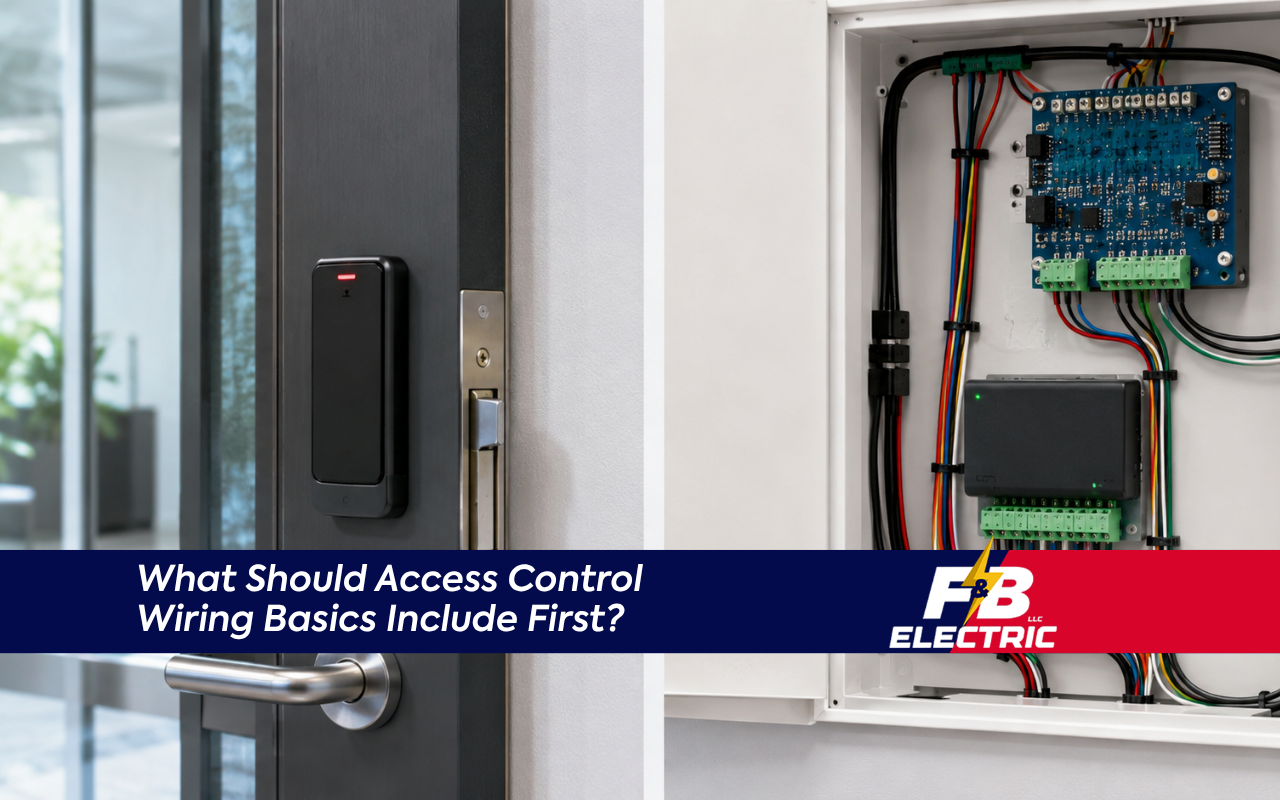
Access control wiring basics start with knowing what each device does. A typical system includes a controller, credential reader, electric lock, door position sensor, exit device, and power source. Each part must connect clearly so the door responds the right way.
When we review a door, we check how people enter, how they exit, and what must happen during a power loss. According to CISA, facility access control should support clear entry rules and safe building access.
- Controller: manages the access decision.
- Reader: accepts a card, PIN, fob, or mobile credential.
- Lock hardware: secures or releases the door.
- Door sensor: confirms whether the door is open or closed.
Power Supplies Support Locks, Readers, and Controllers Reliably
An access control power supply gives the system steady low-voltage power. Most access devices use 12V or 24V DC, but the correct choice depends on the reader, lock, controller, and cable distance. Undersized power can cause weak locks and reader errors.
With F&B Electric LLC, you get clear guidance before parts are connected. We review the current draw, battery backup needs, and safe enclosure location. A stable power source helps prevent random lock failures, especially when several doors share one supply.
- Check voltage requirements for every device.
- Calculate the full load before wiring.
- Use battery backup when security must continue during outages.
- Protect wiring from moisture, heat, and tampering.
Door Access Wiring Organizes Signals for Safer Entry
Door access wiring connects the controller to the reader, lock, request-to-exit device, and door sensor. Clean routing and labeling make the system easier to test, repair, and expand. Poor wire organization can make simple problems hard to find.
For commercial properties, we often recommend planning door access wiring with the same care used for other building systems. Our Commercial Electrician in Baltimore page explains how business wiring support can reduce downtime and safety concerns.
Labeling both ends of every cable helps future technicians confirm power, data, lock control, and sensor wiring without guessing.
Low Voltage Planning Reduces Risk in Baltimore Properties
Low voltage access control Baltimore, MD projects need safe routing, code-conscious planning, and careful separation from higher-voltage wiring. Low-voltage does not mean careless wiring. The setup still affects security, fire safety, door function, and daily building use.
Our crew at F&B Electric LLC reviews wire paths, wall access, conduit needs, and device locations before work begins. NFPA describes the National Electrical Code as a key benchmark for safe electrical design, installation, and inspection.
Good low-voltage planning should account for:
- Safe cable routes away from damage and interference.
- Accessible junction points for future testing.
- Proper cable type for the building area.
- Device locations that support safe entry and exit.
Entry System Wiring Follows a Clear Service Process
Entry system wiring works best when the project is reviewed before cables are pulled. When customers call F&B Electric LLC, we ask about the door type, access device, lock hardware, power needs, and how the space is used.
After booking, we review the door layout and explain what should connect first. Before work begins, we identify safe cable routes and check whether the access control power supply can support the planned devices.
- Review the door, wall path, and hardware.
- Confirm reader, lock, sensor, and exit device needs.
- Plan low-voltage cable routing and protection.
- Test power, lock release, reader response, and door status.
Step-by-step testing prevents hidden wiring mistakes from becoming daily security issues. For broader planning, our guide on Hiring a Professional Electrician in Maryland explains why trained support matters.
Smart Troubleshooting Protects Security and Daily Access
Troubleshooting access control starts with the simplest checks first. Loose terminals, weak batteries, damaged cable, or overloaded power supplies can cause doors to stay locked, release slowly, or show false open-door alerts.
When a reader fails, we check voltage, continuity, cable condition, and device connections. Slow lock response often points to voltage drop, long cable runs, or an access control power supply issue. If several doors fail at once, the shared controller or power source should be reviewed first.
Safe troubleshooting should never bypass life-safety needs. Exit devices must still allow people to leave as required. When you reach F&B Electric LLC, we can review the wiring and explain the safest next step through our Contact Us page.
Frequently Asked Questions
What wires are needed for access control doors?
Most controlled doors need wiring for the reader, lock, door sensor, request-to-exit device, and power connection. The exact cable depends on the hardware and controller. A planned layout helps keep power, data, and signal lines organized from the start.
Does access control wiring need a dedicated power supply?
Many systems need a dedicated access control power supply because locks and readers require steady low-voltage power. Shared or undersized power can cause failures. For related support, review our Electrical Services before planning a new setup.
Can door access wiring run near electrical wires?
Door access wiring should be routed carefully and kept away from high-current lines when possible. Close runs can increase interference and service problems. A professional review helps confirm safer cable paths, protection, and code-conscious separation for the building.
Who installs low voltage access control in Baltimore, MD?
Low voltage access control Baltimore, MD work should be handled by qualified professionals who understand wiring, door hardware, power needs, and safety. Business owners can review Commercial Electrician in Baltimore for electrical support that fits commercial properties.
When should I upgrade old entry system wiring?
Upgrade entry system wiring when doors respond slowly, readers fail often, labels are missing, or cables show damage. Older wiring can limit future devices. To discuss the next step, use our Contact Us page and share your access concern.
Choose Safer Wiring Guidance Before Security Problems Grow
Clear wiring protects daily access, security, and building safety. If your door hardware, reader, or power setup feels confusing, our team can review the system and explain practical options. Start with Electrical Services or request help through Contact Us before small wiring issues become larger access problems.