
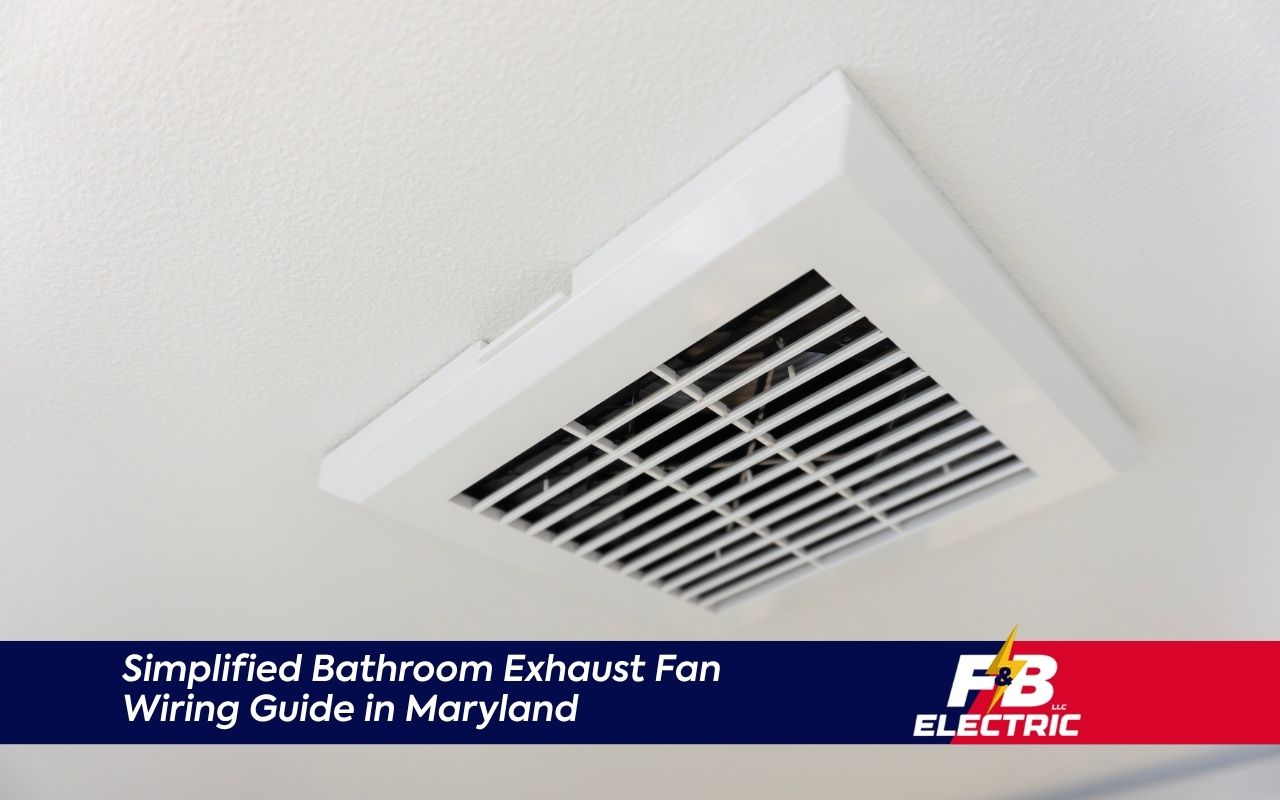
At F&B Electric LLC, we know bathroom fan wiring can feel confusing when safety rules, moisture, and local codes are involved. This bathroom exhaust fan wiring guide in Maryland explains the basics in a clear way, so you can better understand what your bathroom needs.
A well-installed fan helps remove steam, reduce odors, and protect your walls, cabinets, and ceiling from moisture damage. With the right planning, your bathroom can stay cleaner, fresher, and safer for daily use.
Understanding Bathroom Exhaust Fan Basics
A bathroom exhaust fan pulls moist air out of the room and sends it outdoors. This helps stop steam from sitting on mirrors, walls, and ceilings, which can lead to mold and peeling paint.
- The motor powers the fan and keeps air moving.
- The fan blades pull damp air from the bathroom.
- The housing holds the fan safely in place.
- The duct carries moist air outside the home.
Good bathroom fan electrical wiring helps the unit run safely and smoothly. It also supports better airflow, which keeps your bathroom more comfortable after showers, baths, and daily use.
Maryland Ventilation Rules for Safer Bathrooms
Maryland homes must follow local ventilation rules to help control moisture and protect indoor air. Most bathrooms need a fan with enough airflow for the room size, and the fan must vent outdoors instead of into an attic or crawlspace.
At F&B Electric LLC, we always take code needs seriously because poor venting can create long-term problems. The bathroom ventilation code in Maryland may also affect duct length, bends, wiring protection, and fan placement near wet areas.
Why Do Maryland Codes Matter for Fan Wiring?
Bathroom codes exist to protect people and property. When wiring, ducting, or fan size is wrong, moisture can stay trapped in the bathroom and cause mold, bad smells, or hidden damage behind walls.
- Code-compliant work lowers the risk of failed inspections.
- Safe wiring helps prevent shocks, shorts, and fire hazards.
- Proper venting helps protect paint, drywall, and wood surfaces.
- Correct fan sizing can support better energy use.
This bathroom exhaust fan wiring guide in Maryland is meant to make those rules easier to understand before any work begins.
Safety Steps Before Bathroom Fan Electrical Work
Safety should come first before touching any switch, wire, or fan unit. Always turn off power at the breaker, then use a voltage tester to confirm the circuit is not live.
- Keep the work area dry and clear.
- Wear eye protection when working near ceilings.
- Use gloves with grip when handling parts.
- Follow the fan maker’s wiring diagram closely.
- Stop the project if wiring looks damaged or unclear.
Correct exhaust fan switch wiring is important because a small mistake can stop the fan from working or create an unsafe connection.
Wiring Tools and Switch Connection Basics
Before starting, gather common tools like screwdrivers, pliers, wire strippers, a voltage tester, wire connectors, and electrical tape. You may also need approved cable, a fan-rated switch, ducting, mounting hardware, and a proper electrical box.
Most fan setups include hot, neutral, and ground wires. The hot wire brings power, the neutral wire completes the circuit, and the ground wire adds safety. Clear labeling can make bathroom fan electrical wiring easier to follow during the project.
This bathroom exhaust fan wiring guide in Maryland can help you understand the process, but it should not replace licensed help when the wiring is complex or the circuit is not clear.
Professional Help for Complex Fan Installations
Some fan projects need more than basic wiring. Combination light-fan units, timer switches, separate controls, older wiring, or ceiling changes can make the job harder and less safe for a homeowner.
F&B Electric LLC can help when you need a bathroom fan electrician in Maryland who understands safe wiring, ventilation needs, and local expectations. You can also learn more about our residential electrical services for home projects.
For more peace of mind, review our home electrical safety tips before starting any electrical work. You can also see why hiring a professional electrician can protect your home and save time.
Frequently Asked Questions
Can I wire a bathroom exhaust fan myself?
You may understand the basic steps, but bathroom wiring must be handled with care because moisture increases risk. F&B Electric LLC recommends calling a licensed electrician if you are unsure about any wire, switch, breaker, or code requirement.
Does a bathroom fan need to vent outside?
Yes, a bathroom fan should vent outdoors. Venting into an attic, wall space, or crawlspace can trap moisture and cause mold, wood damage, and poor indoor air quality.
What size bathroom fan do I need?
Fan size depends on the bathroom size and layout. Many standard bathrooms need enough airflow to remove moisture quickly, while larger bathrooms may need a stronger unit or added ventilation planning.
What is the safest switch setup for a bathroom fan?
The safest setup depends on your fan type and bathroom layout. Simple fan switches, timer switches, and separate light-fan controls can all work when installed with the right wiring and approved parts.
When should I call a licensed electrician?
Call a licensed electrician when wiring is old, unlabeled, damaged, or connected to other fixtures. You should also call for permit needs, inspection concerns, or any project tied to the bathroom ventilation code in Maryland.
Keep Your Bathroom Wiring Safe and Reliable
A safe fan installation helps protect your bathroom from moisture, odor, and long-term damage. When wiring, airflow, and ducting work together, your fan can support a cleaner and healthier space every day.
F&B Electric LLC is here to help you make smart choices for bathroom ventilation and electrical safety. Use this bathroom exhaust fan wiring guide in Maryland as a starting point, then reach out through our contact page when your project needs expert care.