
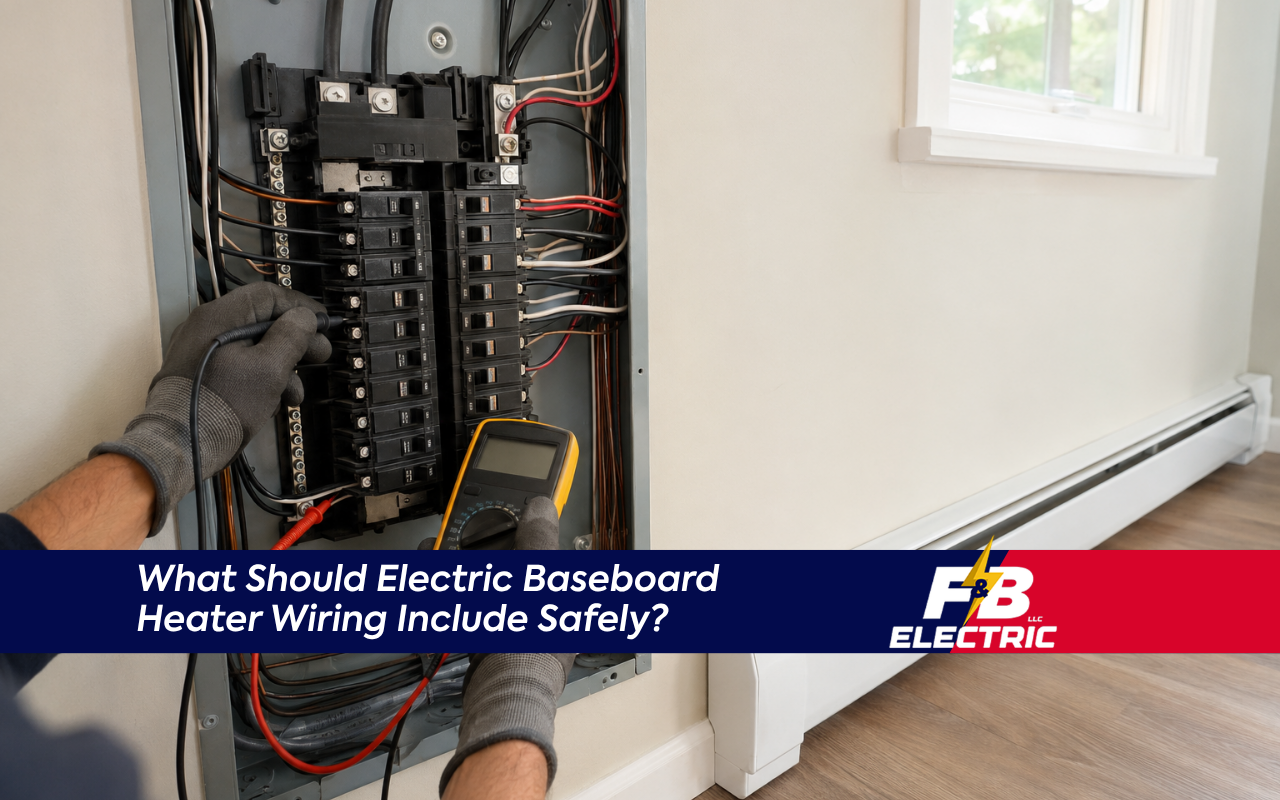
Electric baseboard heater wiring should include a properly sized dedicated circuit, correct breaker protection, safe thermostat connections, grounding, and code-compliant 240-volt wiring. In Baltimore, this planning helps reduce overheating risks and supports steady heat during colder months.
For safe planning, our Explore More Electrical Services page can help you compare related electrical needs before work begins.
What Should Electric Baseboard Heater Wiring Include Safely?
Baseboard heating wiring connects a wall-mounted heater, thermostat, breaker, and branch circuit so the unit can heat a room safely. Homeowners, landlords, and small property managers need this work when adding, replacing, or correcting electric heat. The goal is safe heat without overloaded wiring.
Dedicated Baseboard Heater Circuit Planning Supports Safer Heating
A baseboard heater circuit should usually be planned as a dedicated branch circuit because electric heat can draw steady current for long periods. Dedicated wiring helps protect the heater, breaker, thermostat, and connected conductors from overload while keeping other home circuits separate.
At F&B Electric LLC, we review the heater rating, room needs, panel condition, and available circuit space before recommending a safe setup. A baseboard heater circuit is not just a wire path. It must match the load, breaker, cable, thermostat, and local code expectations.
- Heater wattage and voltage rating
- Breaker size and wire gauge
- Thermostat type and placement
- Grounding and box connections
- Panel capacity for added load
According to NFPA, the National Electrical Code is used to protect people and property from electrical hazards. That is why circuit planning should come before installation, not after a breaker starts tripping.
Proper 240v Heater Wiring Reduces Costly Overload Risks
Proper 240v heater wiring sends power through two hot conductors and a grounding conductor, instead of using a standard 120-volt setup. Many electric baseboard heaters use 240 volts because higher voltage can support heating loads more efficiently with correctly sized conductors.
With F&B Electric LLC, you get clear guidance before any wiring choice is made. We check the nameplate rating, calculate amperage, and explain whether the circuit can safely support the heater. Wrong wire size can create heat inside the wall, even when the heater seems to work.
Property owners should avoid guessing based on heater length alone. Two heaters that look similar can have different wattage ratings. The safer choice is to read the manufacturer label and match the wiring to the actual electrical load.
- 240-volt units usually need a double-pole breaker
- Wire size depends on calculated amperage
- Loose terminals can cause arcing
- Grounding supports safer fault protection
Thermostat Wiring For Baseboard Heat Improves Room Control
Thermostat wiring for baseboard heat controls when the heater receives power, so the room can stay near the selected temperature. Line-voltage thermostats are common for electric baseboard heaters because they switch the heater circuit directly.
Our team at F&B Electric LLC helps customers understand whether the thermostat should be single-pole or double-pole, based on the heater and wiring design. We also check placement because drafts, sunlight, and exterior walls can affect temperature readings.
A thermostat should be easy to reach, away from direct heat, and mounted where it can sense normal room temperature. Good thermostat placement improves comfort and helps the heater cycle more predictably. For home wiring support, visit Residential Electrician in Baltimore MD.
Correct Heater Breaker Requirements Baltimore MD Protect Homes
Heater breaker requirements Baltimore, MD depend on the heater load, wire size, circuit type, and code rules used by the local authority. A breaker must protect the wire, not just power the heater, so oversizing a breaker can create a serious safety risk.
The International Residential Code states that branch circuit conductors supplying fixed electric space-heating equipment should be sized at not less than 125 percent of the equipment load. This matters because baseboard heaters often operate as continuous loads during cold weather.
When customers contact F&B Electric LLC, we compare the heater rating with the panel, conductor size, and breaker type. We also explain whether the circuit needs updates before the heater is connected. Breaker trips are warning signs, not small inconveniences to ignore.
- Too small: nuisance tripping may occur
- Too large: wire protection may be reduced
- Wrong type: panel compatibility may fail
- Poor labeling: future troubleshooting gets harder
For deeper planning, review Code Compliant Breaker Sizing MD.
Careful Installation Steps Prepare The Heater For Use
A safe installation process starts with load review, power shutdown, wiring inspection, thermostat connection, breaker matching, and final testing. Each step helps confirm that electric baseboard heater wiring is ready before the heater runs for daily use.
Before work begins, we ask about the room, heater model, panel location, and any past breaker problems. During the appointment, we inspect the planned wiring path, check panel space, and confirm that the thermostat and heater can be connected safely.
- Review the heater label for watts and voltage.
- Confirm circuit capacity and panel condition.
- Plan thermostat location and wiring route.
- Install approved cable, boxes, and connections.
- Test voltage, grounding, and heater operation.
After testing, we explain what was checked and what the owner should watch for. If you are planning a heating electrical guide project, Contact Our Electrical Team before connecting new equipment.
Frequently Asked Questions
Does every baseboard heater need a dedicated circuit?
Many electric baseboard heaters need a dedicated circuit because the load can run for long periods. The safest answer depends on heater wattage, voltage, and the existing panel. A licensed electrician can check whether shared wiring is unsafe or not allowed.
What size breaker works for 240-volt baseboard heat?
The breaker size depends on the heater amperage and wire gauge. Electric heat is often treated as a continuous load, so sizing must account for that added demand. For safe planning, use Code Compliant Breaker Sizing MD.
Can I use a regular thermostat with baseboard heat?
Most electric baseboard heaters need a thermostat rated for line-voltage heating, not a standard low-voltage furnace thermostat. The thermostat must match the voltage, amperage, and control style. Our Explore More Electrical Services page explains related wiring support.
Why does my baseboard heater breaker keep tripping?
A tripping breaker can point to overload, loose wiring, damaged insulation, a failing heater, or an incorrect breaker. Do not keep resetting it without inspection. Repeated trips can signal a safety issue that needs proper testing.
Who should inspect old baseboard heater wiring?
An experienced residential electrician should inspect old heater wiring before replacement or reuse. Older circuits may have weak connections, outdated cable, or poor labeling. For Baltimore homes, visit Residential Electrician in Baltimore MD for safe home electrical help.
Schedule Safer Heating Wiring Before Cold Weather Arrives
Electric heat should feel steady, safe, and simple to use. At F&B Electric LLC, we help property owners plan electric baseboard heater wiring with careful load checks, thermostat review, breaker sizing, and clear next steps. To discuss your heater wiring needs, Contact Our Electrical Team before the next cold stretch.