
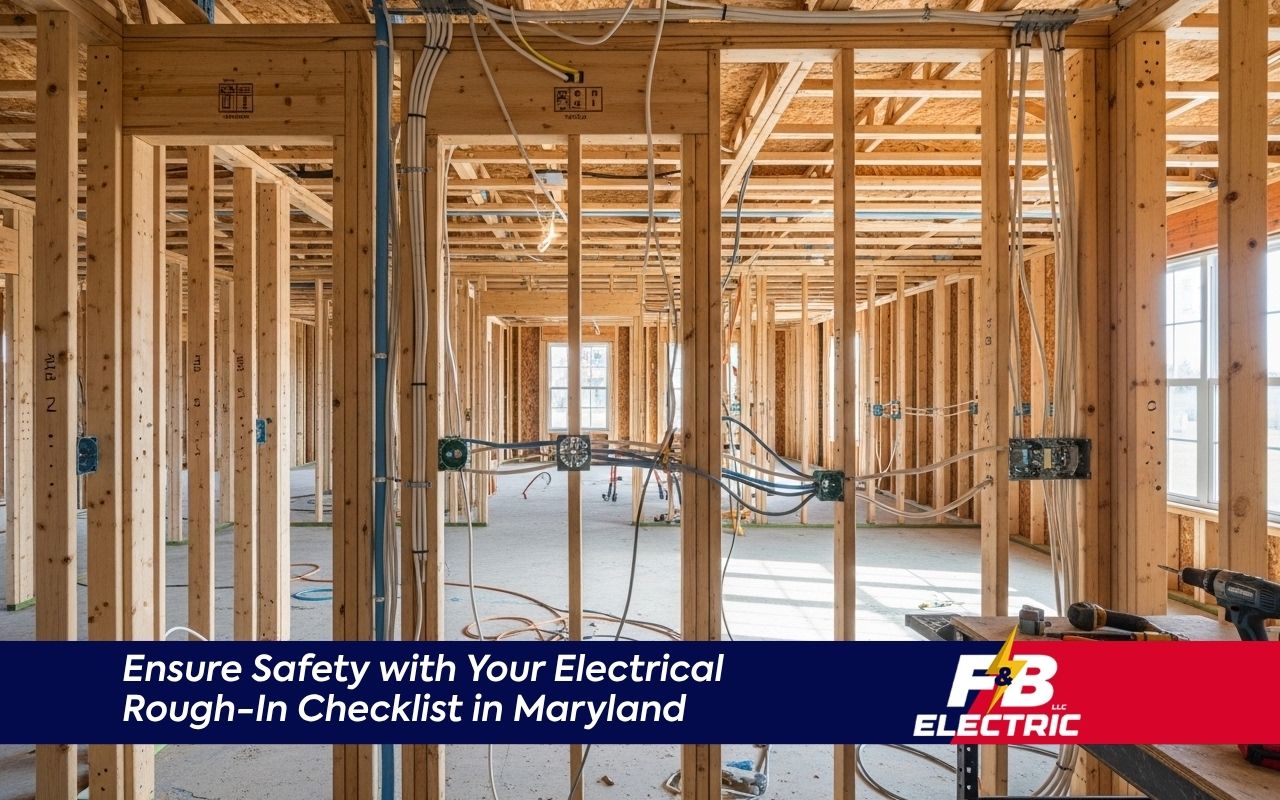
Building a new home takes careful planning, especially when wires, panels, outlets, and switches must be ready before the walls close. A clear electrical rough-in checklist in Maryland helps you keep the work safe, organized, and ready for inspection.
At F&B Electric LLC, we know this stage can feel stressful. However, the right plan helps you avoid missed steps, delays, and unsafe wiring. With clear guidance, your project can move forward with more confidence.
Why Rough-In Planning Matters Before Walls Close
Every safe electrical system starts before drywall, paint, and finishes are added. During rough-in, wires are placed, boxes are set, and circuits are prepared for the final devices. This is why your checklist should match the project plan from the start.
A complete electrical rough-in checklist in Maryland also helps your electrician, builder, and inspector stay aligned. When each person understands the layout, the work is easier to check and less likely to need costly changes later.
Key Items for a Safer Rough-In Process
A good rough-in wiring checklist should cover the main areas that inspectors review. It should also help your team confirm that each room has the right outlets, switches, lighting points, and circuit paths before the walls are closed.
- Confirm outlet, switch, and fixture locations on the plans.
- Check cable routing, box placement, and wire protection.
- Review grounding, panel space, and circuit labels.
- Keep all work areas clear for easier inspection access.
For broader service support, you can review our electrical services and see how we support safe work from planning to completion.
Maryland Code Details Your Project Should Follow
Electrical rough-in requirements in Maryland can include rules for wire size, grounding, box fill, circuit protection, and safe cable support. Because local rules may vary by county or city, it is important to confirm the right steps before work begins.
F&B Electric LLC approaches each project with code awareness and careful review. Our goal is to help you prepare a safer system that supports approval and long-term use, not just a quick installation.
You can also learn more through our electrical code compliance guidance if you want to better understand how code affects your project.
How Can You Prepare for Rough-In Inspection?
Rough-in inspection preparation starts with clean, visible, and well-organized work. Inspectors need to see wiring paths, boxes, staples, grounding, and panel connections before insulation or drywall hides them.
- Keep permits and approved plans available at the job site.
- Label circuits clearly so the layout is easy to review.
- Make sure junction boxes remain open and accessible.
- Walk through the work before the inspector arrives.
An electrical rough-in checklist in Maryland can make this review easier because it gives your team a simple way to confirm each step before the official visit.
Smart Planning for New Construction Wiring
New construction electrical planning should begin with how each room will be used. Kitchens, bathrooms, laundry rooms, offices, and outdoor areas often need more focused planning because they use more power or need special safety features.
Think about daily comfort as well. Outlet placement, lighting control, appliance needs, and future upgrades should all be reviewed early. This helps the system serve the home better for many years.
Common Rough-In Mistakes to Avoid
Many rough-in problems come from rushed work or unclear plans. Small issues can lead to failed inspections, damaged walls, or future safety concerns. F&B Electric LLC helps clients reduce these risks through steady planning and careful checks.
- Placing boxes at uneven heights or wrong locations.
- Leaving too little wire inside boxes for final connections.
- Running cables too close to framing edges without protection.
- Forgetting to update plans after field changes.
Before your inspection, our electrical inspection checklist can help you review important safety and approval points.
Frequently Asked Questions
What is included in an electrical rough-in checklist?
It usually includes wire routes, outlet locations, switch boxes, light boxes, panel planning, grounding, cable support, and inspection items. The goal is to confirm that the hidden electrical work is safe before walls close.
When should rough-in inspection preparation begin?
Preparation should begin before wiring starts. Early planning helps your team follow the layout, keep documents ready, and fix small issues before the inspector visits.
Why do Maryland rough-in rules matter?
They help protect the home from unsafe wiring, fire risks, poor grounding, and future repair problems. Following electrical rough-in requirements in Maryland also supports a smoother inspection process.
Can a checklist help prevent project delays?
Yes. A checklist helps reduce missed items, unclear layouts, and last-minute changes. It also gives the team a shared guide during each stage of the work.
Should homeowners be involved in rough-in planning?
Yes. Homeowners should review outlet needs, lighting plans, appliance locations, and future use. This makes the final electrical system more practical and easier to live with.
Build With Confidence and Safer Wiring
A well-prepared electrical rough-in checklist in Maryland gives your project a stronger start. It keeps the work organized, supports code compliance, and helps your inspection go more smoothly.
F&B Electric LLC is ready to help you plan safer wiring for your build. To discuss your project with our team, visit our electrical service support page and take the next step with confidence.